Bong’s Design 2.0 Expands 3D Print Services for Creators
Bong’s Design in Phnom Penh launched bongs.design 2.0 on January 3, 2026, evolving from a custom merchandise shop into a broader creator ecosystem. The update adds an Online Design Studio, expanded sustainable product lines such as recycled-material lampshades, and local print-on-demand services, making iteration, prototyping, and sales more accessible for regional creators.
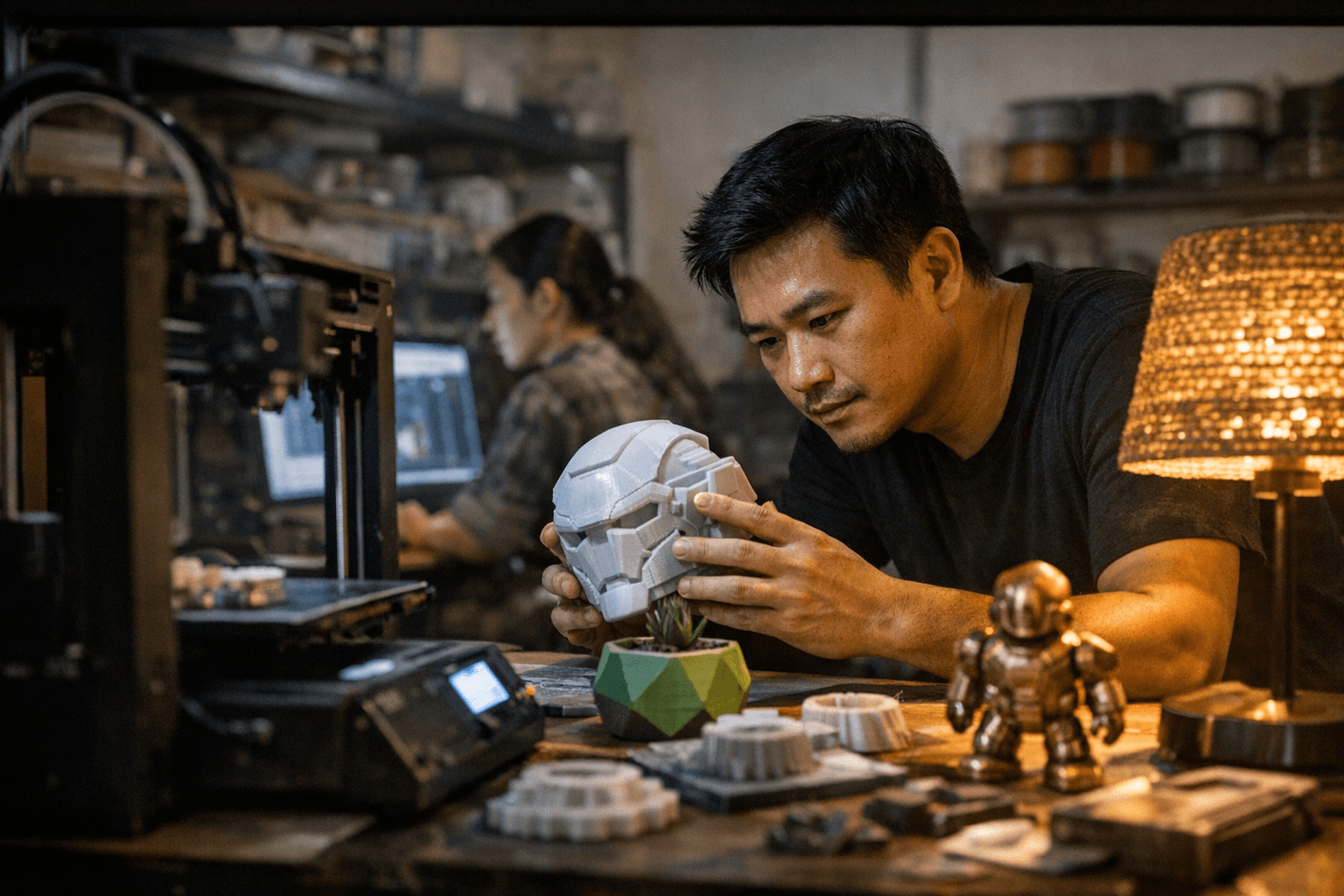
Bong’s Design announced a major platform upgrade on January 3, 2026, retooling its online presence into bongs.design 2.0 to serve artists, designers, and small businesses in Cambodia. The site moved beyond one-off merchandise to offer tools and services aimed at building a local creator economy, with an emphasis on co-creation, sustainability, and on-demand production.
The centerpiece of the relaunch is an Online Design Studio that enables co-creation between makers and their collaborators. The studio is intended to let users iterate designs digitally before committing to physical prints, lowering the barrier to experimentation and shortening the feedback loop between concept and prototype. Complementing the design tools, bongs.design 2.0 added print-on-demand services tailored to local creators, allowing products to be produced as orders arrive rather than in large, upfront batches.
Sustainable product lines are a visible part of the platform’s new direction. The rollout includes items made from recycled materials, with recycled-material lampshades cited as a flagship example. That emphasis responds to growing interest in circular-materials approaches and gives creators options for eco-conscious product lines without having to source specialty materials independently.
For makers and small-scale entrepreneurs, the practical value is immediate. The combination of collaborative design tools and local print-on-demand reduces capital risk: you can test designs, order small runs or single units, and refine products based on real customer feedback. Localized production also shortens lead times and can reduce shipping costs and complications that come with cross-border fulfillment. By focusing on Khmer-inspired product design, the platform aims to preserve and promote local cultural aesthetics while making them commercially viable.
Community impact goes beyond sales. The platform positions itself as a cultural and commercial bridge, connecting traditional design influences with modern production methods and offering a place for local artists and entrepreneurs to prototype, iterate, and sell without large upfront investment. bongs.design 2.0 serves as a practical example of how accessible 3D printing and on-demand manufacturing can support small creative economies, and it gives regional creators a clearer path from concept to customer.
Sources:
Know something we missed? Have a correction or additional information?
Submit a Tip