Border Force Seizes Quarter Million Fake Labubu Toys, Safety Alert
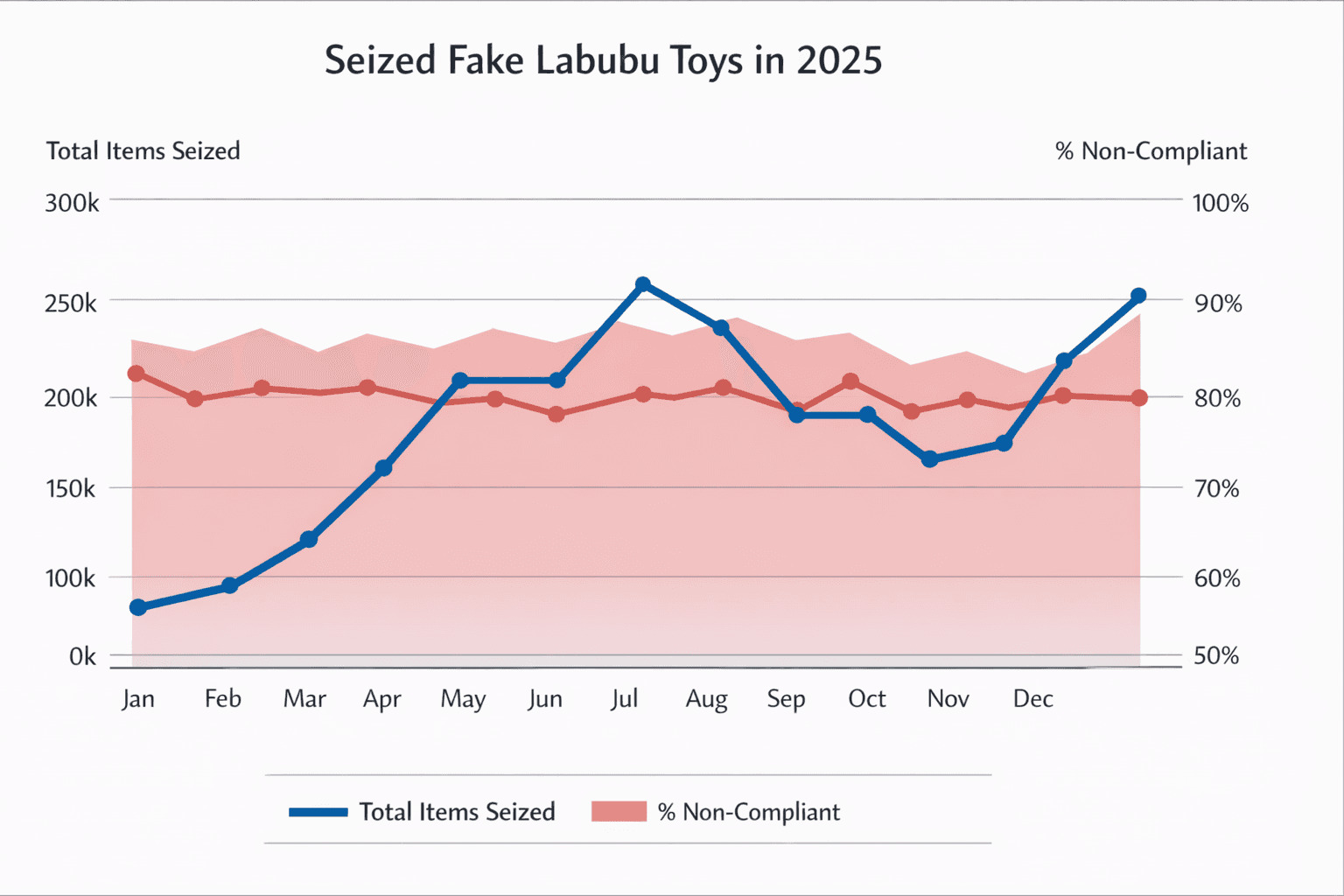
Border Force intercepted nearly a quarter of a million counterfeit Labubu items in 2025, and testing found about 75 percent failed to meet basic safety standards. The seizures highlight how the viral popularity of Pop Mart's Labubu figures has driven a sprawling knockoff market that poses risks to collectors and children, and can feed organised crime.

On December 23, 2025 Border Force announced a major interception of counterfeit Labubu toys, totaling nearly 250,000 items seized over the year. Testing carried out by authorities indicated roughly 75 percent of those items would not meet recognised safety standards, raising concerns about choking hazards, toxic chemical exposure and unsafe wiring in electrically powered variants.
The surge in fake figures reflects the broader market dynamics that have elevated Labubu from a niche collectible to a mainstream craze. Scarcity of official releases, strong resale demand and celebrity endorsement have all pushed collectors toward secondary markets. That high demand has created room for knockoffs to flourish, and law enforcement says some of the trade has helped fund organised criminal activity in certain cases.
Authorities are urging buyers to take practical steps before purchasing. Verify the seller, confirm the product is sold through authorised retailers or official channels, and be wary of prices that seem too low to be genuine. When an item lacks clear safety markings or has poor packaging and finish, it is safer to avoid the purchase. For parents, the immediate priority is to keep questionable items away from young children until their authenticity and safety can be confirmed.
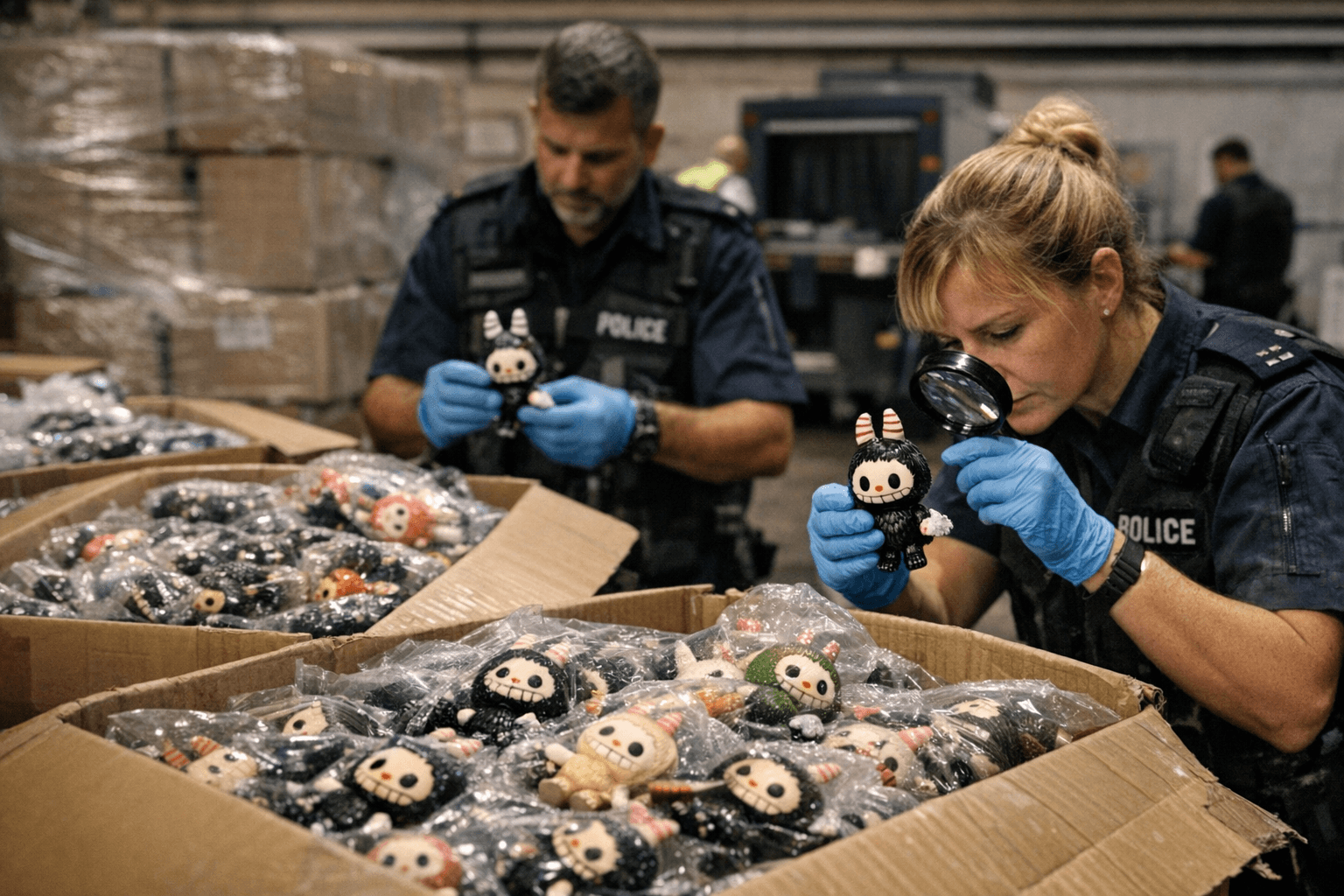
Safety concerns cited by officials include small detachable parts that create choking risks, paints and plastics that may contain harmful chemicals, and electrical components that do not meet wiring and insulation standards. These issues are not limited to adults who collect figures, they directly affect households where toys are handed to children.
Buyers who suspect they have purchased counterfeit or unsafe dolls can seek refunds through the seller or platform used for the purchase, and report the item to consumer protection authorities or platform safety teams. Keep receipts and photographic evidence of the item and its packaging, and remove unsafe toys from circulation at home.
For the collecting community the lesson is clear. Verify sources before buying, prioritize items from authorised sellers, and treat unusually low prices as a red flag. Doing so protects personal safety and helps reduce demand for counterfeit goods that can harm communities and bankroll criminal networks.
Sources:
Know something we missed? Have a correction or additional information?
Submit a Tip