New TOYSEZ forensic guide sharpens Labubu V4 authenticity checks
TOYSEZ’s TAL authentication lab published a detailed forensic "Real vs Fake" master guide for the Labubu V4 (Pin for Love) series on January 7, 2026, laying out the most reliable anti-counterfeit checks across box artwork, physical stamps and material cues. The guide gives collectors, resellers and marketplace buyers a practical, tiered checklist to spot sophisticated fakes and protect resale value.

On January 7, 2026 TOYSEZ’s TAL authentication lab released a comprehensive forensic guide aimed at helping the Labubu community distinguish authentic Labubu V4 Pin for Love figures from counterfeits. The guide focuses on the combination of box artwork, molded stamps and material finishes as its primary verification layers, responding to an uptick in counterfeit sophistication that has complicated sealed blind box purchases and open-unit trades.
The guide’s first and most accessible checkpoint is the outer box and artwork. Verify the typography and kerning of the POP MART logo, look for a distinct blue shadow block near hairlines in the artwork layers, and confirm consistent regulatory icon placement. Many fake boxes fail at print quality and layered artwork, so these visual cues are high-value first checks for sealed units or listings with photos.
Foot stamps and mold marks are presented as a high-confidence physical indicator. Authentic Labubu V4 dolls have a deep, precisely embossed foot stamp with a noticeable gap between specific letters, notably between the "C" and "K" in the copyright stamp. Shallow, misaligned or smeared stamps are red flags that warrant further scrutiny.
Care labels and materials form the third tier of checks. Genuine labels show a woven grid texture and higher-quality stitching, while replicas often use smooth, flat ribbons. The guide stresses touch and feel as a reliable test when paired with visual inspection, especially for opened units where box cues are unavailable.
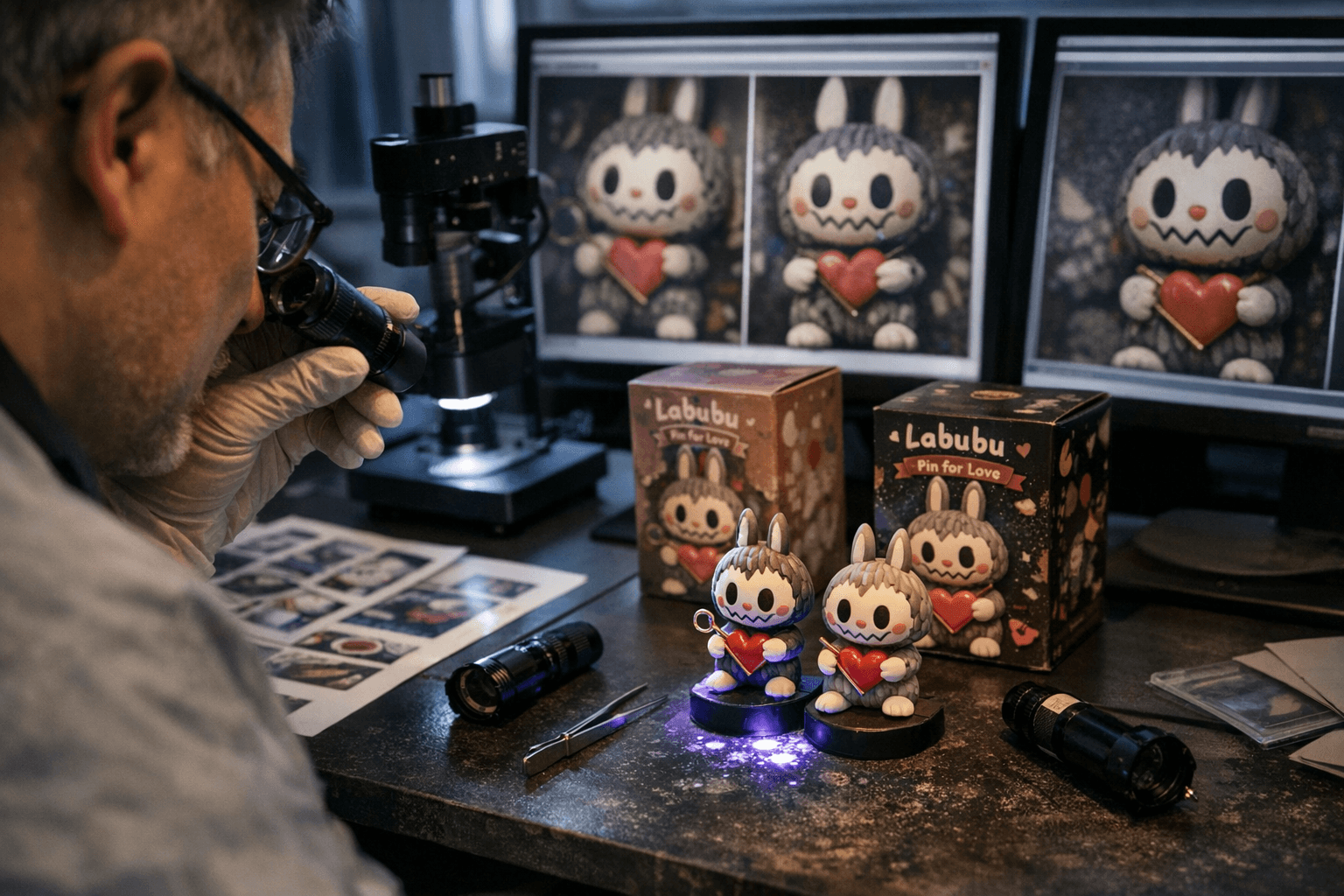
Surface finish and facial detail complete the recommended sequence. Authentic figures typically display a refined matte finish with dense hairline plush. Counterfeit units may show an oily sheen, a receding hairline, or paint bleeding around small facial features. These tactile and close-up visual differences help resolve borderline cases after box and stamp checks.
TOYSEZ’s TAL recommends a tiered approach: start with outer box typography and artwork layers, then verify the foot stamp and care label, and finish with a material and finish check. If any single high-confidence marker fails — for example incorrect logo kerning or a missing embossed stamp — treat the item as suspect and seek a refund or further verification.
The practical value for the Labubu community is immediate. Use these layered checks to vet listings on eBay, local marketplaces and buy/swap groups before paying resell premiums, and apply the sequence when inspecting sealed blind boxes or opened figures. Standardizing these checks should reduce false positives and false negatives and make buying and selling safer across the community.
Sources:
Know something we missed? Have a correction or additional information?
Submit a Tip