Buncombe Offers Free Radon Test Kits for Residents This January
On Jan. 8, the Asheville-Buncombe Air Quality Agency and Buncombe County Environmental Health began distributing a limited number of free short-term radon test kits to local residents during National Radon Action Month. Testing identifies invisible, odorless radon that can raise lung cancer risk, and the agencies say prompt testing and mitigation are a practical step to protect households across the county.

On Jan. 8, Asheville-Buncombe Air Quality Agency and Buncombe County Environmental Health encouraged residents to test their homes for radon and began offering a limited supply of free short-term radon test kits. Kits are available for pickup at Buncombe County Environmental Health, 35 Woodfin Street in Asheville, Monday through Friday from 8 a.m. to 5 p.m. The distribution is limited to one kit per household and two per person.
Radon is a naturally occurring radioactive gas that is invisible, odorless and tasteless. It escapes from the ground into outdoor air without harm but can accumulate to dangerous levels inside homes and buildings. The Environmental Protection Agency and the U.S. Surgeon General recommend taking action to fix a home if radon levels reach 4 picocuries per liter (pCi/L) or higher. Testing is the only way to know whether a home has elevated radon.
Public health officials stress that radon is the second leading cause of lung cancer in the United States after smoking and the leading cause among people who have never smoked. For Buncombe County residents, that means a simple short-term test can identify a hidden risk that has long-term consequences for family health. Officials note that most homes can be fixed for about the same cost as other common home repairs, making mitigation a practical investment in household safety and property value.
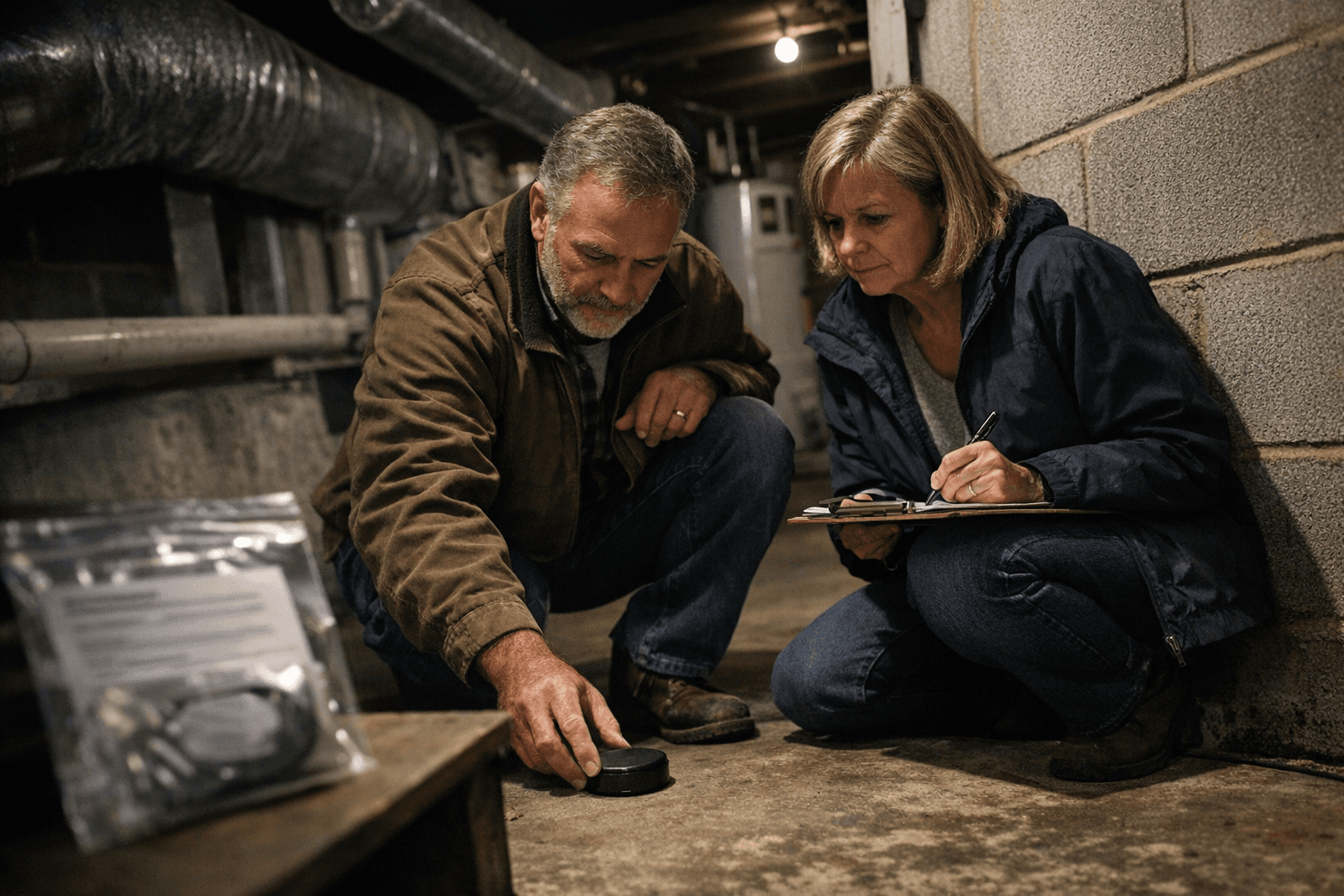
Residents who cannot obtain a free kit at the county office can request short-term kits through the North Carolina Radon Program, purchase them online for as little as $12.95, or find them at many home improvement and hardware stores. The agencies also point to EPA radon resources and the North Carolina Radon Program for additional information about testing, interpreting results and options for mitigation.
The limited supply of free kits highlights a broader equity concern: households with lower incomes, renters and older homes may face both greater exposure risk and barriers to testing and mitigation. Public health advocates say outreach during National Radon Action Month is intended to raise awareness, prompt action and connect residents with affordable testing options. For families in Buncombe County, testing during January offers a low-cost first step toward reducing long-term cancer risk and improving indoor air quality.
Sources:
Know something we missed? Have a correction or additional information?
Submit a Tip