California Standard Requires Restaurants to Prevent Dangerous Indoor Heat
California’s Occupational Safety and Health Standards Board adopted an indoor heat illness prevention rule that requires employers to act when indoor temperatures reach 87 degrees Fahrenheit for general areas and 82 degrees for workers wearing protective clothing or exposed to radiant heat. The standard matters for Taco Bell crew and managers because it triggers new duties around hazard assessment, monitoring, training, cool down areas, and emergency response that apply to kitchens and other indoor restaurant spaces.
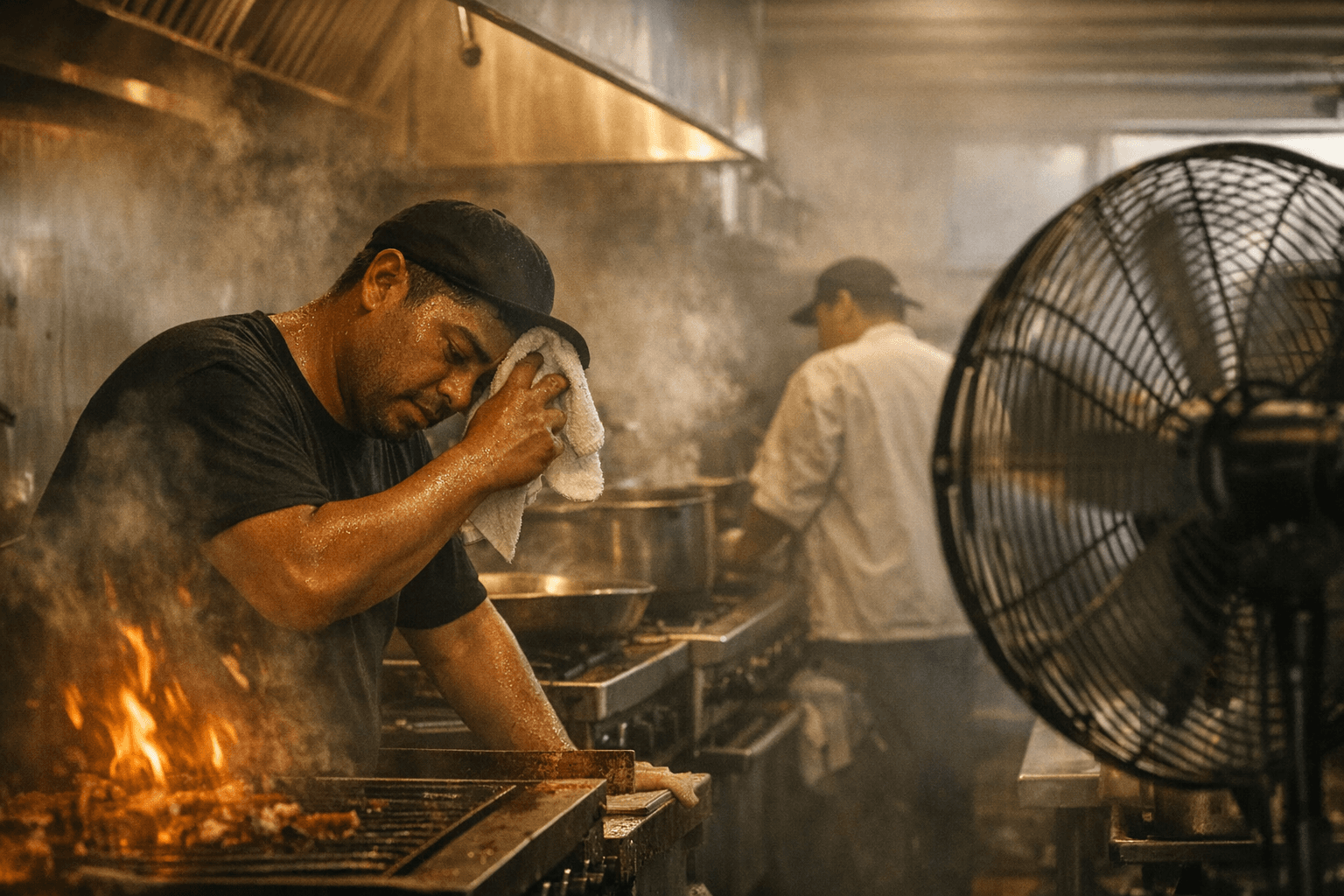
California regulators have added a new layer of protections for workers who labor in hot indoor environments, a move that directly affects fast food kitchens, warehouses, and manufacturing settings. The Occupational Safety and Health Standards Board adopted an indoor heat illness prevention regulation that sets clear temperature triggers and mandatory employer actions. For general indoor workplaces the trigger is 87 degrees Fahrenheit. For areas where workers wear protective clothing or face radiant heat exposure the trigger is 82 degrees Fahrenheit.
The rule requires employers to assess and control heat hazards, provide readily available drinking water and cool down areas, establish a written heat illness prevention plan, and train both employees and supervisors about heat risks and response procedures. Employers must also implement emergency response protocols and acclimatization measures when appropriate. Cal OSHA has produced tools to help workplaces comply and maintains a hotline and online resources for workers to report hazards and request assistance at dir.ca.gov.
For Taco Bell employees the standard codifies protections that are often raised in complaints about kitchen temperatures, HVAC failures, and mitigation measures. Managers will need to monitor ambient conditions and document steps taken to reduce heat risk. That could mean more frequent HVAC maintenance, designated cool down breaks, rotation of staff out of the hottest stations, and written training sessions covering signs of heat illness and emergency response.
The change is likely to alter workplace dynamics in both operational and labor relations terms. Workers gain a clearer basis to request mitigation and to report unsafe conditions. Supervisors gain firm obligations to act when thresholds are reached, which can reduce ambiguity but increase demands on scheduling and store logistics. Employers can face citations for noncompliance, but they also gain a framework to prevent heat related illness and reduce lost time from heat related incidents.
As summer months return, fast food chains and franchise operators in California will need to update policies and training to align with the new standard. Workers who believe their stores are exceeding the temperature thresholds can contact Cal OSHA through its online resources and hotline for guidance and to file complaints.
Sources:
Know something we missed? Have a correction or additional information?
Submit a Tip