Commission Considers Overnight Trailhead Parking Closures, Staff To Clarify
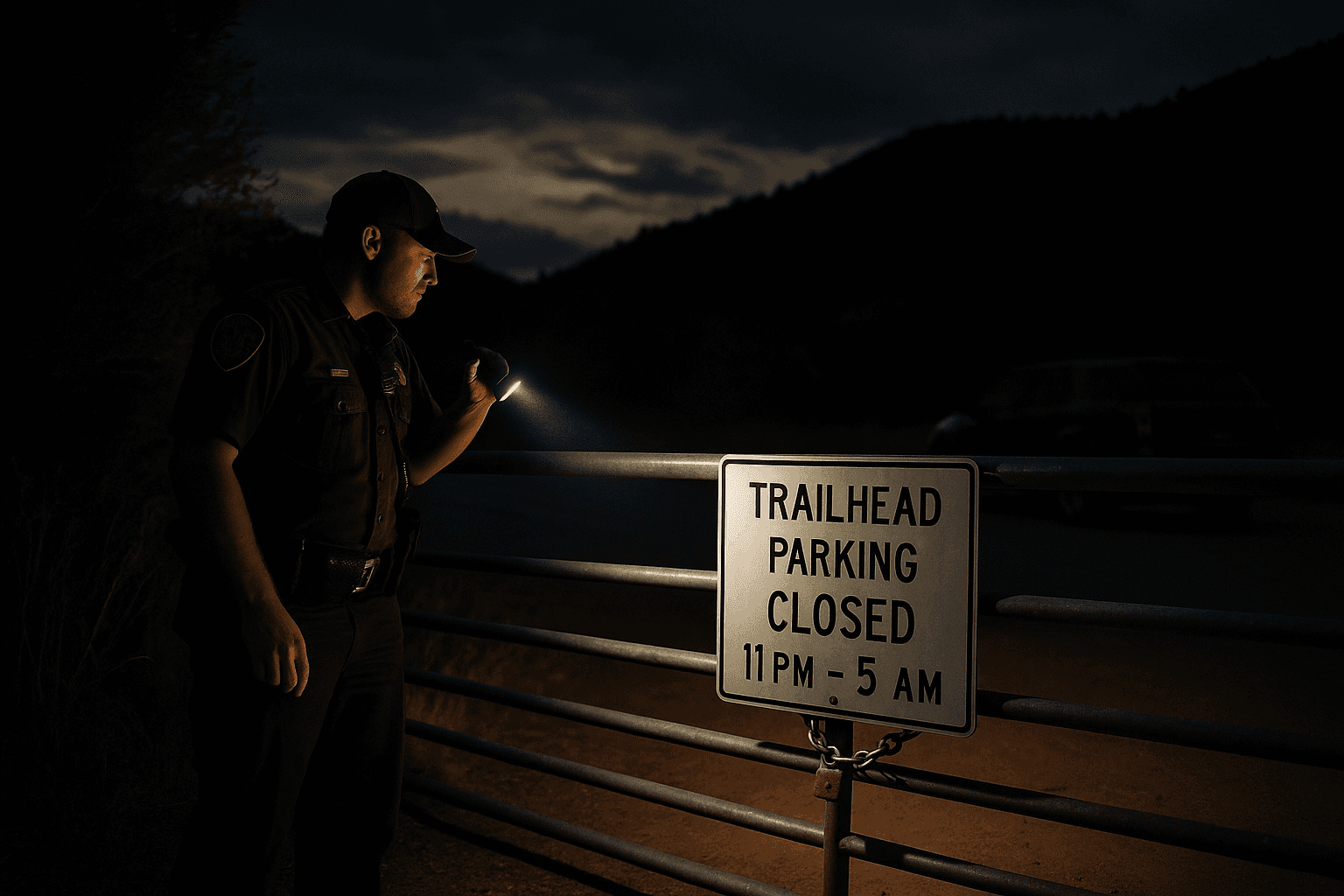
City staff asked the Commission on December 8 to consider closing several trailhead parking lots overnight, generally between 11 p.m. and 5 a.m., citing repeated vandalism and public safety concerns. The proposal affects popular access points including Beattie, Dump Gulch, Lime Kiln, Old Shooting Range, Reeder's Village and the South Hills Disc Golf course, and matters to residents who use these trails for recreation, commuting and economic activity.

City staff presented a proposal to the Commission on December 8 recommending that several trailhead parking lots be closed overnight, generally between 11 p.m. and 5 a.m. The recommendation named Beattie, Dump Gulch, Lime Kiln, Old Shooting Range, Reeder's Village and the South Hills Disc Golf course as sites affected by the proposed closures. Staff cited repeated vandalism and public safety concerns as the rationale for limiting vehicle access during late night hours.
Commissioners did not take a formal vote at the meeting. Instead they asked staff to refine the draft language so trail users are reassured the closures would not prevent access to the trails themselves. Staff will return to the Commission with clarified language and implementation details before any final action is taken.
The proposal sits at the intersection of public safety policy, municipal enforcement and outdoor recreation access. Closing parking lots overnight aims to reduce property damage and deter illegal activity at trailheads, but it also raises practical questions about who would be affected and how enforcement would be carried out. Early morning and late night users, including shift workers, dog owners and athletes who rely on vehicle access outside conventional hours, could see their routines altered. The proposal would need clear exemptions or signage to avoid unintentionally restricting pedestrian access to trails.
Financial and operational considerations will shape the final plan. The city will need to specify enforcement methods, signage, hours of operation and how closures will be communicated to the public. Commissioners will also need to weigh costs associated with enforcement and potential partnerships with local volunteer groups, parks staff and law enforcement to ensure closures both address safety concerns and preserve equitable access to public lands.
For residents, the next opportunities to influence the outcome will come when staff returns with revised language and implementation plans. The issue underscores the importance of transparent policy drafting and public engagement whenever municipal measures affect access to outdoor resources and daily routines.
Sources:
Know something we missed? Have a correction or additional information?
Submit a Tip