County awards $53,196 for nonlethal wolf-defense to four producers
Union County commissioners approved $53,196 in ODA funds to expand nonlethal wolf-defense measures for four ranches, helping reduce livestock losses and local conflict. This matters because limited funds will shape how producers protect herds and how the county manages wolf-livestock tensions.

Union County commissioners voted Jan. 7 to award $53,196 in Oregon Department of Agriculture funds to four local livestock producers to support nonlethal wolf-defense measures. The county’s Wolf Depredation Committee reviewed applications and recommended how to distribute the limited pool; the program was about $7,000 short of covering applicants’ full requests, so awards were reduced proportionally.
Awards were allocated as follows: Mike Becker received $28,137.27, Eric Harlow $12,148.55, Cameron Krebs $9,677.04 and Colby Thompson $3,233.45. Proposed uses reported to the county include expanded range rider patrol days and aircraft support to spot cattle patterns on Becker’s operation; extra herder wages and additional livestock protection dogs for Harlow and Krebs; and fencing costs and range riders for Krebs and Thompson. County administrative staff and commissioners said they aimed to be fair in allocating the reduced funds and noted producers plan to use the grants to implement or expand methods designed to reduce wolf-livestock conflicts.
The funding is aimed at prevention methods that can lower depredation risk without lethal control. Range riders, livestock protection dogs, temporary or permanent fencing, paid herders and aerial monitoring are commonly used tools that can shift grazing behavior, improve response times to predator activity and reduce the chance of lost animals. For producers in Union County, even modest grants can cover critical up-front costs such as dog procurement, herder wages for the peak grazing season or stretches of new fencing, but they rarely finance full-scale projects.
The program’s shortfall highlights the gap between demand for nonlethal tools and available public funds. With the awards reduced proportionally, some producers will likely prioritize immediate, high-impact measures over broader investments. That prioritization shapes outcomes on the ground and may affect future requests for county or state support. It also factors into local debates about predator management, livestock insurance claims and the long-term economics of grazing in wolf country.
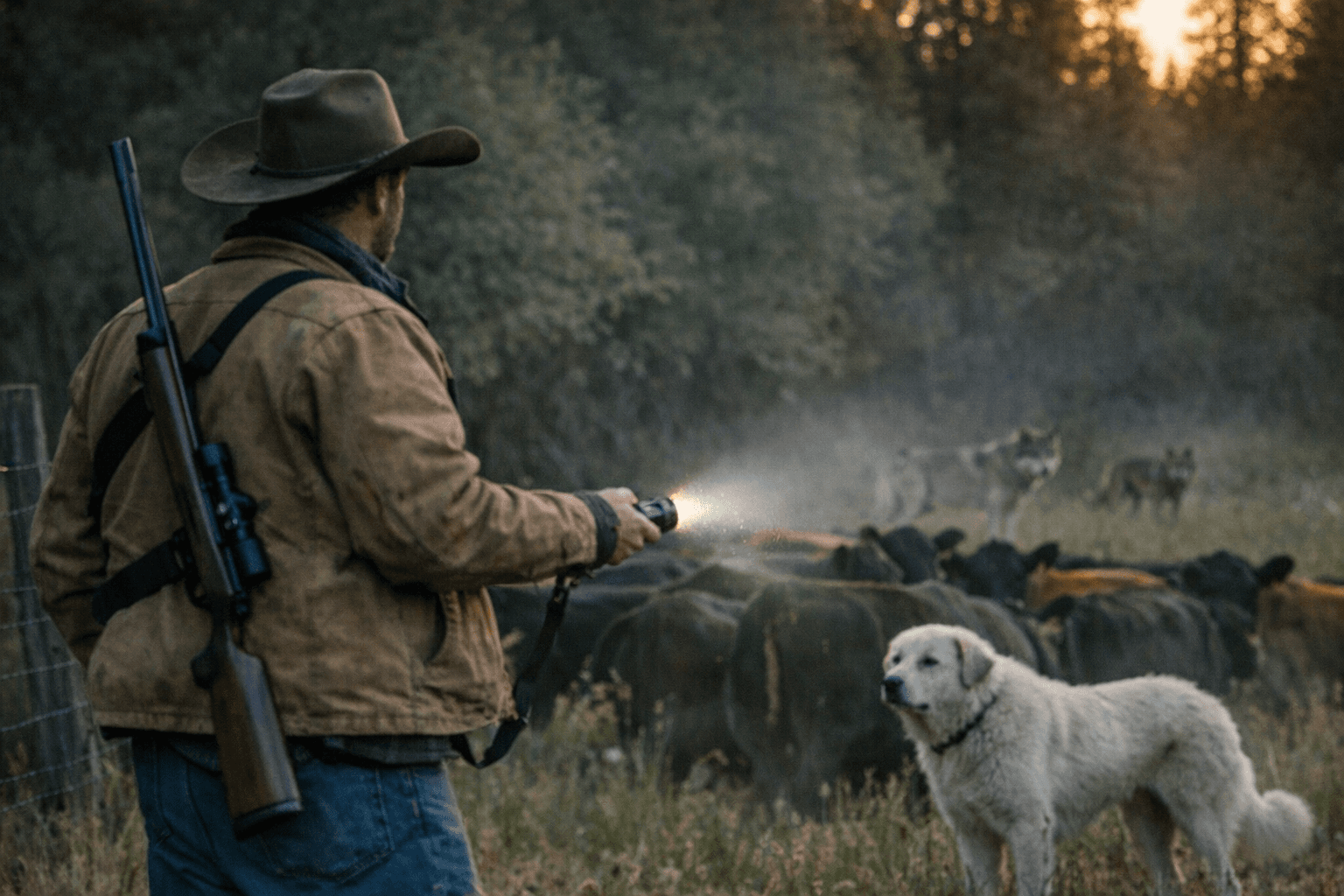
For the broader community, the decision signals county-level engagement with practical prevention measures rather than only reactive responses after depredations occur. It also underscores the role of the Wolf Depredation Committee as a gatekeeper for scarce mitigation dollars and the importance of transparent allocation criteria as funding remains limited.
Our two cents? Producers should document outcomes and costs so the county and ODA can track what works; neighbors and landowners should stay engaged at commission and committee meetings so limited mitigation dollars reflect on-the-ground needs and priorities.
Sources:
Know something we missed? Have a correction or additional information?
Submit a Tip