Crane collapse on Thai passenger train kills at least 31
A construction crane fell onto a moving train in Nakhon Ratchasima, killing at least 31 and injuring 64; an investigation into the high-speed rail project has been ordered.
%3Amax_bytes(150000)%3Astrip_icc()%3Afocal(697x469%3A699x471)%2Fcrane-collapse-train-thailand-011426-3-b77e26e77e53404182c7635c57c5a90b.jpg&w=1920&q=75)
A construction crane working on an elevated segment of a major high-speed rail project collapsed onto a moving passenger train in Sikhio district, Nakhon Ratchasima province on Wednesday morning, killing at least 31 people and injuring 64, Thai authorities said. The crane struck multiple carriages, derailing the train and sparking a brief but intense fire that has since been extinguished as rescuers continued searching wreckage for survivors.
The Bangkok to Ubon Ratchathani service was carrying 195 people when the accident occurred at about 9:00 a.m., Transport Minister Piphat Ratchakitprakan said. Provincial police, local rescuers and public health teams led the initial response, extracting injured passengers and working through damaged carriages. Officials cautioned that casualty figures evolved rapidly during the morning as crews accessed more of the wreckage; earlier on-scene counts had ranged from single digits to double-digit fatalities before the Health Ministry released the latest toll.
The collapsed crane was part of an ambitious Thai-Chinese high-speed rail project intended to link Bangkok with Nong Khai and beyond, a two-stage program with a total investment cost cited at more than 520 billion baht, roughly $16.8 billion. Investigators have not yet publicly determined the cause of the collapse. The transport minister ordered a formal inquiry into the accident, and police and provincial officials said the investigation will examine whether construction procedures, equipment failures or safety oversight contributed to the collapse.
Beyond the immediate human tragedy, the incident threatens to deepen skepticism about the execution and oversight of large infrastructure projects in Thailand, and to add financial pressure to a project already under close scrutiny. The scale of the investment means delays or major remedial work could carry material budgetary consequences for both Thai authorities and foreign partners, raising the risk of cost overruns, higher insurance claims and contract disputes. Contractors tied to the project face reputational damage that may affect future bidding and financing terms, while insurers and lenders will be watching early investigative findings for indications of systemic safety failures.
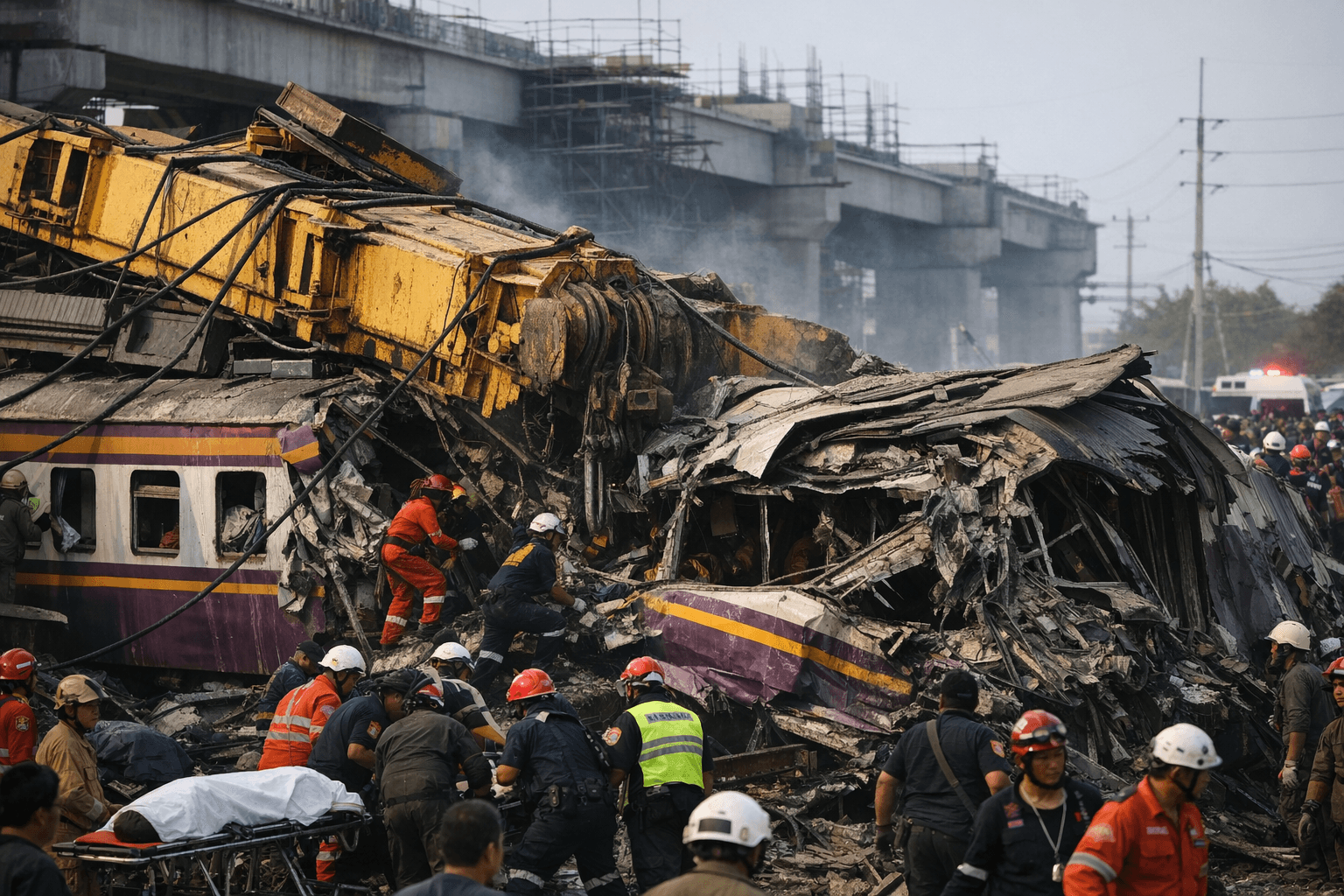
The accident revives memory of a prior fatal collapse on the same planned route in August 2024, when a tunnel segment in Nakhon Ratchasima collapsed during heavy rainfall and killed three workers. That earlier event had prompted calls for stronger safety standards and closer oversight of construction on the line. Wednesday’s crash is likely to intensify regulatory scrutiny, prompt comprehensive safety audits across active sites and could slow progress as authorities demand more rigorous inspections and certification.
Local economic effects are immediate and tangible. Rail service disruptions will ripple through regional mobility for commuters and freight, and the region faces short term strains on medical and emergency resources. In the longer term, any pause or redesign of project elements could shift procurement schedules and employment patterns in construction, with knock-on effects for suppliers and contractors in related sectors.
Rescue teams continued to comb the derailed carriages as investigators prepared to begin a technical examination of the collapsed crane and supporting infrastructure. Authorities warned the casualty count could be revised further as recovery operations proceed and the inquiry into responsibility and safety practices advances.
Know something we missed? Have a correction or additional information?
Submit a Tip