Dark Web Sells Verified Identities, Banks and Fintechs at Risk
Analysts at AMLTRIX reviewed 25 dark web markets and found a booming trade in ready made identity packages that can defeat common biometric checks, sometimes for as little as $30. The findings matter because those identities can be used to open bank accounts, crypto wallets, and payment profiles that funnel money through legitimate systems before fraud is detected.
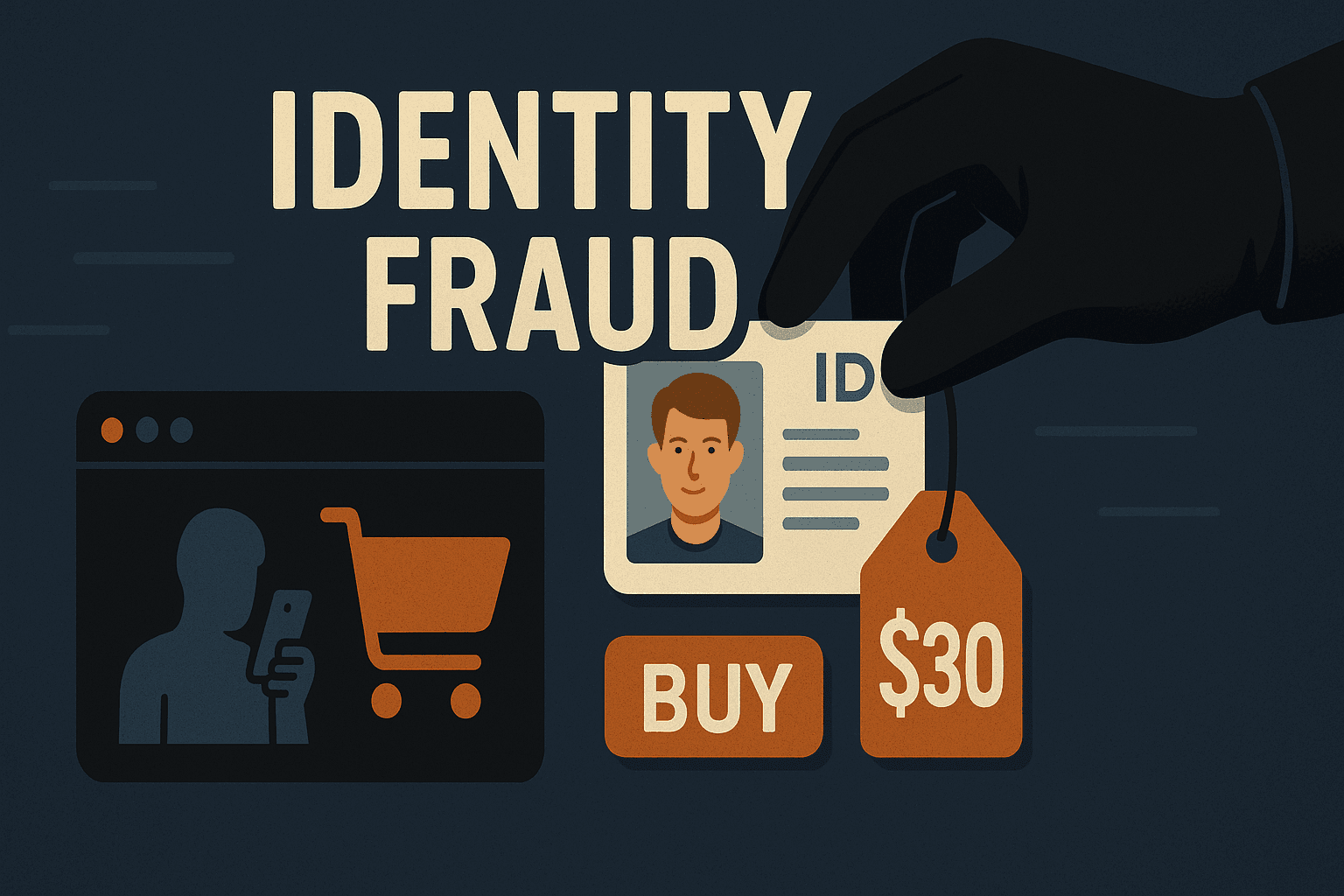
A five day review by analysts at AMLTRIX found that dark web marketplaces and forums are selling full identity packages that make bypassing Know Your Customer checks cheaper and easier than many organisations assume. AMLTRIX reviewed 25 prominent venues from 28 November to 2 December 2025 and documented offerings that include high resolution ID scans, matching selfies, and dossiers of personal data that fraudsters use to create mule accounts and launder funds.
Pricing in the markets tracked by AMLTRIX shows a clear economy. Raw profile data can cost roughly $30, while more polished, verified online accounts command $200 to $400. Country profiles vary in price according to perceived onboarding difficulty, with US profiles listed at $45 to $100, Polish and Danish profiles at $30 to $40, UK profiles at $30 to $35, and Russian French and Australian profiles at $20 to $30. High ticket physical documents appear as well, with listings such as an Irish passport offered for $2,500 and a UK frequent traveller passport for $2,600, though analysts warn many of those listings are scams aimed at other criminals.
AMLTRIX argues the trade is industrialised. "A full identity pack with ID scan and selfie is now cheap enough and accessible for criminals to buy in bulk, and if that is not enough, the dark web offers other, more reliable, although more expensive options," says AMLTRIX co founder Gabrielius Erikas Bilkštys. The group frames identity abuse as a central enabler of organised fraud, pointing out that "bank accounts are commonly registered to fake, stolen, or borrowed identities," a practice that turns a stolen identity into a renewable asset rather than a one time payoff.
For communities and consumers the danger is practical and personal. Victims may not notice misuse until debt collectors or investigators contact them, and being tied to mule accounts can draw law enforcement scrutiny in addition to credit damage. From an institutional perspective AMLTRIX says collecting more documents will not solve the problem. Organisations need systems that assess whether an identity remains plausible over time and detect behavioral patterns indicative of coordinated criminal control rather than genuine account use.
"Many organisations still think of the dark web as a distant, exotic threat," Bilkštys adds. "In reality, it is tightly connected to everyday phishing campaigns, large data breaches, account takeovers, and money laundering cases that compliance teams are already dealing with." Verify accounts through behavioral signals, monitor for repeated use of the same identity across platforms, and notify consumers promptly when suspicious onboarding activity appears, because the market lowering the cost of entry also raises the stakes for everyone.
Know something we missed? Have a correction or additional information?
Submit a Tip

