DEQ study finds little change in Lake Coeur d’Alene metal levels over 25 years
A DEQ study found lead and arsenic in lake and river sediments remain similar to 1998 levels; open water poses low health risk, but some nearshore sites exceed screening levels.
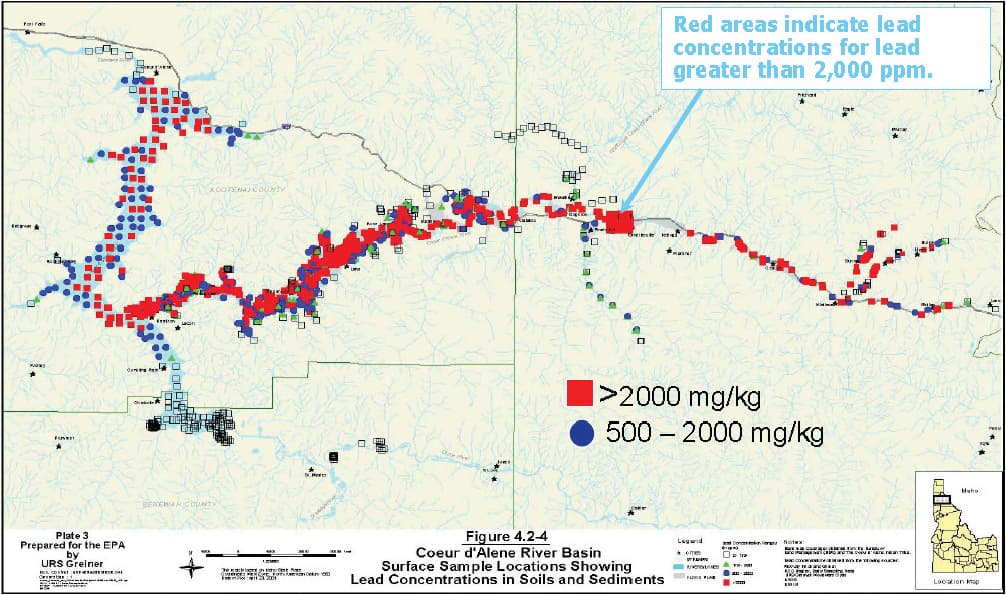
A new Idaho Department of Environmental Quality study presented in Coeur d’Alene found that lead and arsenic concentrations in sediments and recreational waters along Lake Coeur d’Alene and the Spokane River have changed little in the past 25 years, and open water levels are unlikely to pose unacceptable health risks.
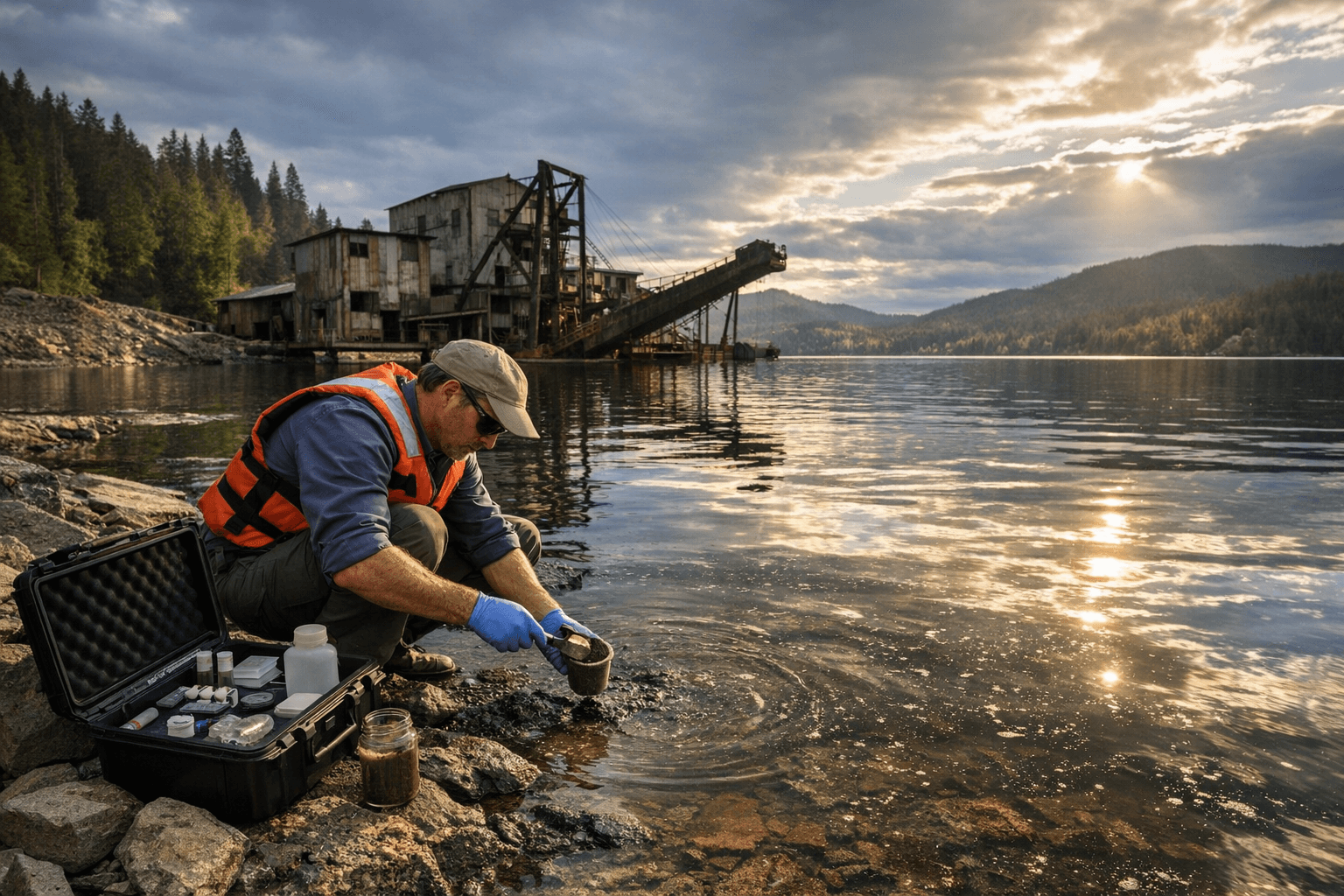
DEQ scientists sampled 32 locations in 2024, collecting dry sediment, wet sediment, nearshore water, open water and upland soil at sites that are largely publicly accessible; eight sampling locations are privately owned. Analysts compared results to risk-based screening levels, or RBSLs, which are set using current EPA information on chemical health effects together with specified exposure circumstances.
“With our open water samples, none of the samples were greater than the screening levels for any of the chemicals,” said Mara Thorhaug, an environmental health scientist. She added, “For near-shore surface water samples, we found that some sample areas were greater than the screening levels for arsenic and some were for lead, but none of the other chemicals.”
All sediment and soil sample areas exceeded arsenic screening values, a result DEQ leaders linked in part to an EPA update last year that set a significantly lower RBSL for arsenic. “Like lead, there’s no known need for arsenic in our bodies,” Thorhaug said. “The science supports a lower toxicity value.” Thorhaug also noted the region has higher naturally occurring arsenic than some other locales and that, overall, “What we found was the lead and arsenic concentrations in 2024 are actually very similar to those that we found in 1998.”
The risk evaluation also considered maximum contaminant levels for drinking water and target blood levels. With those factors, DEQ reported 11 sites exceeded arsenic screening levels: Corbin Park, Cheamkwet Park, Atlas Waterfront Park, Blackwell Island, Yap-Keehn-Um Beach, Boardwalk Public Beach, Sanders Beach West, Higgens Point Day Use, Q’emiln Park and two privately owned locations. DEQ emphasized that these exceedances are far lower than the Bunker Hill Superfund action levels of 100 milligrams per kilogram for arsenic and 700 milligrams per kilogram for lead, with officials saying the sites were “well below” those action thresholds.
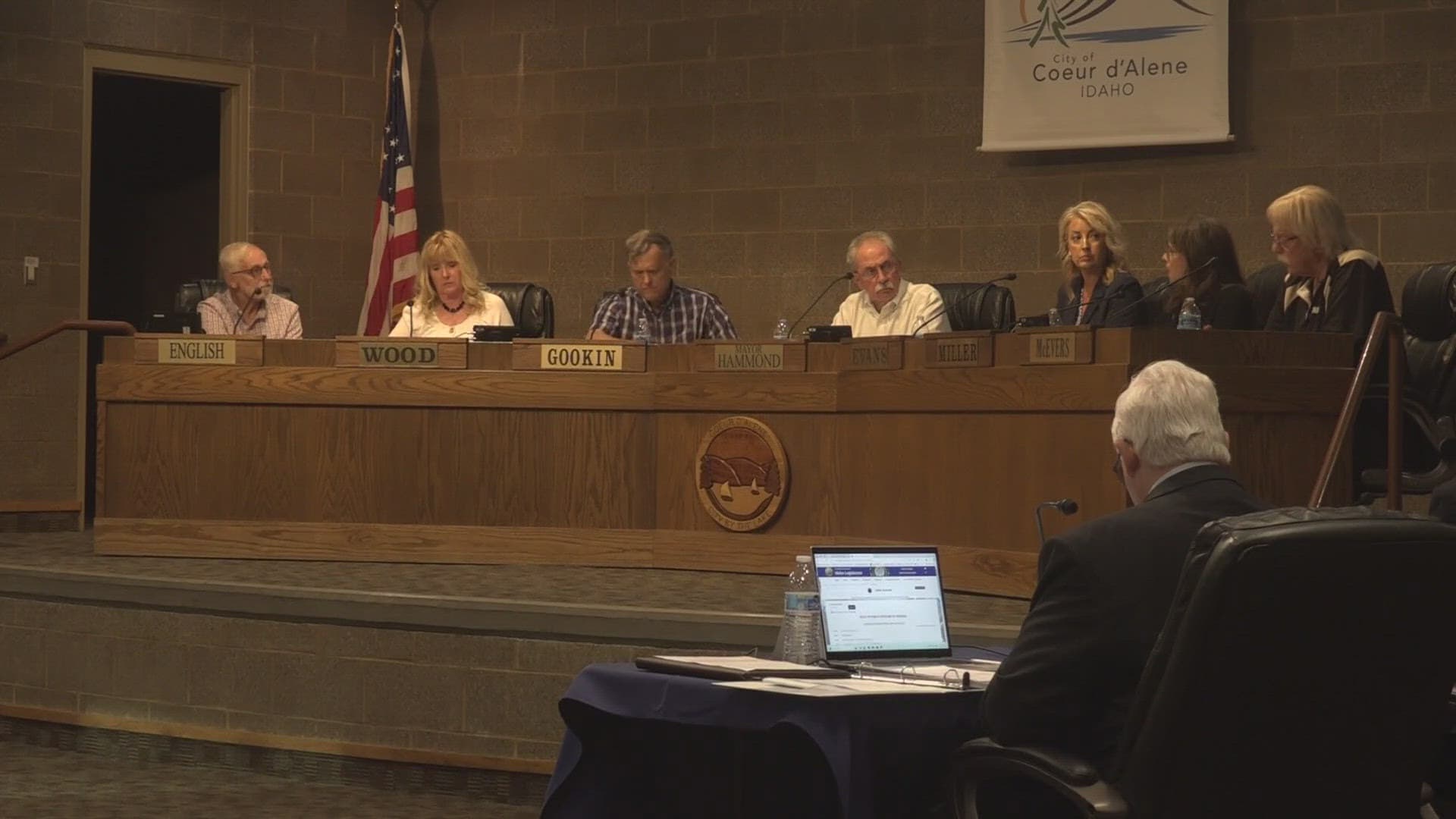
Local officials, agency staff and community managers heard the findings at a 4C Natural Resources Committee meeting in downtown Coeur d’Alene. Haley McDaniel, senior water quality analyst with DEQ, framed the results as broadly reassuring for recreational users: “I think we should be very pleased with these results.” She added, “When it comes to these concentrations, I would have zero problem with my kids playing in any one of these areas,” and urged parents and caregivers to “adhere to safe play practices.”
DEQ plans to publish the full findings on its website within the month, which will provide the detailed data sets and site-specific analyses that local parks managers, contractors and residents can use for decisions about maintenance, public messaging and worker protections.
Our two cents? Treat this as good news with a practical edge: keep enjoying the lake and river, but follow common-sense safe play practices—wash hands after beach time, discourage eating or digging in sediments, and clean gear and pets after outings—until the DEQ posts its full report and local managers update site guidance.
Sources:
Know something we missed? Have a correction or additional information?
Submit a Tip