Developer sues after county denies Holtsville battery site variance
Savion Energy sued after Suffolk County denied a variance for a Holtsville lithium battery storage project; the dispute raises local safety, land-use, and oversight questions.
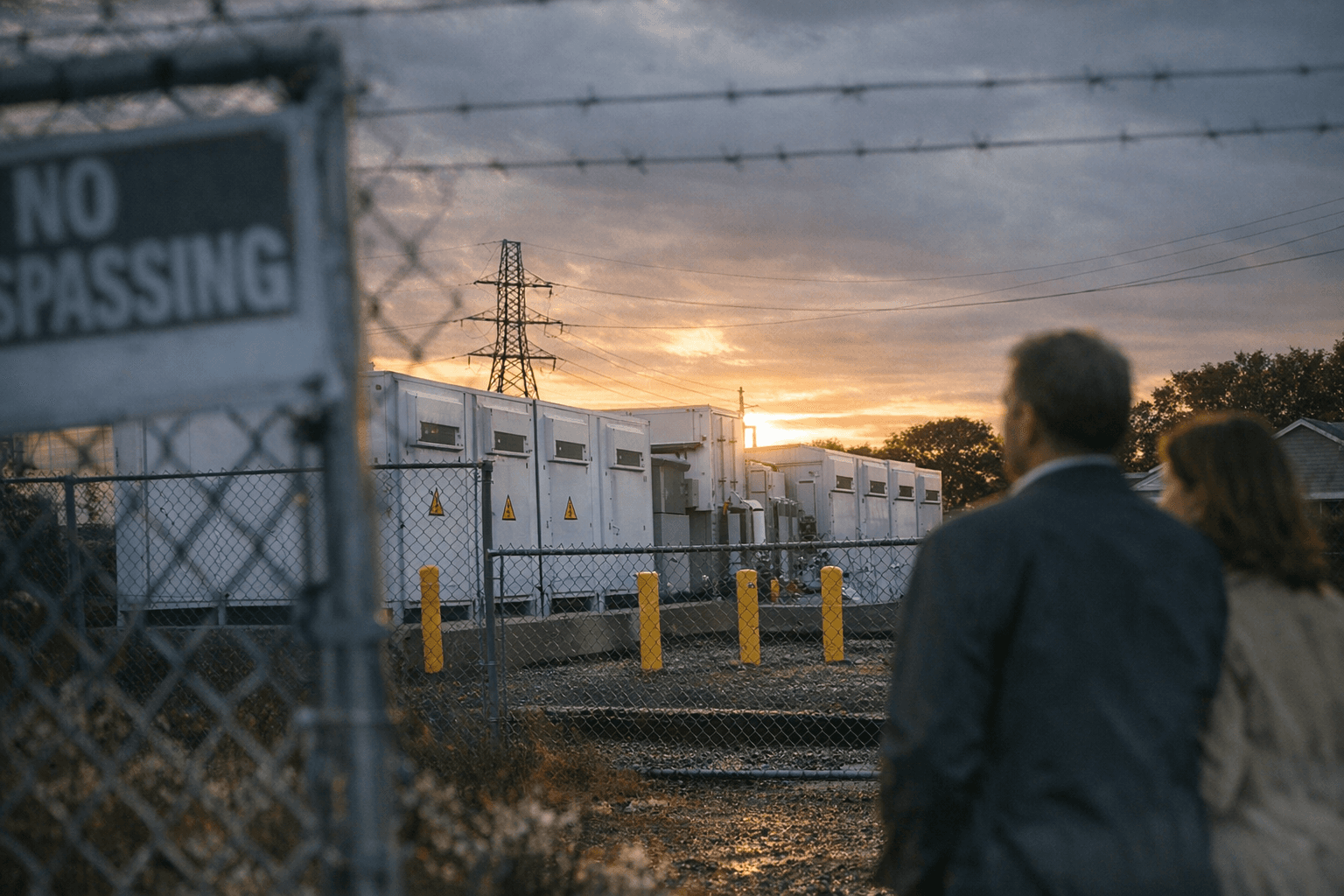
Savion Energy filed a legal challenge after a Suffolk County health services review board denied a variance for a proposed lithium battery storage project on a six-acre parcel in Holtsville. The board rejected the developer’s request to house tens of thousands of gallons of petroleum distillate oil and other liquids on the site, saying the proposed storage amounts exceeded allowable limits established by county rules.
The denial shifts the fight over this project from the administrative review stage into the courts and highlights the regulatory tensions surrounding utility-scale battery storage in Suffolk County. County officials and local opponents raised concerns about the volume of flammable liquids to be stored alongside lithium battery modules, citing the board’s finding that the quantities proposed were beyond what the county permits for that zoning and site configuration.
Savion Energy’s legal filing seeks to overturn the variance denial and pursue whatever relief the court will grant. The company’s next procedural steps put questions about interim construction and permitting on pause while judges consider whether the review board correctly applied county storage limits and safety standards. For residents, the litigation process means the immediate outcome rests with the judiciary rather than local permitting bodies.
This case matters beyond a single parcel. Municipal review boards across Suffolk are increasingly confronting siting decisions for battery storage as developers propose clustered facilities that combine batteries with associated mechanical systems and fuel sources. The Holtsville denial underscores how county-level standards for combustible liquids and fire mitigation can determine whether a project goes forward. It also highlights gaps and friction points between developers seeking predictable permitting timelines and regulators prioritizing public health and emergency preparedness.
Institutionally, the dispute illuminates the role of the county health services review board as a gatekeeper for environmental and safety-related variances. The board’s enforcement of allowable storage limits signals a willingness to apply conservative thresholds on liquid fuels near battery arrays. For elected officials and county planners, the episode raises policy choices: tighten county siting rules, create clearer numeric thresholds for combined hazards, or streamline variance processes to reduce legal uncertainty.
For Holtsville neighbors, the practical impacts include concerns about emergency response capabilities, local traffic during construction, and potential property effects. For voters, the episode is a reminder that land-use and energy infrastructure decisions are shaped by local boards and enforcement choices as much as by state energy policy.
Our two cents? Track the court filings, show up at county board meetings, and ask your local lawmakers how they plan to reconcile safety rules with clean-energy goals. That engagement is where policy gets shaped and where practical protections for neighborhoods are decided.
Sources:
Know something we missed? Have a correction or additional information?
Submit a Tip