Eureka Protest Demands Accountability After Minneapolis ICE Shooting
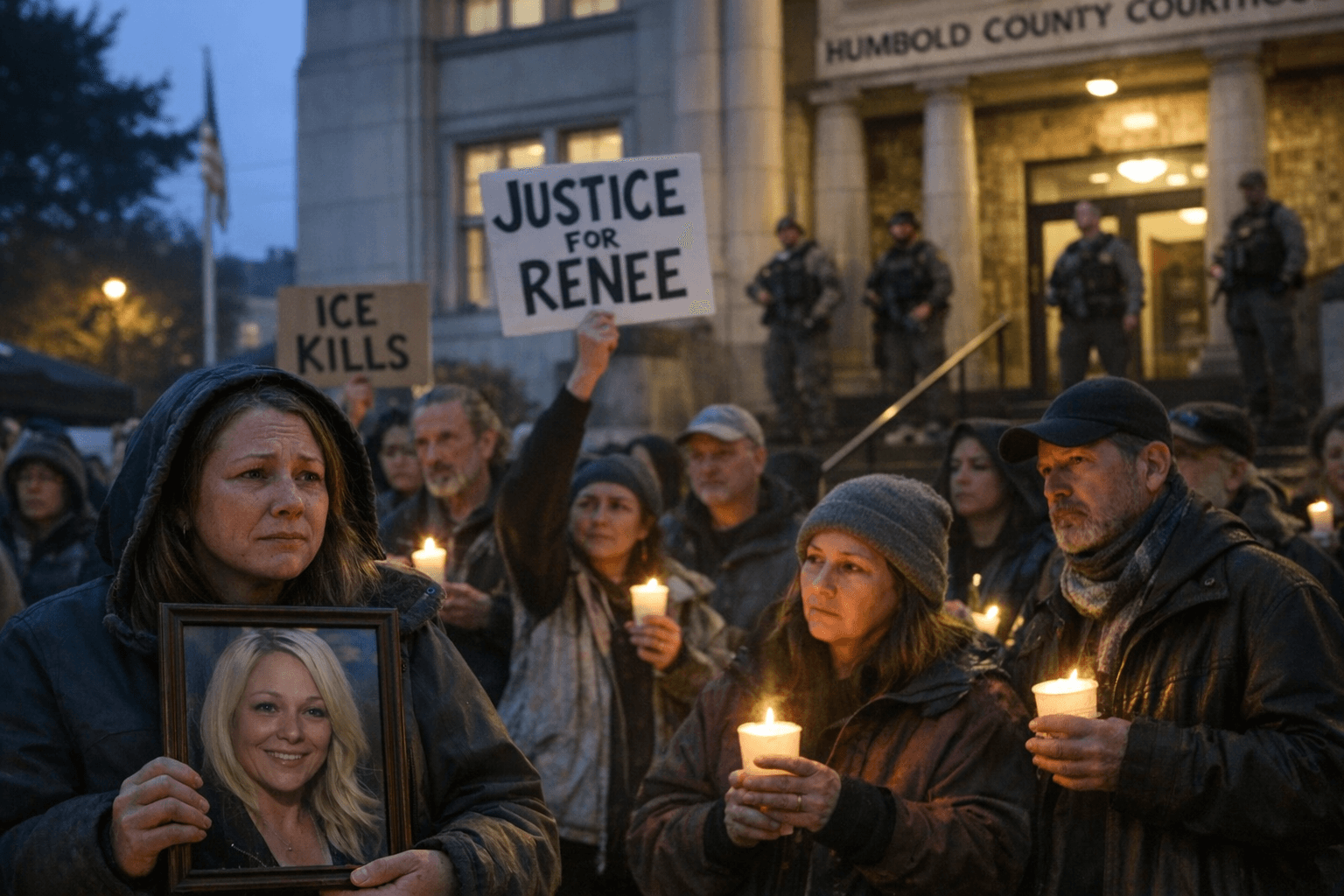
Roughly 200 people gathered in front of the Humboldt County Courthouse in Eureka on Jan. 9 to protest the fatal shooting of Renee Nicole Good by an ICE officer during a federal enforcement operation in Minneapolis. The demonstration highlighted local solidarity with affected families, raised concerns about federal immigration enforcement and policing, and underscored potential public health and community impacts for immigrant residents.
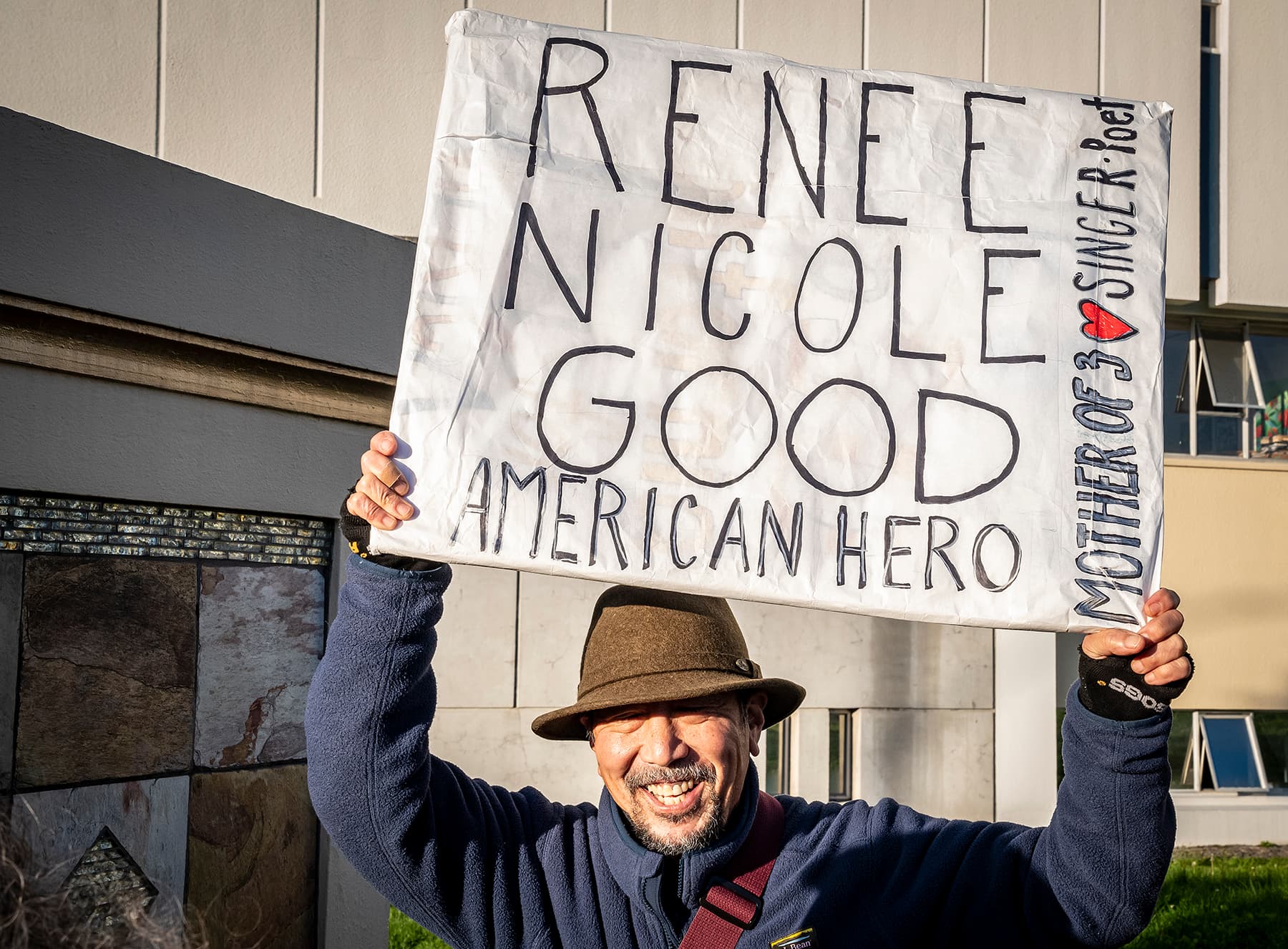
Roughly 200 people stood on the courthouse steps and sidewalks in Eureka on Jan. 9, filling the plaza with signs, speeches and music to protest the deadly shooting of Renee Nicole Good by an ICE officer during a federal enforcement operation in Minneapolis. Organizers and attendees tied the incident to broader concerns about immigration enforcement and policing, and they called for accountability and systemic changes in federal practices.
The crowd included a mix of long-time activists, family members of immigrants, and community allies. Musicians, including the Raging Grannies, performed as speakers described the impact of the Minneapolis killing on families and communities nationwide. Photographer Mark Larson captured images of people holding hand-lettered signs, chanting, and linking arms as passing cars repeatedly honked in visible support.
Protesters framed the event as both a demand for justice in an individual case and a critique of federal enforcement tactics that they say disproportionately harm immigrant communities. Organizers emphasized solidarity with Minneapolis families and stressed that the consequences of aggressive enforcement extend far beyond law enforcement interactions, affecting daily life in Humboldt County for undocumented residents and mixed-status families.
Public health practitioners and community advocates say those consequences can include reduced willingness to seek medical care, avoidable delays in accessing mental health services, and a chilling effect on participation in public health programs. In communities where fear of enforcement is high, people may hesitate to visit clinics, enroll children in school-based health programs, or engage with contact tracing and vaccination efforts. Local leaders and service providers have long warned that trust is essential to effective public health work, and events like this reinforce the need for policies that protect access to care for all residents.
The demonstration also highlighted broader questions about how federal enforcement intersects with local priorities. Attendees urged policymakers to consider the downstream effects of enforcement on community wellbeing, including housing stability, access to medical and behavioral health services, and family unity. For Humboldt County, those concerns translate into an urgent local discussion about how to balance public safety, civil rights, and health equity.
The protest remained peaceful throughout the afternoon, with a steady stream of honking from motorists signaling wider public attention. Images from the scene documented not only the size of the turnout but also the emotional tenor of the gathering: grief and anger alongside community solidarity and calls for institutional change. As the national conversation around immigration enforcement continues, Humboldt County residents and service providers say they will be watching for policy responses that address both accountability and the public health implications for vulnerable populations.
Sources:
Know something we missed? Have a correction or additional information?
Submit a Tip