Local Food Not Bombs Chapters Serve Rising Need Amid SNAP Changes
On Jan. 8, 2026, volunteer chapters of Food Not Bombs in Arcata and Eureka carried out their regular weekly food distributions, providing prepared meals and donated produce to hundreds of neighbors. The efforts highlight how grassroots mutual aid is filling gaps as changes to EBT benefits and broader economic pressures increase food insecurity across Humboldt County.

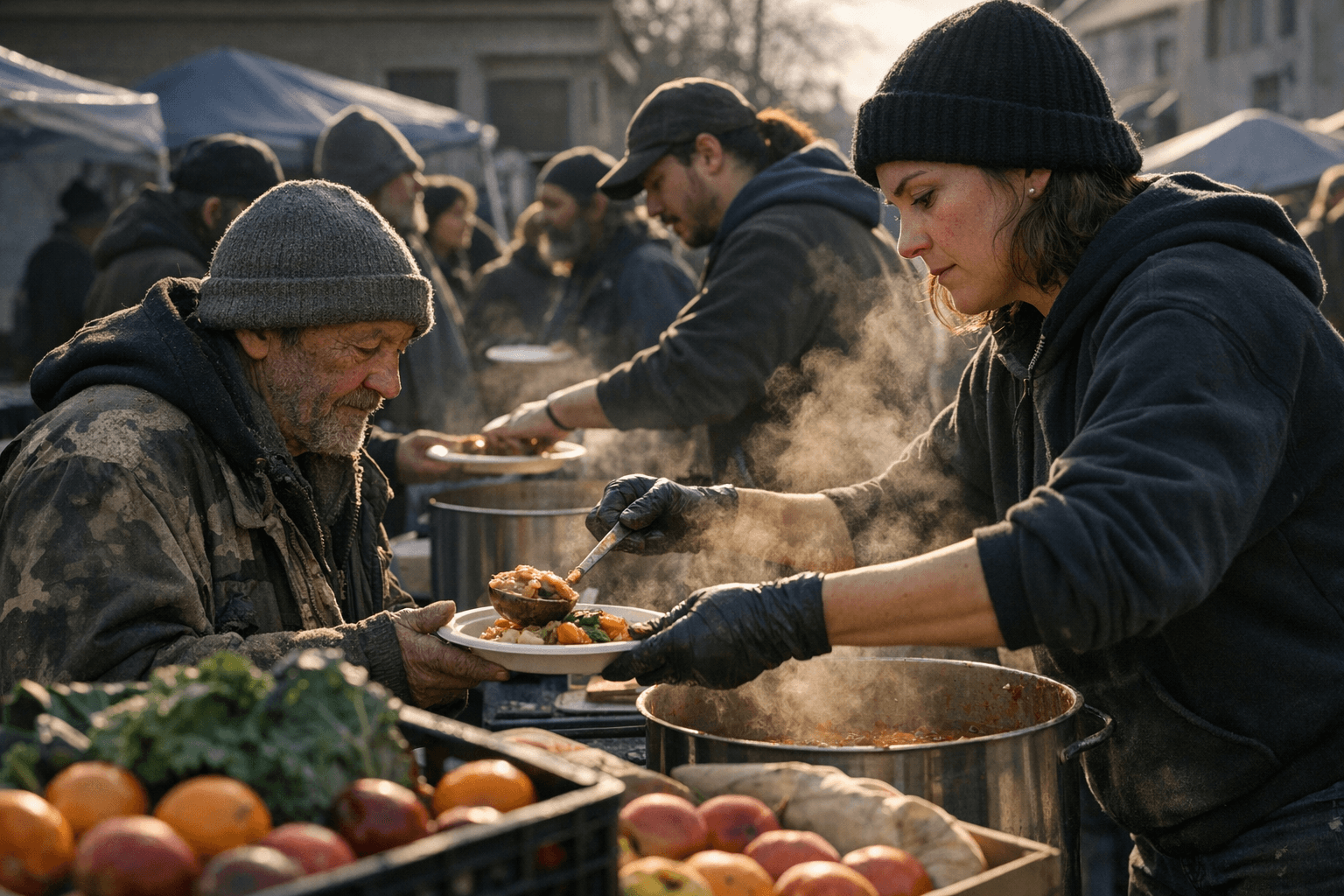
On Jan. 8, volunteer-run Food Not Bombs chapters in Arcata and Eureka set up their weekly kitchens and distribution lines, handing out meals and boxes of donated produce to people facing food insecurity. The two chapters operate on a model of unconditional service: no registration, no questions asked, and volunteers work on rotating kitchen shifts to prepare and distribute food sourced from community donations.
Volunteers said they rely heavily on unsold produce and other donations from local markets and businesses to stock their tables. That sourcing keeps edible food from going to waste while supplying nutrient-rich options that are often missing from emergency food distributions. Kitchen teams rotate through preparation shifts, organizing menus, portioning meals, and coordinating logistics to manage evolving crowd dynamics and ensure steady flow at distribution sites.
Demand has risen in recent weeks. Volunteers and recipients described longer lines and increased reliance on the weekly meals after changes to EBT benefits and ongoing economic strain pushed more households into precarious situations. For many people the Food Not Bombs distributions have become an essential backstop during winter months when costs for housing, utilities, and groceries spike together.
The chapters’ approach embodies mutual aid principles: neighbors supporting neighbors outside formal charity structures or government bureaucracy. This model reduces access barriers for unhoused people, those with unstable incomes, and residents who face stigma or administrative hurdles when seeking assistance. At the same time, the steady need on the ground points to broader policy shortcomings in the county and state systems intended to prevent hunger.
Public health implications are immediate and practical. Regular access to cooked meals and fresh produce can reduce the acute risks associated with food scarcity, help mitigate nutrition-related illnesses, and decrease pressure on emergency services. Volunteers work to maintain food safety and orderly distribution, but sustained demand underscores the need for systemic responses that expand food security through stable income supports and affordable housing.
Local businesses and community members continue to play a critical role by donating surplus food and volunteering labor. While these mutual aid efforts are vital, organizers and public health advocates say they are not a substitute for policy solutions that address root causes of hunger. As Humboldt County navigates winter and the ripple effects of EBT changes, Food Not Bombs’ weekly distributions remain a frontline response, offering dignity, community, and nourishment to many who need it most.
Sources:
Know something we missed? Have a correction or additional information?
Submit a Tip