Farmington report shows 109 crashes concentrated on East Main Street
Police data shows 109 crashes and 15 DWI cases near East Main Street; no fatalities were reported, a detail important for local traffic planning.
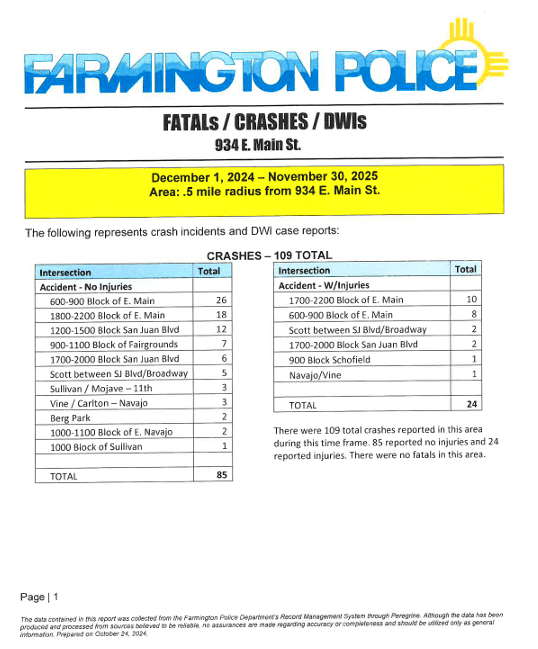
Farmington Police Department data covering a one-year period centered on 934 E. Main Street shows 109 traffic-related crashes within a five-mile radius, with no fatal crashes recorded during the timeframe. The figures, which span December 1, 2024 through November 30, 2025, also record 15 total DWI cases in the same study area; none of those DWI incidents were linked to crashes or injuries.
The bulk of collisions were non-injury incidents: 85 of the 109 crashes resulted in no injuries, while 24 crashes involved injuries. The busiest corridors for crashes were concentrated along East Main Street, with the 600–900 block recording the most incidents and the 1700–2200 block close behind. Other recurring trouble spots included stretches of San Juan Boulevard and the Fairgrounds area, marking several consistent corridors with elevated crash activity.
Patterns in the data show non-injury crashes clustered in high-traffic, commercial zones and at signalized intersections. The 600–900 block of East Main Street alone accounted for more than two dozen non-injury crashes, and the 1800–2200 block also registered significant non-injury totals. Injury crashes were less frequent but similarly concentrated: the 1700–2200 block of East Main had the highest number of injury-related collisions, followed by the 600–900 block. Smaller numbers of injury crashes were reported near the San Juan Boulevard, Schofield, and Navajo Avenue intersections.
DWI enforcement tracked across the corridor rather than focusing on a single hotspot. The most DWI cases were reported in the 600–900 block of East Main Street and near Scott Avenue between San Juan Boulevard and Broadway, with additional cases spread across several intersections. Crucially, the DWI incidents included in the dataset did not involve crash reports or injuries, suggesting enforcement activity was largely preventive or involved stops without collisions.
City planners, transportation officials, and law enforcement can use these figures to evaluate signal timing, patrol deployment, and where targeted mitigation might reduce crash frequency. Although the data does not trigger any immediate policy changes, Farmington Police routinely review crash statistics as part of ongoing safety assessments, and the report could inform future infrastructure recommendations or enforcement strategies.
For residents and businesses along the East Main corridor, the numbers clarify where collisions are most likely to occur and which stretches see the most enforcement activity. The takeaway? Pay extra attention through the 600–900 and 1700–2200 blocks of East Main, expect active patrols in known DWI locations, and bring specific concerns to city traffic meetings so planners see where daily life is most affected. Our two cents? Slow down, watch the signals, and stay engaged with local traffic planning so safety improvements match the places people use every day.
Sources:
Know something we missed? Have a correction or additional information?
Submit a Tip