Fifteen Appalachian teams at Southeast Kentucky FIRST robotics regional
Fifteen regional teams competed in Hazard at the FIRST robotics regional, giving students hands-on STEM experience and strengthening local workforce pathways.
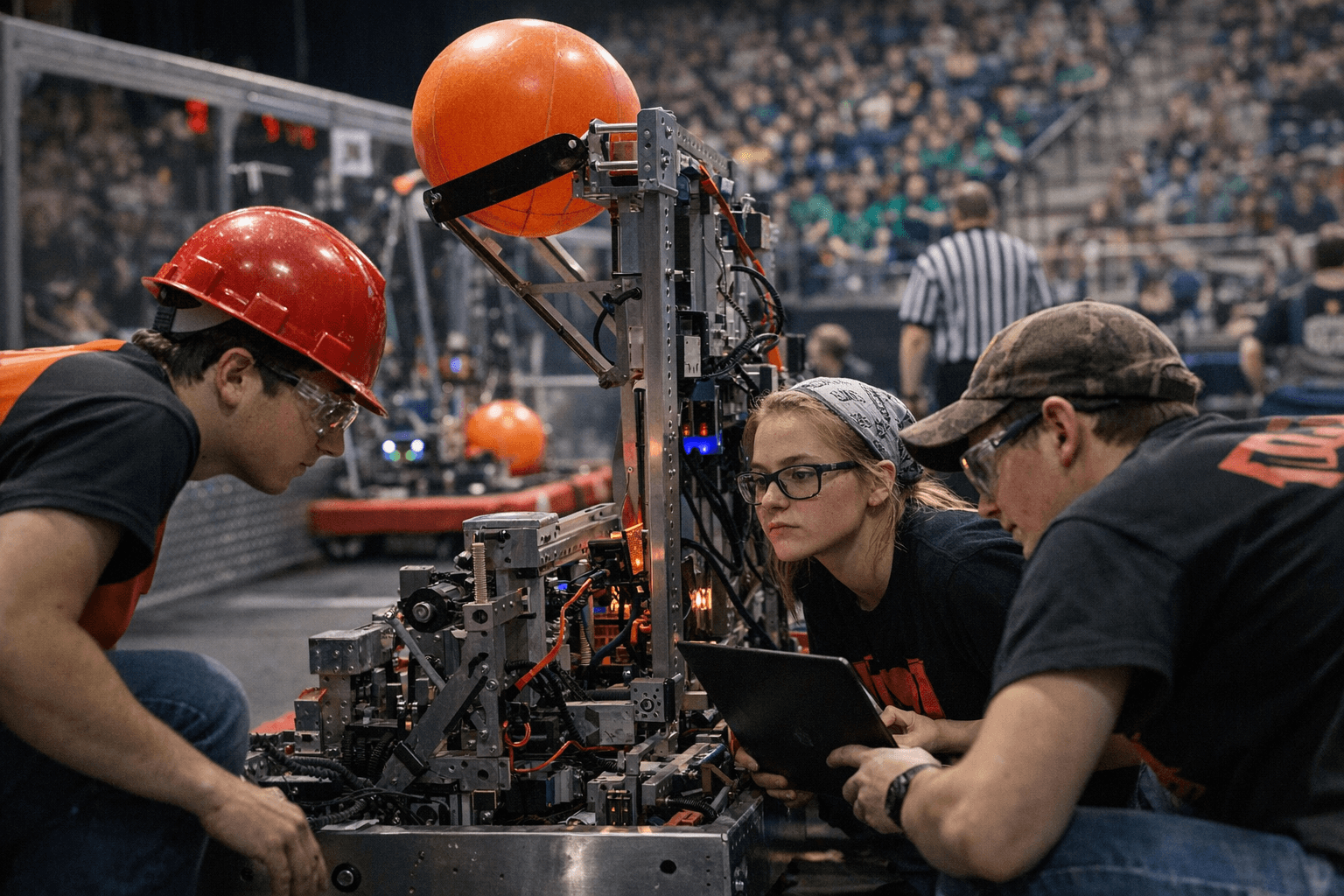
Fifteen teams from Appalachian schools converged in Hazard on Jan. 9 for the Southeast Kentucky FIRST Robotics Regional, a regional FIRST Lego Robotics Tournament that showcased student-built robots and months of preparation. The competition centered on an archaeology theme that challenged students to design machines for simulated fieldwork, testing both technical skill and creative problem solving.
Organizers said the event is intended to build a pipeline for students into STEM careers and higher education. Joseph Collins, program director at the Challenger Learning Center, described the learning focus behind the theme: “They’re learning about the problems archaeologists face, how we solve them, you know, how do we move forward using all this sci-fi modern-age technology to uncover the secrets of the past.” Collins added that the program aims to ready students for future employment: “So, they’re growing, it’s becoming professionals, developing skills, and really getting in ready to move into, you know, the the workforce of the future.”
Elementary and middle school teams, including the Robo Raptors from Magoffin North Elementary, brought practical solutions to the scenario. The Robo Raptors explained their approach to archaeological safety: “They go into caves that could collapse or small spaces like that. So, we came up with the solution and it’s called the dig bot,” the team explained. A team member detailed the device’s features: “And what it does, it has a camera and ultra sensors and a lot and like a soul sifter and everything like that and it can go into small uh spaces and caves and stuff like that,” a member from the team added.
For Perry County and surrounding Appalachian communities, events like this perform multiple civic functions. They provide hands-on STEM learning where school budgets and rural access to advanced coursework can be limited, create visible pathways to technical careers, and foster partnerships between schools, nonprofits like the Challenger Learning Center, and volunteer mentors. The regional competition also acts as a public demonstration of skills that local employers and county leaders can support through targeted investments in afterschool programs, teacher training, and maker-space infrastructure.
Policy implications are straightforward: maintaining and expanding these programs requires steady funding and volunteer capacity. For county education boards and elected officials, the contest highlights an opportunity to align resources with workforce development goals and to advertise Perry County as a place that cultivates technical talent from an early age.
The takeaway? Support for robotics teams is more than extracurricular fun — it's a tangible investment in local talent and economic resilience. Our two cents? Parents, teachers, and civic leaders should consider volunteering time, advocating for sustained program funding, and showing up to these events so the next generation of mountain engineers keeps building.
Sources:
Know something we missed? Have a correction or additional information?
Submit a Tip