Fifteen Thousand New York City Nurses Stage Largest Hospital Strike
Nearly 15,000 nurses struck at ten private hospitals in New York City over staffing, safety and pay. The walkout could strain care access and spotlight health equity.
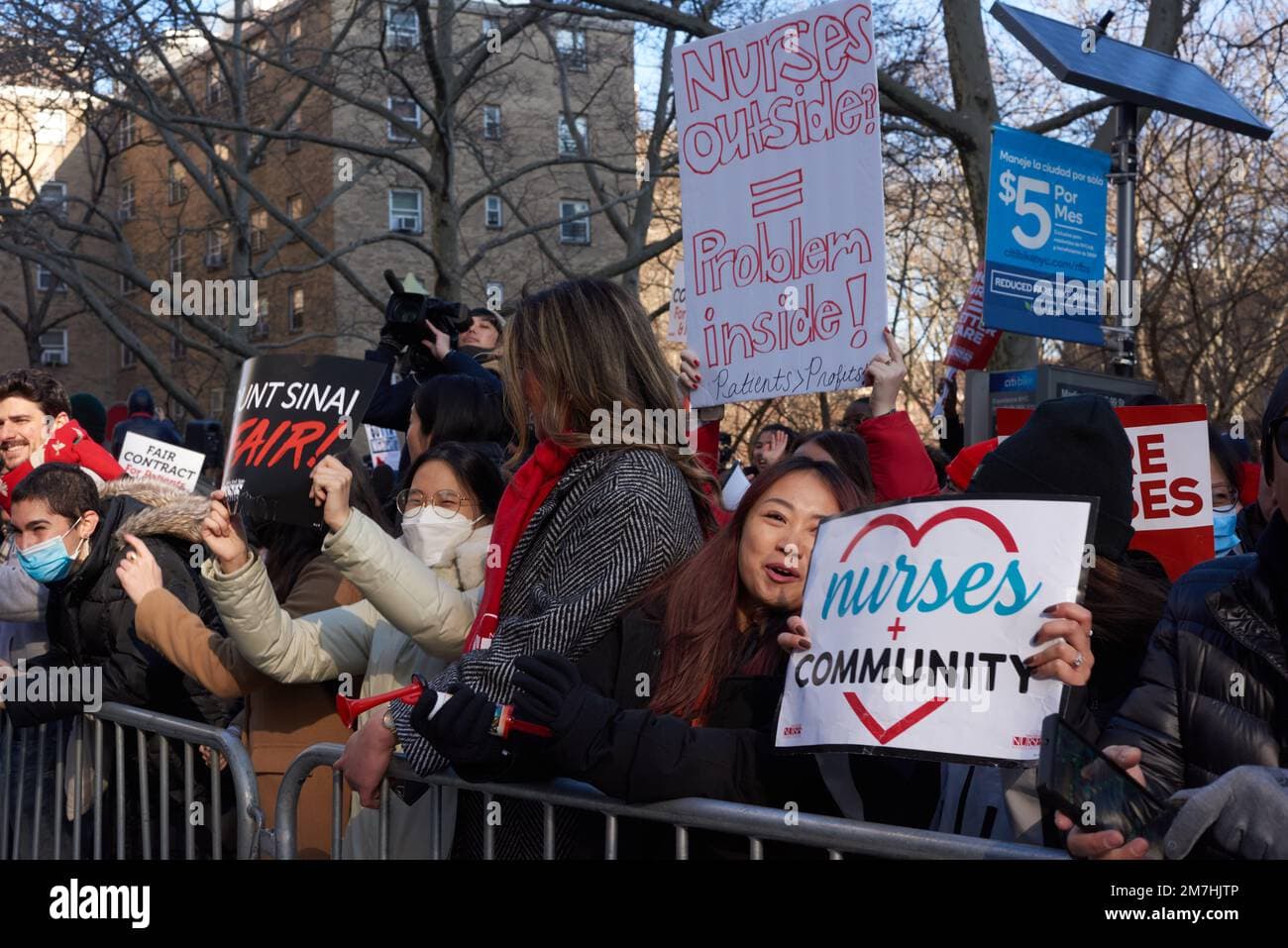
Roughly 15,000 nurses represented by the New York State Nurses Association walked off the job and onto picket lines on Monday, targeting ten major private hospital campuses operated by three large systems across the city. The union called the action the largest nursing strike in New York City history, and picketing continued into a second day as negotiations remained stalled.
The strike centers on a package of contract demands that union leaders say are necessary to protect patient safety and stabilize a workforce strained by years of understaffing. NYSNA’s priorities include enforceable safe-staffing ratios, higher wages to offset inflation, expanded protections against workplace violence, contract language addressing artificial intelligence, full health care coverage and pensions, and new provisions for nurses with substance use disorders. The union said the walkout followed months of bargaining after collective agreements expired Dec. 31.
Union officials criticized hospital negotiators for what they described as minimal engagement in mediation, saying management “barely met with mediators” and that some representatives left bargaining sessions “as early as 7:30.” NYSNA President Nancy Hagans accused health systems of prioritizing corporate resources over fair contracts, saying hospitals “would rather use their billions to fight against their own nurses than settle a fair contract.”
Hospital systems moved in advance to maintain operations, contracting with staffing agencies for travel nurses, securing housing for temporary personnel and hiring contingent workers. One system reported that about 20 percent of its nurses reported for duty on the first day rather than join picket lines. Hospital spokespeople urged patients to continue seeking emergency care and said contingency plans were in place to preserve critical services.
The strike has immediate implications for emergency departments, scheduled procedures and outpatient services, particularly in neighborhoods that already face limited access to care. City health officials and hospital leaders warned the walkout could create service bottlenecks and signed emergency measures to stabilize staffing. Gov. Kathy Hochul signed an executive order declaring “a disaster is imminent,” citing risks to availability and delivery of care.
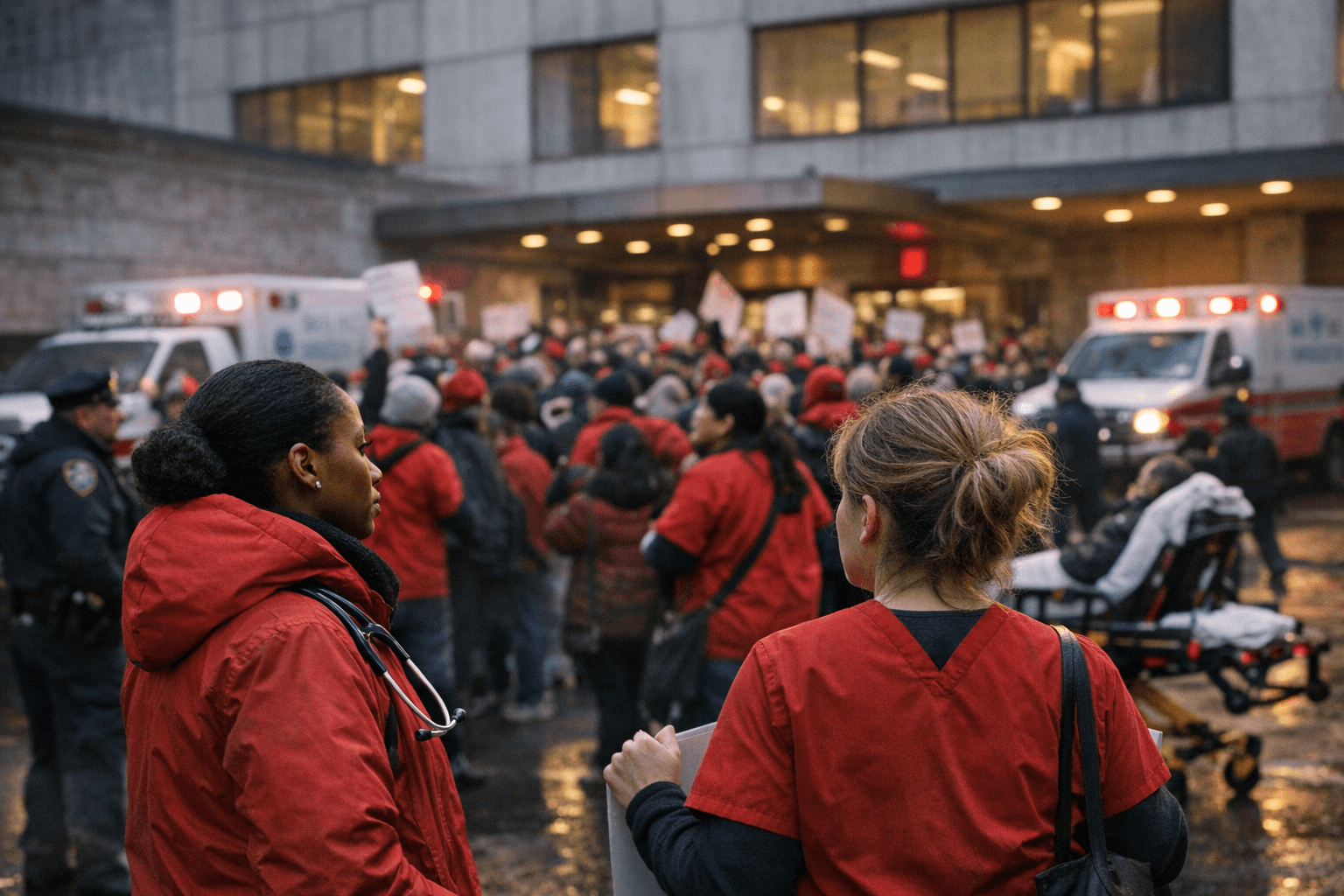
Tensions intensified as NYSNA alleged that one hospital unlawfully fired three nurses hours after the walkout began and disciplined others who had publicly discussed workplace safety and the contract fight. Hospital management did not immediately respond to those specific allegations. Union leaders framed such actions as efforts to intimidate staff and suppress organizing at a moment when nurses say patient safety is at stake.
The strike follows a smaller, multiday NYSNA action in 2023 that produced enforceable staffing measures at some institutions and later resulted in financial penalties for understaffed shifts. Negotiators on both sides have portrayed the current standoff as a test of whether private hospital systems will accept enforceable limits on staffing and new protections for front-line workers.
As pickets wrapped around hospital entrances and community advocates rallied in support, the dispute crystallized broader policy debates about labor standards, health system consolidation and equity in access to safe, timely care. Union leaders argue that stable, well-supported nursing staff are essential to reducing disparities in outcomes for low-income and marginalized communities. Hospital executives say preserving operations during a large-scale strike requires temporary measures that can be costly and disruptive.
With bargaining sessions paused and both sides publicly dug in, the next moves will largely determine whether the walkout expands or yields a renewed push toward a negotiated settlement that addresses staffing, safety and pay.
Know something we missed? Have a correction or additional information?
Submit a Tip