Gallup 9th Street Flea Market Drives Local Indigenous Economy and Tourism
The Gallup 9th Street Flea Market, one of the largest and longest-running Native American trading markets in the United States, operates most weekends in downtown Gallup and draws visitors year-round. The market’s hundreds of Native vendors generate crucial seasonal income for families and small businesses while sustaining downtown foot traffic and cultural exchange that matter directly to McKinley County residents.
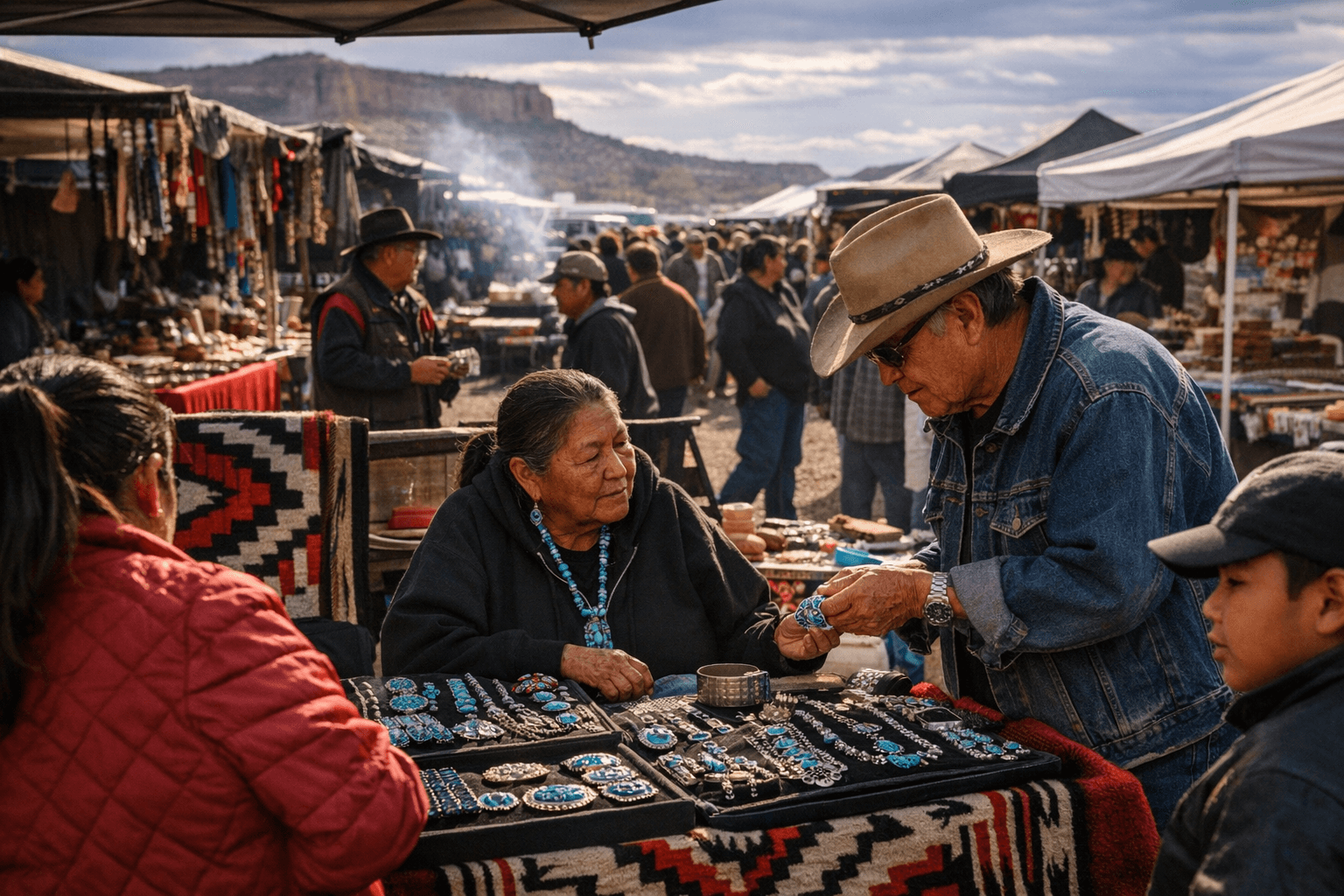
The 9th Street Flea Market in downtown Gallup is more than a weekend shopping destination; it is a central economic and cultural engine for McKinley County. Operating most weekends, the market hosts hundreds of Native vendors selling jewelry, rugs, pottery, beadwork, textiles, traditional crafts, and food. Its scale and longevity make it a major draw for visitors from across the region, translating cultural heritage into tangible income for Indigenous artisans.
For local residents the market affects daily life in several ways. Increased weekend foot traffic supports surrounding downtown businesses, from restaurants to service providers, and creates informal employment opportunities tied to tourism cycles. Many vendor families rely on market sales as part of their seasonal incomes, making the flea market an essential component of household finances in Gallup and neighboring communities.
The market also functions as a place of cultural exchange. Visitors come not only to buy goods but to learn about Indigenous craft traditions and community practices. This steady flow of shoppers helps sustain demand for traditional arts that might otherwise face decline, preserving skills and supplying a market for small-scale producers who prefer direct sales over middlemen.
There are clear market implications for policymakers and local planners. Supporting infrastructure such as parking, signage, and public safety on busy Saturdays can maximize economic benefits while maintaining the market’s character. Simple measures that reduce vendor costs and administrative hurdles can increase participation and income stability for artisans. Given the market’s year-round appeal, targeted promotion during slower tourism months could smooth income volatility for vendors and spread benefits across the local economy.
Practical advice for visitors and residents: bring cash, as many vendors prefer or require it; be respectful when photographing individuals or vendors and ask first; and check vendor hours because market size and activity peak on Saturday mornings. For McKinley County, sustaining the 9th Street Flea Market means protecting both a vital revenue source and a living cultural institution that anchors Gallup’s downtown economy and Indigenous community livelihoods.
Sources:
Know something we missed? Have a correction or additional information?
Submit a Tip