Groundwater Crisis on Ranegras Plain Prompts Potential State Regulation
Data presented at a Jan. 6 public meeting showed severe groundwater declines across the Ranegras Plain basin, with some wells dropping more than 100 to 200 feet and local land subsidence reported. State water officials are weighing creation of a regulated area that could force high-capacity well owners to measure and report pumping and restrict further irrigation expansion, a decision with direct consequences for La Paz County households, farmers and infrastructure.
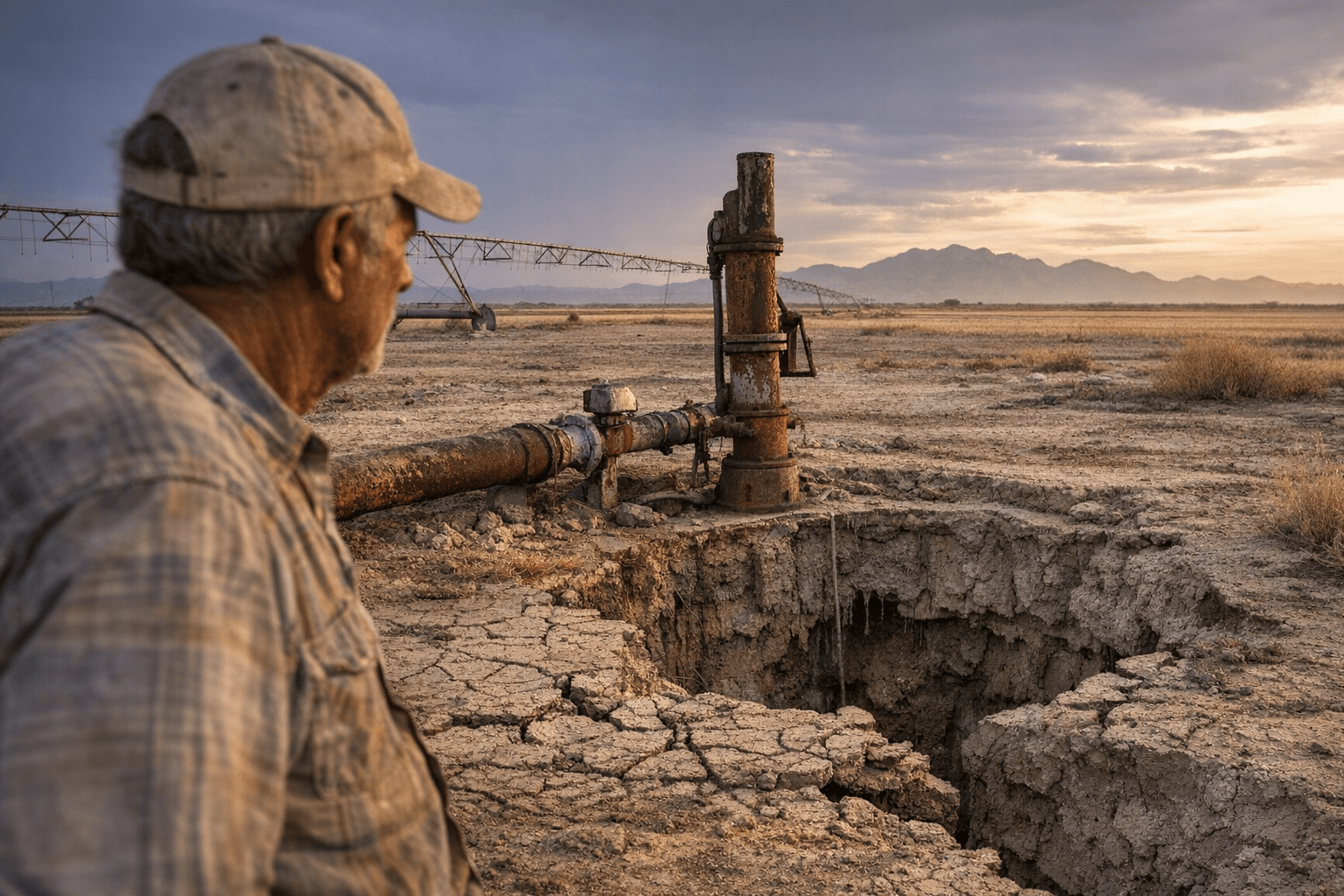
Residents of La Paz County gathered January 6 for a public meeting where hydrologic data underscored accelerating groundwater declines in the Ranegras Plain basin. The evidence presented included wells that have fallen more than 100 to 200 feet and localized land subsidence, prompting growing concern about dry household wells, crop viability and damage to roads and other infrastructure.
The Arizona Department of Water Resources is considering designation of the basin as a regulated area. Under the proposal, owners of high-capacity wells would be required to measure and report groundwater pumping, and new or expanded irrigation of farmland could be limited. ADWR director Tom Buschatzke was scheduled to announce whether he will move forward with such a designation by Jan. 17, 2026.
The basin’s largest documented water user is Fondomonte, a U.S. operation connected to Saudi dairy interests. The company’s heavy pumping in the region has drawn scrutiny as La Paz County residents contend with plunging water tables. The Arizona Attorney General has filed a lawsuit against Fondomonte, adding a legal dimension to the policy and resource-management debate unfolding locally.
For communities near Bouse and Vicksburg, the stakes are immediate. Some households have reported dry wells, while farmers face growing uncertainty over the water available for irrigation. Local elected officials in La Paz County, including County Supervisor Holly Irwin, have expressed support for stronger protections intended to preserve groundwater for domestic use and sustain local agriculture over the long term.
The situation in the Ranegras Plain illustrates a broader policy tension in Arizona between preserving rural groundwater and supporting agricultural development, particularly when large-scale pumping is driven by outside capital. If the ADWR moves forward, regulated-area requirements would increase transparency about pumping volumes and impose limits designed to slow declines in the aquifer. Those measures could protect domestic wells and reduce subsidence risk, but they may also constrain irrigation-dependent operations and spark legal and economic disputes.
Next steps hinge on ADWR’s decision by mid-January. If the regulated area is established, the agency will develop implementation details and reporting requirements that will directly affect high-capacity well operators within the basin. For La Paz County residents, the decision will shape immediate access to groundwater, the future of local farming, and the management of land and infrastructure vulnerable to subsidence.
Sources:
Know something we missed? Have a correction or additional information?
Submit a Tip