Grow Aloha extends free plant adoption program through June 2026
Grow Aloha extended its monthly free plant adoption program through June 2026 to expand native plant and cultural crop restoration across the islands. Residents gain access to native species and guidance to rebuild habitat and food sources.
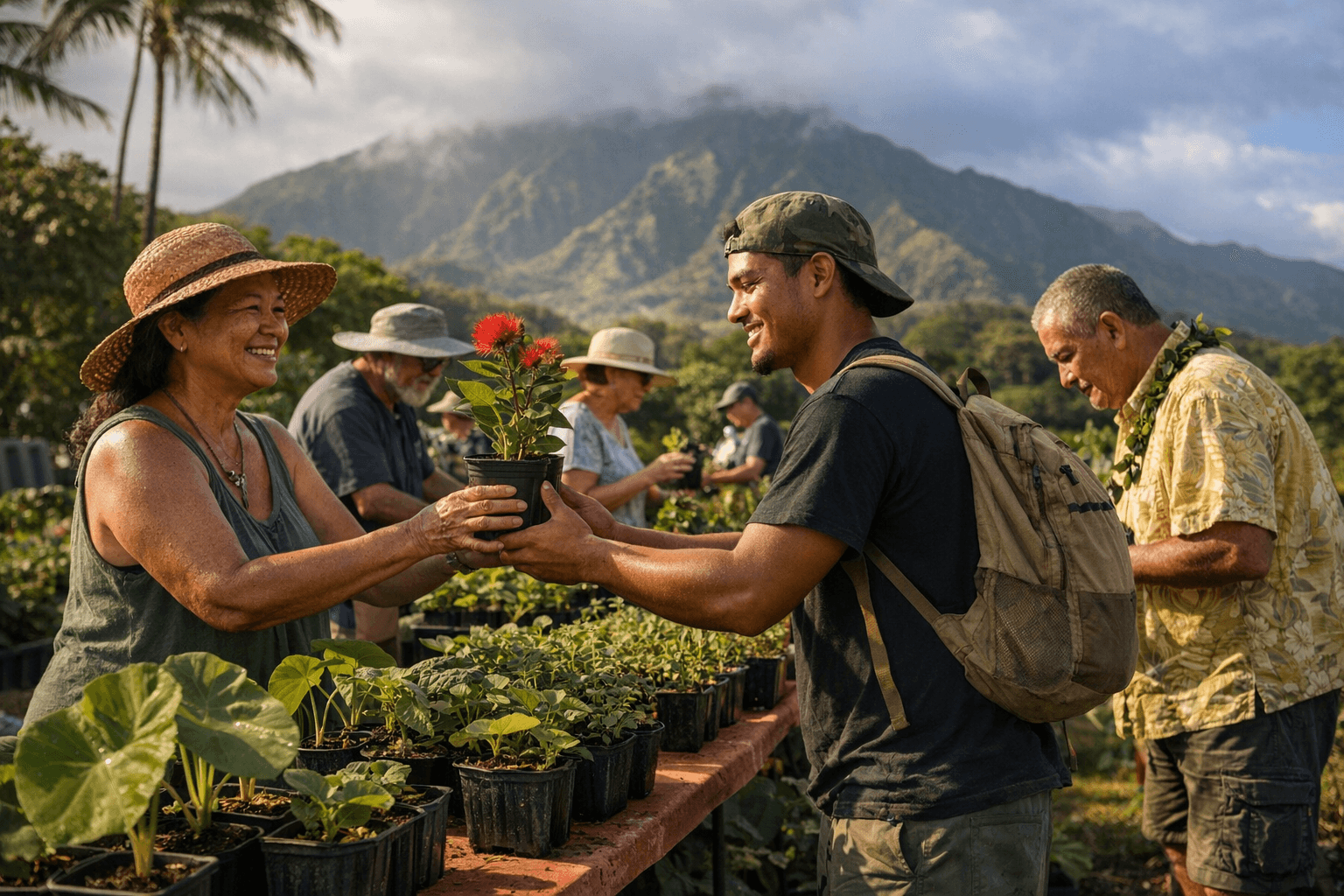
Grow Aloha announced on Jan. 10, 2026 that its monthly plant adoption program will continue through June 2026, giving residents another 18 months to obtain native plants and Hawaiian heritage crops at no cost. Since the program launched, organizers report more than 5,000 plants representing over 100 species and varieties have been handed out statewide and are now growing in backyards, schoolyards, and community ohana spaces.
The program’s model relies on partnerships with local distribution groups and community organizations that host monthly adoption events. At these events residents pick up plants free of charge and receive guidance on planting and care. That combination of free access and hands-on instruction is intended to lower barriers to participation and increase local stewardship of native ecosystems and cultural food systems.
For Kauai residents the immediate impact is practical and visible. Native species planted in home landscapes and at schools can slow runoff, support pollinators and native birds, and help rebuild seed sources that islands need for long-term resilience. Heritage crops distributed through the program provide opportunities to revive traditional foodways and increase household food security—an outcome with both cultural and practical significance across the county.
There are also broader policy and institutional implications. The extension through June 2026 buys time for county leaders and community partners to align planting efforts with watershed management, public landscaping policies, and school curricula. Integrating Grow Aloha distributions into county planning could amplify benefits if survival rates and ecological outcomes are tracked, prioritized species lists are shared, and nursery capacity is coordinated to supply appropriate plants for different microclimates across the island.
Sustained programs like this can shape how voters and policymakers view environmental investments. Continued community uptake and measurable restoration outcomes could influence budget priorities at County Council sessions and strengthen arguments for sustained funding or formal partnerships between Grow Aloha and county departments that manage parks, roadsides, and public facilities.
Operational questions remain relevant for local organizers: which species are thriving in Kauai’s varied mauka and makai zones, what support is needed for aftercare, and how to scale volunteer training and school partnerships. Answering those questions will determine whether thousands of new plants translate into durable ecological gains or short-term landscaping changes.
Our two cents? Take advantage of the free adoptions, plant with an eye to your yard’s microclimate, and bring a neighbor or keiki so the care and knowledge stay in the community. The more we plant with purpose, the better chance these native species have to stick around for generations.
Sources:
Know something we missed? Have a correction or additional information?
Submit a Tip