Haw River and Greenway Network Expand Outdoor Access Across Alamance County
The Haw River and Alamance County’s growing greenway network provide more than a dozen miles of trails and multiple river access points, linking neighborhoods to parks and outdoor recreation across Graham, Burlington, Elon, Mebane and Haw River. These corridors support hiking, paddling, birding, fishing, environmental education and local health initiatives, while highlighting policy decisions about funding, land use and long-term maintenance.
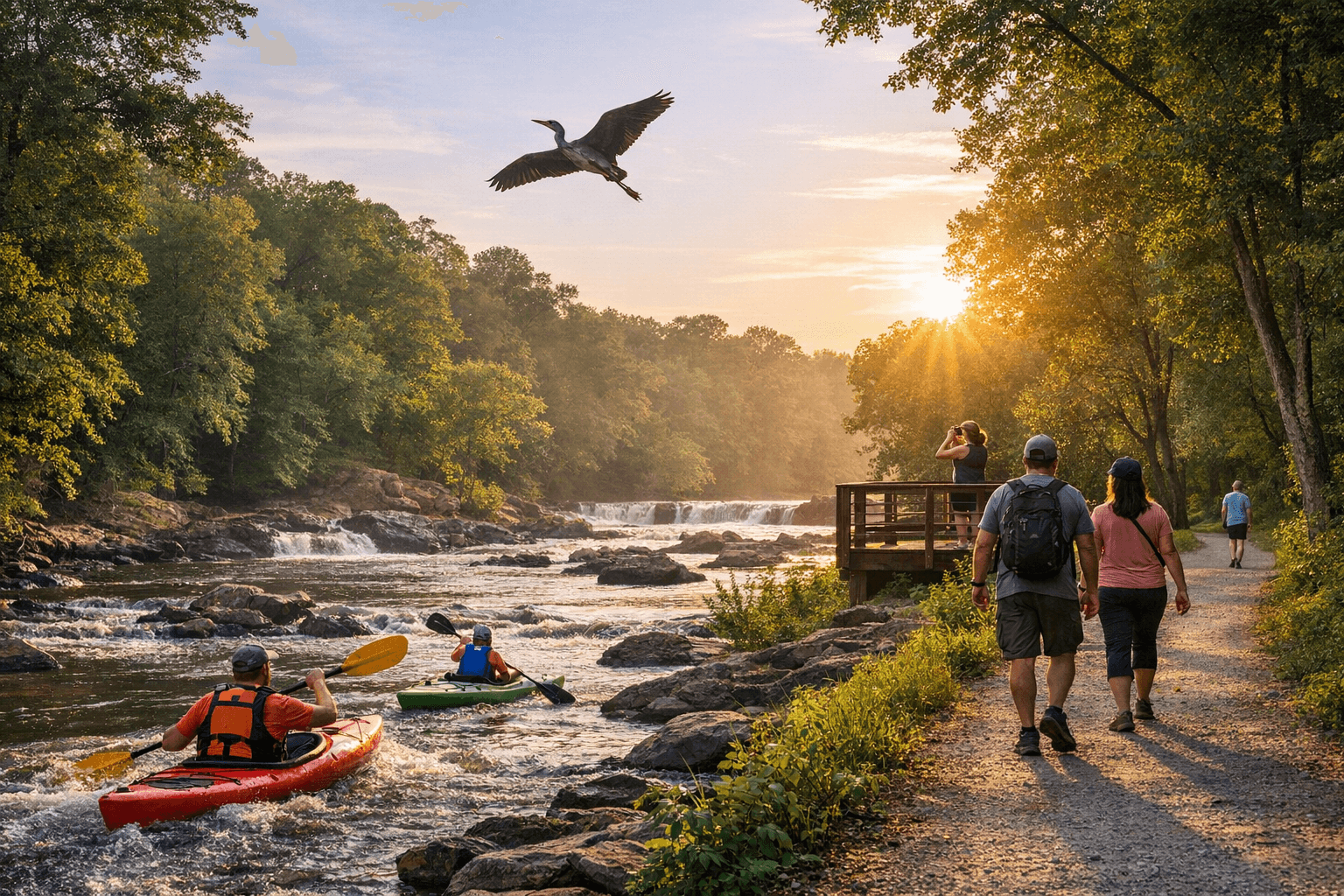
Alamance County’s greenway network, anchored by the Haw River, has become a visible public asset that connects residential neighborhoods to parks and river access across Graham, Burlington, Elon, Mebane and Haw River. More than a dozen miles of trails and multiple river access points offer residents and visitors opportunities for hiking, paddling, birding and fishing, and the corridors are increasingly used for environmental education and community health programs.
The Haw River Assembly and local governments have collaborated on conservation and trail development projects that knit these assets together. That cooperation has produced shared conservation outcomes and recreation infrastructure, but it also raises practical policy questions for county and municipal officials. Funding streams for trail construction differ from those needed for long-term upkeep, and coordination across jurisdictions is necessary to maintain continuity of paths, manage river access points and protect riparian habitat.
For local residents, the greenway network reduces travel time to outdoor spaces and expands options for active transportation and recreation. Schools, nonprofit groups and public health initiatives can leverage connected trails for outdoor learning and exercise programs. For municipalities, greenways can be tools for economic development through increased visitation and potentially higher property values along well-maintained corridors. Those benefits depend on sustained investment and clear agreements on land stewardship between governments and nonprofit partners.
Institutional choices will shape whether the network remains accessible and resilient. Decisions about land acquisition, easement policies, maintenance responsibilities and budget prioritization will determine equity of access across different neighborhoods. The visibility of greenway projects also has political effects: trail and river investments represent tangible policy outcomes that inform voter priorities and can influence municipal decision-making during budget cycles and local elections.
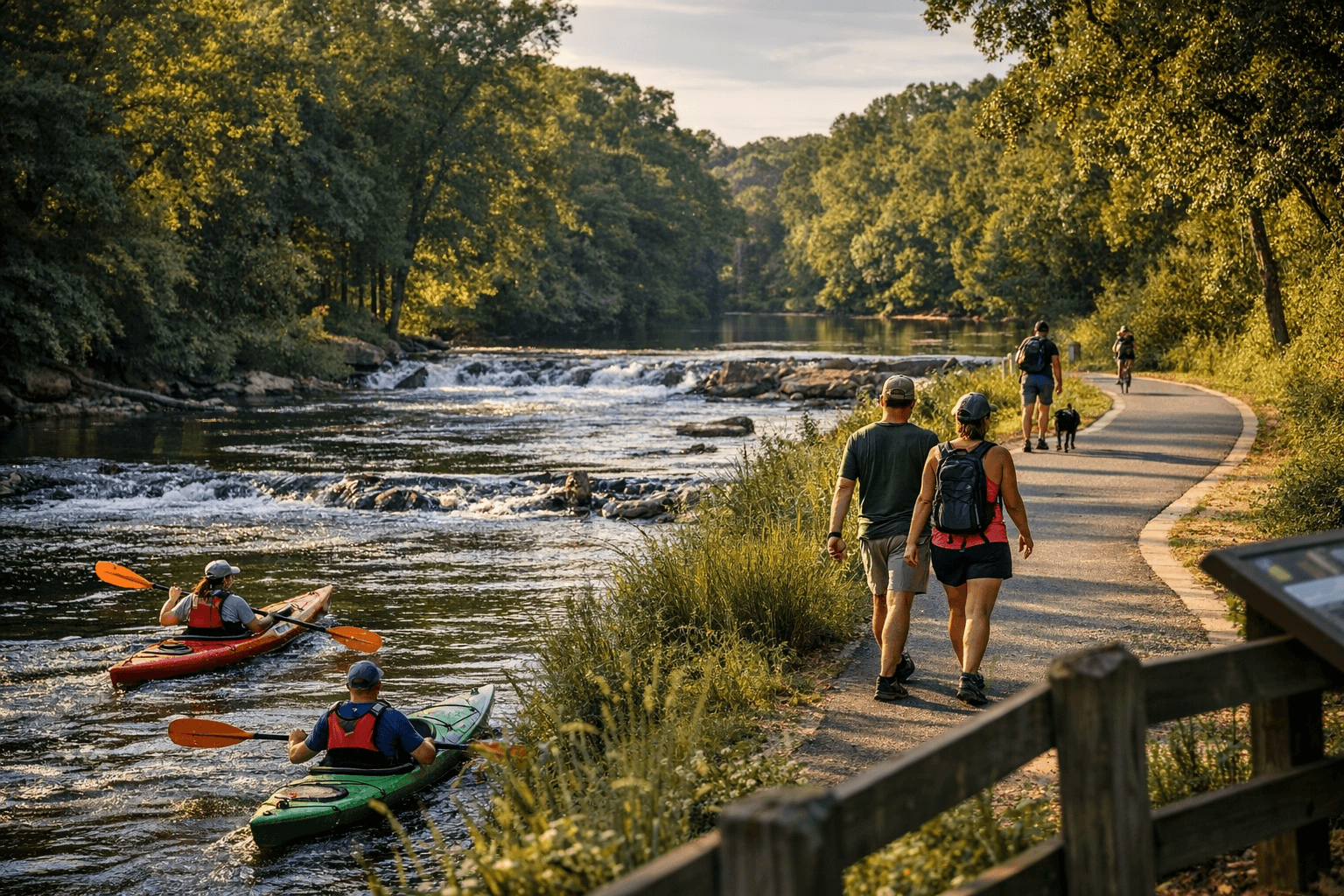
Moving forward, county and municipal leaders face options that include formalizing intergovernmental maintenance agreements, identifying recurring funding sources for repairs and signage, and integrating greenways into comprehensive land-use and public health strategies. Civic engagement will be central to those efforts. Residents who participate in public planning discussions can influence routing, access equity and programming that ties greenways to education and health goals.
Alamance County’s greenways and the Haw River remain strong local assets. Their future value to residents will depend on continued collaboration between the Haw River Assembly, local governments and an engaged public committed to the long-term stewardship of trails and river access.
Sources:
Know something we missed? Have a correction or additional information?
Submit a Tip