Honduras Seeks Arrest of Former President After U.S. Pardon
Honduras’ attorney general has asked Interpol to execute a 2023 arrest order for former president Juan Orlando Hernández, escalating legal confrontation after his recent pardon and release from a U.S. prison. The move deepens political tensions ahead of a contested presidential election and raises questions about the separation of international and domestic accountability.

Honduras’ attorney general on December 8 and 9 issued an international arrest warrant and formally requested that Interpol execute a 2023 domestic arrest order for former president Juan Orlando Hernández, according to a Reuters account published December 8 and 9. The request concerns allegations of fraud and money laundering tied to the Pandora case, in which prosecutors say officials diverted public funds to political campaigns.
The document was posted publicly on the attorney general’s social media accounts, an unusual step that appears intended to make the action immediately visible amid a fraught political atmosphere. Prosecutors say the 2023 order predates Hernández’s extradition and prosecution in the United States, and that it relates to a separate set of alleged crimes under Honduran law. Hernández’s current whereabouts are undisclosed. His lawyer characterized the move as political, according to Honduran authorities, but did not provide substantive legal responses in public filings released by prosecutors.
Hernández was extradited to the United States, convicted on drug trafficking charges and received a 45 year sentence before being pardoned and released by U.S. authorities earlier this month. Honduran officials have made clear they intend to pursue domestic probes and filings that are independent of the U.S. case, citing the principle that different sovereigns may investigate and prosecute distinct alleged offenses arising from the same conduct.
The development places Honduras at the center of a juridical and diplomatic test. Interpol participation will determine whether the international police network will take custody actions based on the Honduran request, which is framed as enforcement of an outstanding domestic arrest order. Interpol historically evaluates such requests for technical compliance with its rules, but the political sensitivity of a former head of state sought while recently freed abroad amplifies scrutiny of any decision.
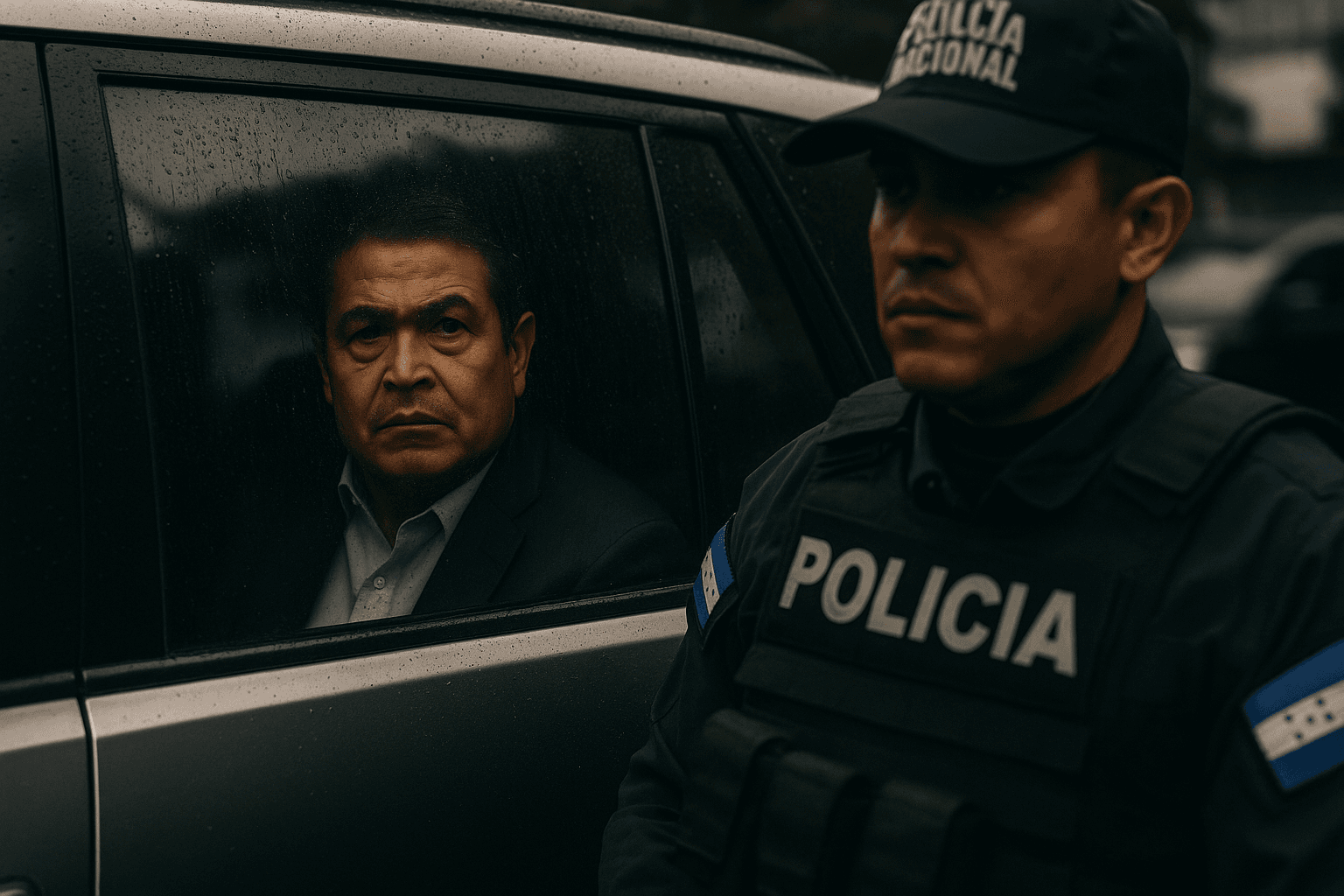
The timing also intersects with an intensely contested presidential election in Honduras. The arrest request and social media publication are likely to reverberate through electoral narratives, reinforcing arguments by critics that the political system remains prone to corruption and by supporters that prosecutions can be politically motivated. Voter confidence and civic engagement could be affected if citizens perceive judicial actions as selective or as instruments of partisan conflict.
Institutionally the case tests the capacity and perceived independence of Honduran prosecutorial authorities. It also highlights the limits of presidential pardons issued by foreign governments when domestic legal processes remain active. For prosecutors, the practical challenge will be securing custody if Interpol does not act or if Hernández remains outside jurisdictions where Honduran law enforcement can operate.
As events unfold, the core questions concern how Honduran institutions will balance legal rigor and political impartiality, and how international mechanisms will manage a request with clear domestic political fallout. The answer will shape public trust in accountability processes and influence the broader trajectory of Honduran democracy in a moment of heightened electoral tension.


