How to Choose Your Next Pickleball Paddle in Asia
This practical buyer’s guide lays out clear, region-specific advice for players picking their first or next pickleball paddle, focusing on weight, shape, materials, grip and authenticity. Knowing these factors helps improve play, avoid counterfeits, and secure reliable after-sales support across Asian markets.

Choosing the right paddle will change how you play at the net, how you attack from the baseline, and how quickly you learn new skills. For most players in Asia, a paddle weight between 7.6 and 8.4 ounces strikes the best balance: lighter paddles help with quick net play and volleys, while heavier paddles add punch for baseline drives and serves.
Shape and size affect reach and sweet spot. Standard shapes offer a balanced sweet spot and manoeuvrability suited to all-round players. Elongated paddles extend reach and favour power and serve-focused players; expect a smaller sweet spot and a different feel on touch shots. If you value dinking and control at the kitchen line, stick with standard shapes; if you want extra serve speed and reach, try an elongated model.
Core material determines feel, control and sound. Polymer (poly) cores are quieter and give dependable control for softer shots and long rallies. Nomex cores are stiffer, producing more pop and power—useful for aggressive, power-first play. Aluminum cores are less common but are durable and have their own feel; they are an option if longevity matters more than the soft control of poly.
Face material alters responsiveness and spin. Fiberglass faces generate power and a lively response, while carbon fiber faces deliver tighter control and a crisp feel. Surface texture matters for spin: textured faces increase spin and help with controlled drop shots and dinks, a useful aid while you learn spin control.
Grip size and hand fit affect comfort and injury risk. Pick the smallest comfortable grip to encourage wrist action and reduce elbow stress. Measure your palm circumference and compare that number to brand grip specifications before buying to avoid picking a paddle that’s too large.
Certification and authenticity protect safety and compliance. Buy paddles listed with your national sanctioning body or on the USA Pickleball/USAPA list, and purchase from authorised dealers to avoid counterfeit or unsafe models. When buying from overseas brands, check shipping costs, warranty terms and after-sales support; local service can save time and expense if repairs or replacements are needed.
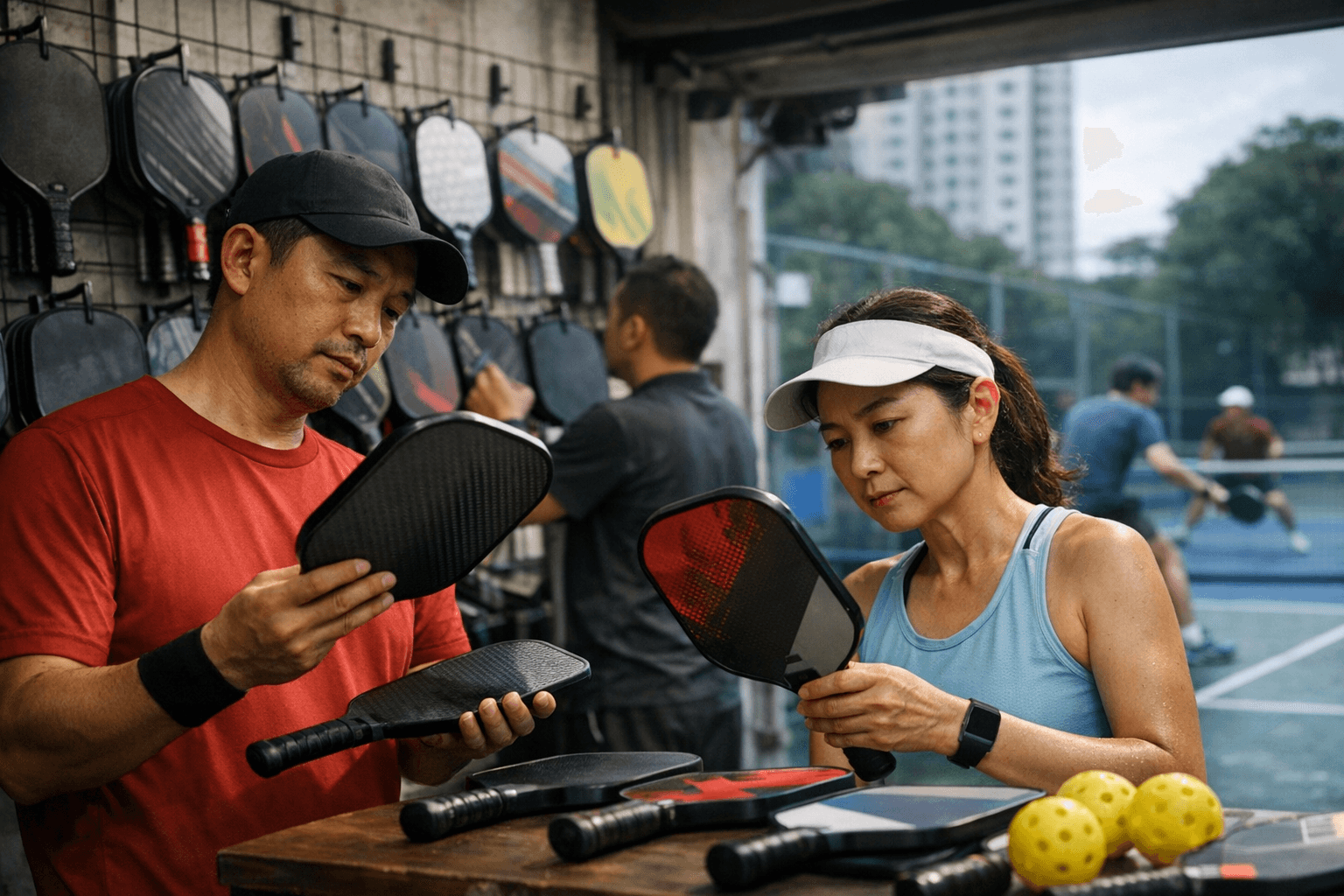
Try-before-you-buy whenever possible. Demo paddles at local courts, pro shops or exhibitions; many clubs maintain demo fleets. If you can’t demo, consider mid-tier models from established manufacturers for reliable value.
Final tip: choose a paddle that complements your current strengths and the skills you want to develop. Control-oriented paddles help dinking and touch; power paddles help baseline play. Measure, test, and prioritise support and certification to get a paddle that serves your game in Asia.
Know something we missed? Have a correction or additional information?
Submit a Tip