How to prune flowering quince for cleaner winter silhouettes
Jonas Dupuich outlines a January pruning approach for flowering quince that shortens internodes and refines silhouette, useful when cold winters fail to trigger leaf drop.
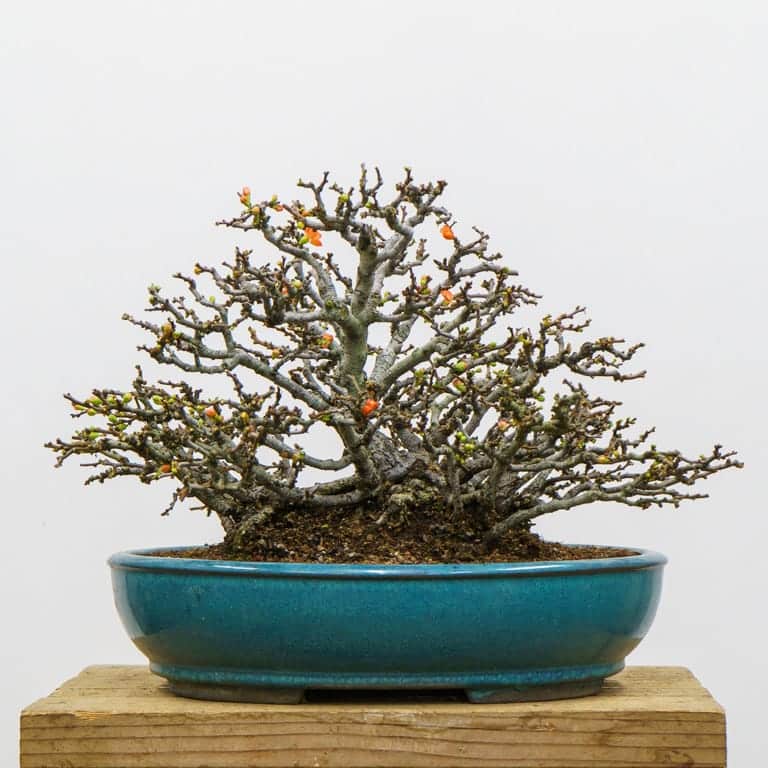
Flowering quince (boke / chojubai / toyonishiki) responds well to decisive winter pruning, and when temperatures don’t force natural leaf drop a more hands-on approach pays off. Earlier this month Jonas Dupuich shared a routine designed to shorten internodes, clean competing growth, and set branch movement before the flush of spring growth.
Start with defoliation and a cutback to reduce internode length and reveal the structure beneath the leaves. Removing foliage makes it easier to see which shoots are working against the design: remove shoots that grow downward, those that reach toward the center, and any that crowd other branches. Make pruning cuts to outward-facing buds to encourage branches to move away from the trunk and create pleasing negative space. The overall aim is a cleaner silhouette and better rhythm between branches rather than maximal ramification in a single session.
Timing matters when winters are mild. If the tree retains leaves into January, perform defoliation now rather than waiting for a non-existent hard frost. Doing the heavy shortening and silhouette work in early January gives new spring shoots clearer direction, reducing the need for corrective pruning during the active growing season.
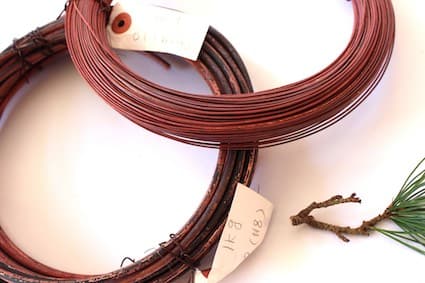
Wiring strategy for quince calls for restraint. Wire embeds quickly on quince wood during vigorous growth, so avoid over-wiring and long-term tight wraps. Use modest bends with flexible wire and favor guy-wires for securing larger branch positions. In many cases light wiring to nudge movement, then switching to guys or cloth ties, prevents wire cuts and preserves bark. Before-and-after photos included with the original demonstration illustrate how modest wiring plus selective cutback can transform a congested quince into a balanced winter silhouette.

This approach is practical for display prep and for trees being readied for shows or spring observation. It accelerates internode tightening without chasing ramification prematurely, and it protects bark from wire damage as the tree wakes up.
News & updates: Bay Area Bonsai Associates 42nd Annual Show is coming up Jan 17–18. Puget Sound Bonsai Association Winter Silhouette Show takes place Jan 31–Feb 1. The US National Tropical Bonsai Exhibition is set for Sept 5–6, 2026; organizers are accepting submissions for display trees.
The takeaway? Shorten internodes, prune to outward buds, and wire lightly — set the silhouette now so spring growth follows the direction you want. Keep tools sharp, verify bud direction before each cut, and let restraint be your wiring rule of thumb.
Sources:
Know something we missed? Have a correction or additional information?
Submit a Tip