Indian Health Service Expands Consultations Amid Proposed Realignment
The Indian Health Service announced expanded in-person and virtual tribal consultations after requests from tribes and urban Indian organizations, as the agency advances plans that would consolidate 12 regional offices into three. The move, timed with planning for a new Gallup Indian Medical Center, has raised local concerns that the reorganization could weaken direct services and reduce tribal influence over health care delivery.

On Jan. 8, 2026, the Indian Health Service said it would add additional in-person and virtual consultation sessions on a proposed realignment that would compress its current 12 regional offices into three. The agency framed the proposal as an effort to modernize federal operations, improve coordination and strengthen accountability at a time when more tribes are assuming control of health programs through self-determination agreements.
Tribal leaders and urban Indian organizations asked for more opportunities to weigh in, prompting the expanded schedule of consultations. Those sessions came as planning advanced for a new Gallup Indian Medical Center, a development that has focused attention locally on how federal health services will be organized and delivered in McKinley County and across the region.
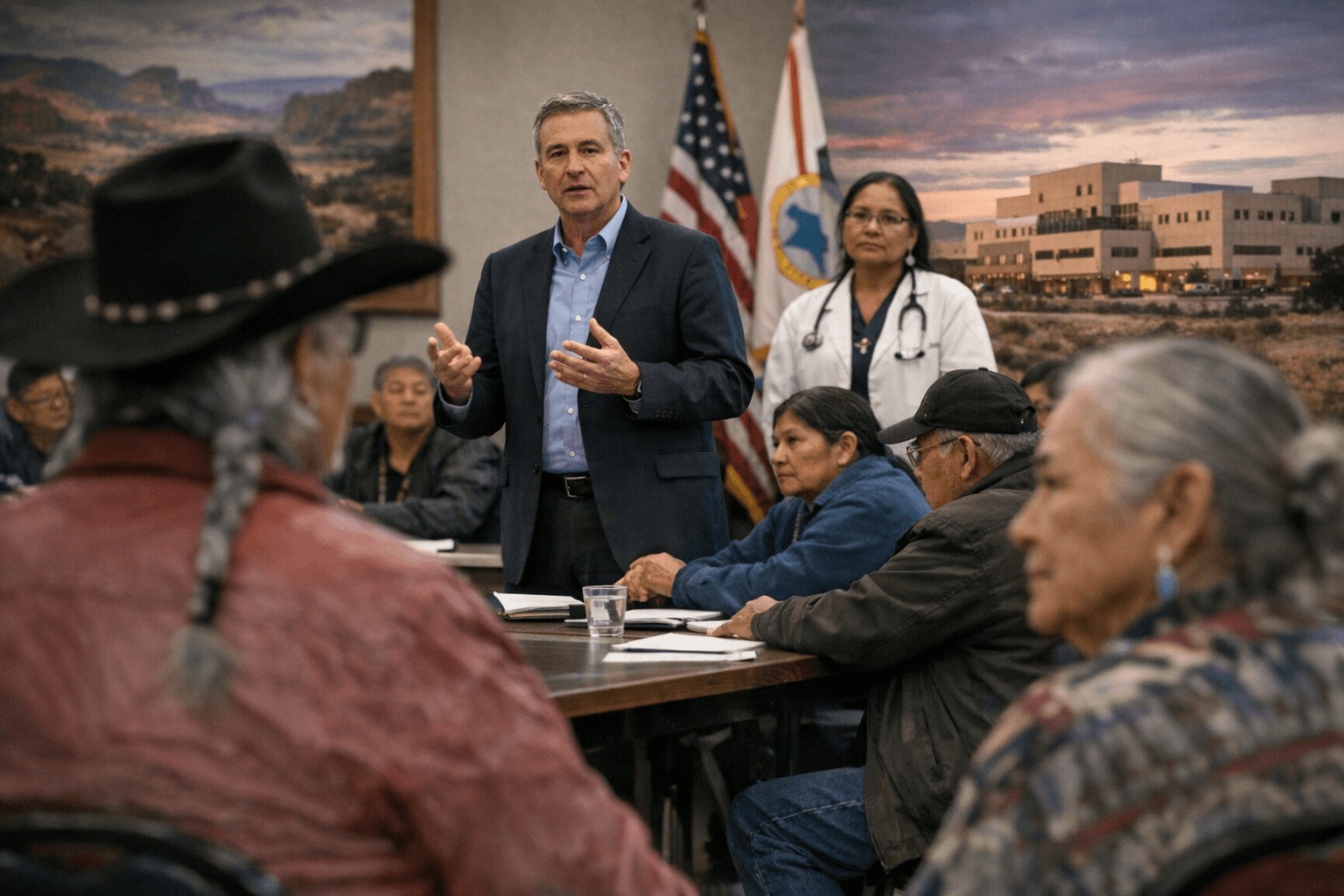
Several tribal representatives who attended consultation sessions expressed worry that the proposed consolidation could distance decision makers from the clinics and communities they serve, potentially weakening direct services and diminishing tribal influence over health care delivery. Jonathan Nez, who attended a recent consultation, said many tribal leaders felt the process had the appearance of a predetermined outcome. “They say this was a tribal consultation where IHS came out to listen to what the tribal leaders’ comments are,” Nez said. “But based on the presentations we received, I think many tribal leaders felt like it was already a done deal.”
For McKinley County residents, the reorganization could affect how federal and tribal health programs coordinate care, how quickly administrative decisions are made, and how funding and oversight are managed as local tribes negotiate self-determination agreements. Community advocates and tribal governments view the consultation process as a critical avenue to protect access to services and to maintain local control over program priorities during the transition.
The IHS has presented the realignment as a modernization step intended to support tribes taking on greater operational responsibility, but tribal leaders want clear guarantees that service levels will not decline and that tribal input will shape final decisions. The agency’s expanded consultations are intended to gather that input, and officials have signaled the process will continue as they refine the proposal.
Local residents and tribal members should watch for announcements from IHS and tribal health offices about upcoming consultation dates and opportunities to provide feedback. The outcomes of these discussions will shape how the new Gallup Indian Medical Center and broader regional services are governed and delivered in the years ahead.
Sources:
Know something we missed? Have a correction or additional information?
Submit a Tip