Iran Signals New Outreach, Foreign Minister to Visit Russia and Belarus
Iran announced that Foreign Minister Abbas Araqchi will travel to Russia and Belarus within two to three days, a move that underscores Tehran's accelerating diplomatic engagement with Eurasian partners. The timing follows President Masoud Pezeshkian's meeting with Vladimir Putin and could have implications for trade, energy flows, and sanctions diplomacy ahead of international deliberations.

Iran’s foreign ministry said on Sunday that Foreign Minister Abbas Araqchi will visit Russia and Belarus within two to three days, the ministry spokesperson Esmail Baghaei told reporters. The brief announcement was reported by Reuters from Dubai and was republished widely by regional and global outlets. The statement gave no itinerary, specific dates for the stops, or a detailed list of objectives.
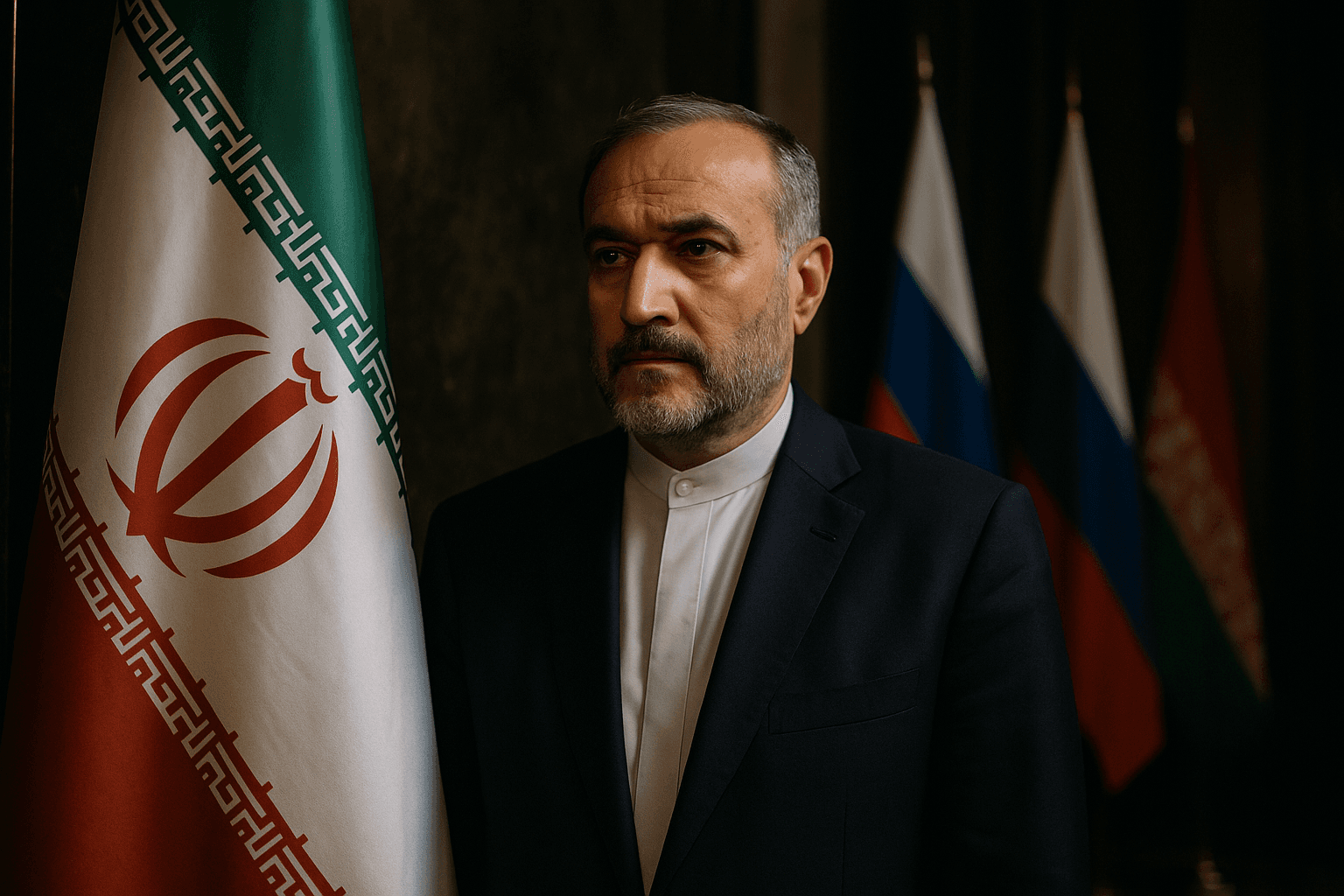
The dispatch noted that the trip follows President Masoud Pezeshkian’s meeting with Russian President Vladimir Putin in Turkmenistan on Friday. That encounter, held on the sidelines of regional summits, signaled a continuing pattern of engagement between Tehran and Moscow after several years of closer cooperation on security and economic matters. File photographs accompanying some republished versions show Araqchi at public events in Tehran on July 12, 2025 and in Istanbul on June 22, 2025.
Observers say the visit is likely to cover a mix of practical and strategic items. Economically, Iran has been seeking to deepen trade links with partners willing to tolerate or circumvent Western sanctions, and Russia has been a principal interlocutor for energy swaps, agricultural trade, and payments arrangements outside conventional Western banking channels. Belarus, tightly aligned with Moscow, offers industrial and logistical connections that can be leveraged for imports of machinery, spare parts and transit routes.
The announcement arrives as international attention focuses on how Tehran maneuvers around ongoing sanctions and prepares for multilateral forums where its status and restrictions may be discussed. While the brief statement did not specify whether energy exports, banking, or military cooperation would be on the agenda, any concrete arrangements involving energy shipments, alternative payment systems or arms transfers could alter regional economic dynamics and draw fresh scrutiny from Western capitals.
Market implications are likely to be muted in the short term given the lack of details. Nevertheless, deeper Iran Russia Belarus cooperation can exert upward pressure on risk premiums in energy and regional supply chains, particularly if transactions increase circumvention of sanctions or if agreements require logistical adjustments that reroute trade. For global markets the direct effect will depend on whether Tehran secures additional buyers or transit corridors for hydrocarbons and refined products, or if Moscow and Minsk agree to industrial or financial mechanisms that substitute for Western services.
Longer term, this diplomatic push fits into a broader trend of Iran pivoting toward Eurasian and regional platforms, including the Shanghai Cooperation Organization, and of Moscow cultivating partners outside the West as it manages its own sanctions related challenges. For policymakers, the visit will be watched for signals about the scale and scope of economic cooperation, the potential for joint projects, and any steps that could complicate enforcement of international restrictions.
Reuters was the primary source for the announcement and multiple outlets republished the brief. Iranian, Russian and Belarusian foreign ministries have not published detailed public itineraries in the text republished by news services. Further confirmation of dates, delegation composition and official agendas will be needed to assess concrete economic and strategic outcomes.
Sources:
Know something we missed? Have a correction or additional information?
Submit a Tip