Japan and Philippines deepen military ties with two defence pacts
Japan and the Philippines signed two defence pacts to expand logistics, disaster response and naval capacity amid rising maritime tensions.
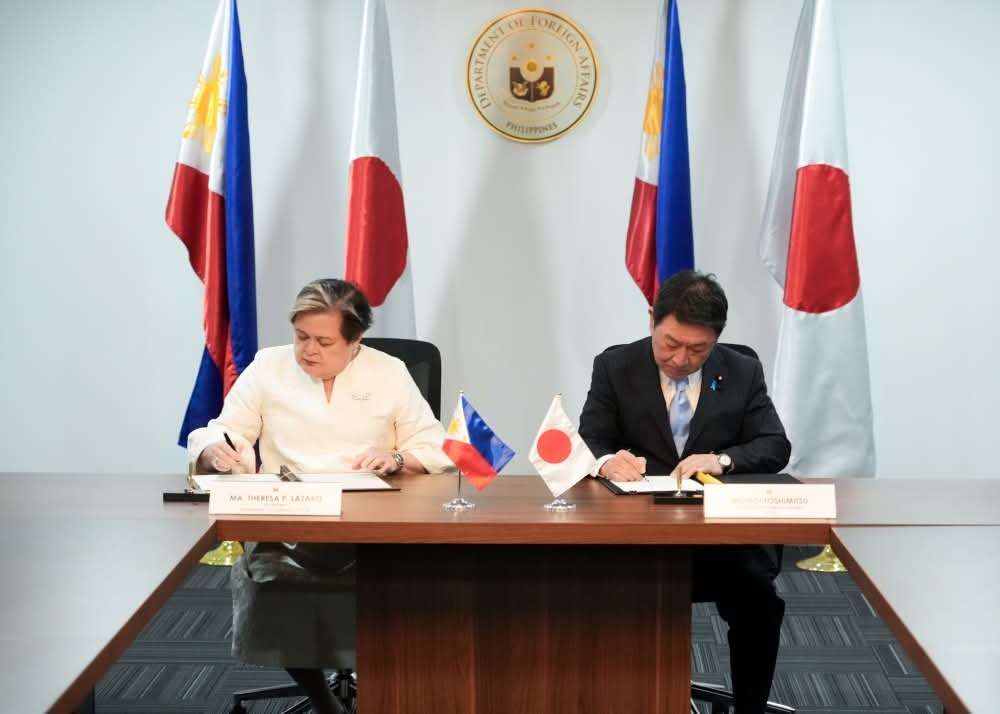
Japan and the Philippines signed two defence-related agreements in Manila today, marking a notable expansion of bilateral security cooperation as regional maritime tensions intensify. The accords, signed by Japanese Foreign Minister Toshimitsu Motegi and Philippine foreign chief Ma. Theresa P. Lazaro in Pasay City, seek to streamline military logistics and boost the Philippines’ coastal and humanitarian response capabilities.
The principal agreement, an Acquisition and Cross-Servicing Agreement or ACSA, is designed to permit the rapid provision and exchange of supplies and services between the two militaries. Specific provisions include tax-free transfers of ammunition, fuel, food and other necessities when forces stage joint training, and facilitation of supply exchange during operations. Officials say the ACSA is intended to support joint combat exercises, humanitarian assistance and disaster relief operations, participation in United Nations peacekeeping missions, and quicker logistical coordination during crises.
The ACSA will require ratification by the Japanese legislature before it can enter into force. No timeline for that parliamentary process has been provided, and the agreements do not include the detailed legal text or operational procedures that will define limits and implementation. Philippine implementing steps were not specified at the signing.
Alongside the ACSA, Tokyo announced a $6 million Official Security Assistance package to fund construction of facilities to house rigid-hulled inflatable boats that Japan is donating to the Philippine navy. The funding and donated craft were presented as part of Manila’s capability enhancement for maritime patrol and rapid response, though officials did not provide a delivery schedule for the boats or construction timelines for the berthing facilities.
The pacts build on a recent intensification of security ties between Tokyo and Manila. In mid-2024 the two governments signed a Reciprocal Access Agreement that took effect in September 2024 and allows the deployment of forces of either country to the other’s territory for joint exercises, including live-fire drills. Japanese officials framed the new agreements as responses to rising maritime tensions and threats to the status quo in the East and South China Seas, and as measures that strengthen deterrence while expanding cooperative disaster-response capacity.
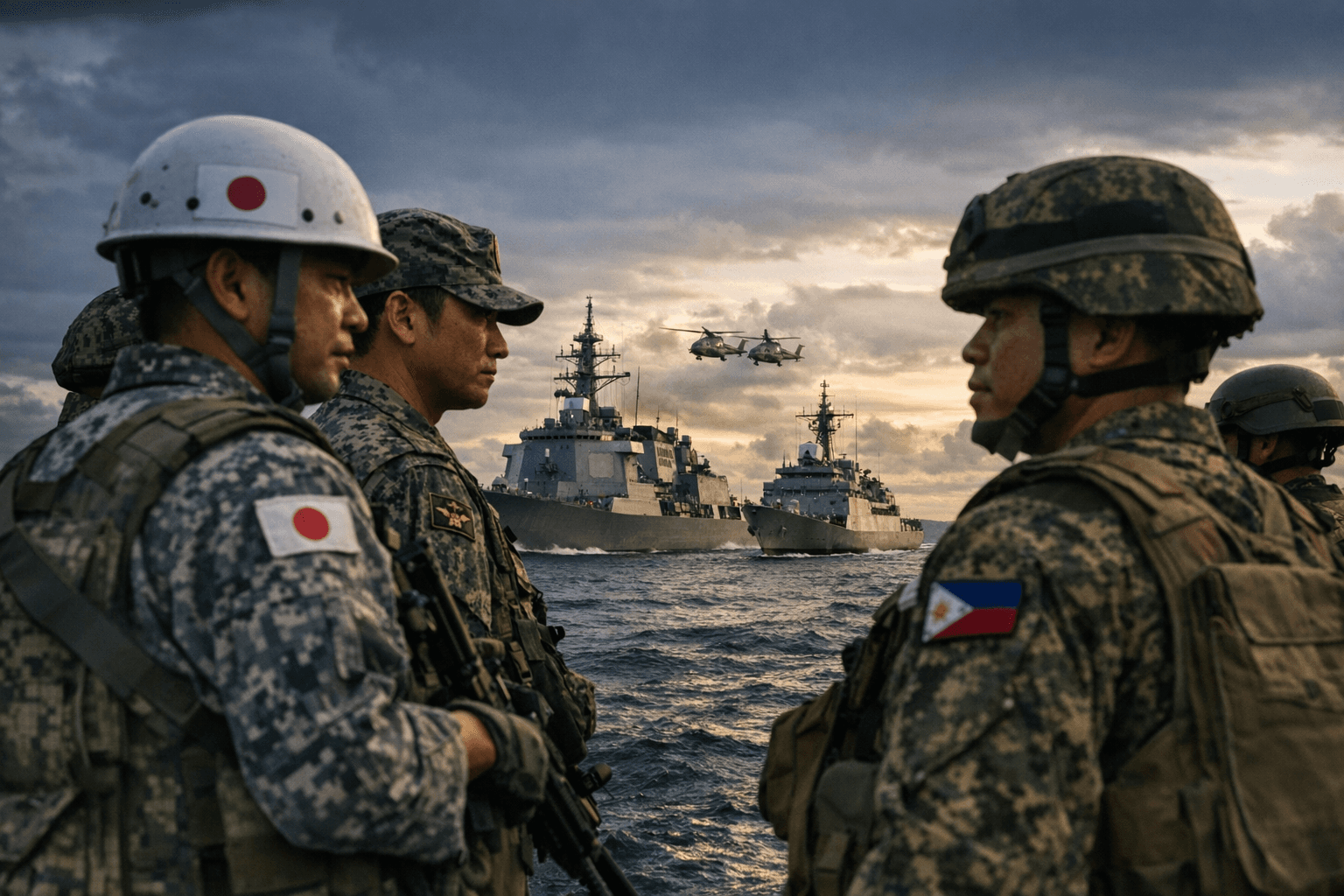
Photographs from the signing ceremony showed Motegi and Ma. Theresa P. Lazaro exchanging documents and shaking hands in Pasay City, underscoring the diplomatic optics Tokyo is cultivating as it expands its strategic footprint across the Middle East and Asia. Motegi is in Manila while on a nine-day foreign tour that includes stops in the Middle East and South Asia, indicating Tokyo’s broader effort to link its diplomatic outreach with security initiatives across multiple regions.
Operationally, the ACSA aims to reduce fiscal and procedural obstacles to rapid supply sharing during exercises and contingencies, smoothing logistics that can otherwise slow allied responses at sea. Strategically, the agreements further align Japanese and Philippine interests with those of other partners focused on preserving freedom of navigation and the regional order.
Key uncertainties remain: the precise legal text of the ACSA, the timetable for Japanese ratification, and delivery and construction schedules for the RHIBs. Those details will determine how quickly the new pacts translate into enhanced operational capability and whether they will alter the balance of deterrence in contested maritime areas.
Know something we missed? Have a correction or additional information?
Submit a Tip