Judge Disqualifies Acting U.S. Attorney From Probes Into Letitia James
A federal judge on Jan. 8, 2026 disqualified John Sarcone from participating in federal investigations that produced subpoenas to New York Attorney General Letitia James and quashed two subpoenas, finding Sarcone lacked lawful authority. The decision not only halts immediate demands for documents but adds to a string of rulings undermining temporary U.S. attorney appointments that could reshape several politically sensitive probes.
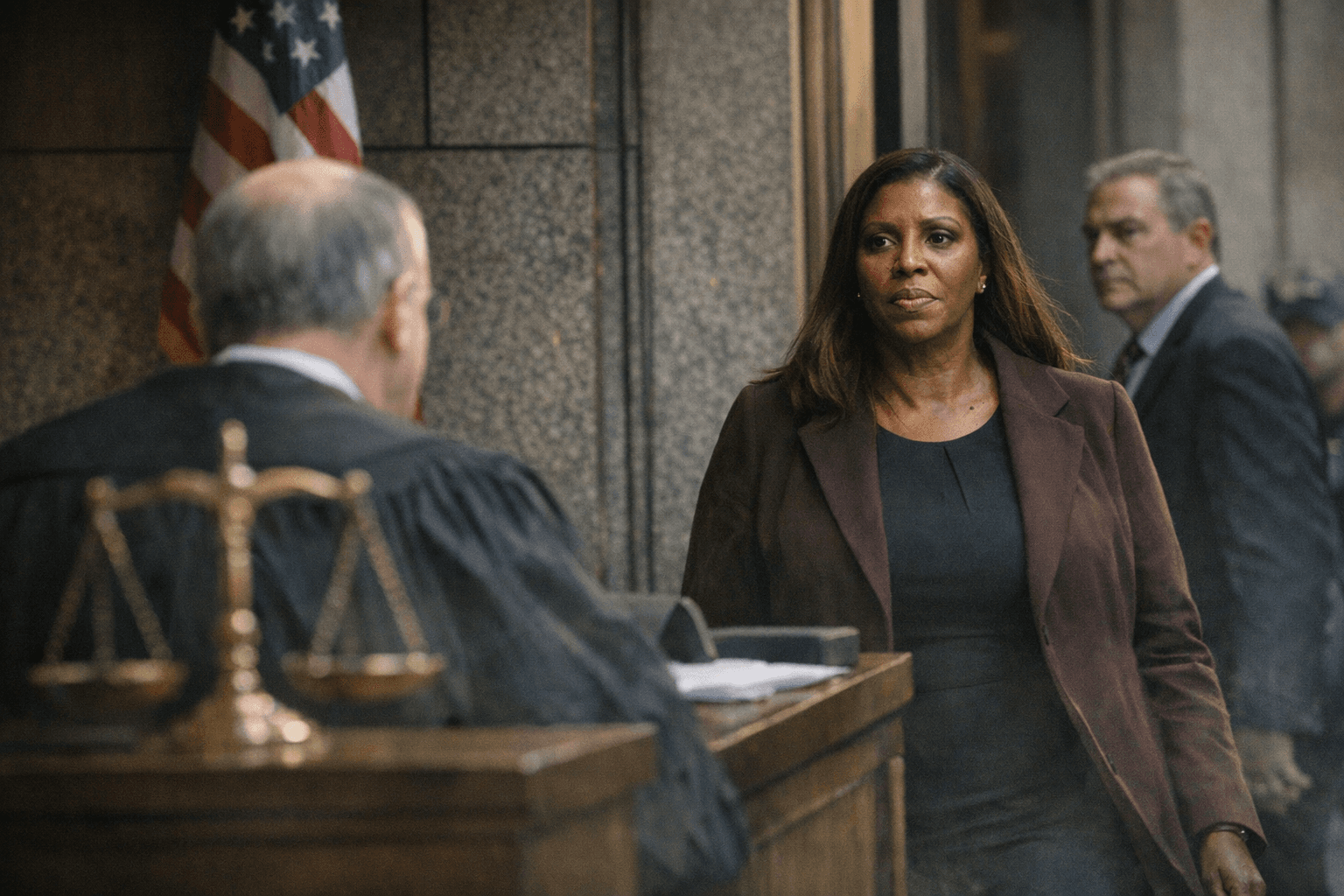
U.S. District Judge Lorna G. Schofield issued a 24-page opinion on Jan. 8, 2026, ruling that John A. Sarcone III "was not lawfully serving as Acting U.S. Attorney when the subpoenas were issued," quashing two subpoenas directed at the office of New York Attorney General Letitia James and disqualifying Sarcone from further involvement in the related criminal investigations.
Schofield found a threshold defect in the executive-branch moves that had kept Sarcone in office after an initial interim term. Sarcone, a former campaign attorney for President Donald Trump, was sworn in as interim U.S. attorney for the Northern District of New York on March 17, 2025. Under the Vacancies Reform Act, that interim appointment was limited to 120 days. When that period expired, judges in the Northern District declined to retain him.
Following the judges' decision, Attorney General Pam Bondi took steps to preserve Sarcone's role by designating him first assistant U.S. attorney and appointing him a special attorney. Federal officials contended those actions allowed him to continue serving; Sarcone and the Justice Department maintained the subpoenas were valid. Schofield rejected that defense, writing that because Sarcone remained in the job after the 120-day limit and had not been nominated or confirmed by the Senate, his acts "are void or voidable."
The subpoenas at issue sought documents from James' office concerning federal criminal inquiries tied to civil suits her office filed against former President Donald Trump, including allegations of business fraud, as well as matters involving the National Rifle Association and some of its former leaders. Schofield noted that each demand was signed solely by Sarcone, accompanied by cover letters stating they related to an "ongoing [federal] criminal investigation," and directed responsive material be sent to Sarcone personally.
Schofield framed the ruling in constitutional and institutional terms, warning of the risks when executive power is used to pursue political adversaries. "When the Executive branch of government skirts restraints put in place by Congress and then uses that power to subject political adversaries to criminal investigations, it acts without lawful authority," she wrote, adding that grand juries are not meant to be "the private tool of a prosecutor," especially one not lawfully appointed.
The decision immediately invalidated the two subpoenas and prohibited Sarcone from prosecutorial or supervisory roles in the specific investigations that produced them. The Justice Department has argued the appointments and subpoenas were proper and is contesting similar rulings in other districts. Courts recently have disqualified several Trump administration interim picks in high-profile cases in Nevada, Los Angeles, and elsewhere; Schofield's opinion is at least the latest in a cluster of judgments scrutinizing long-term use of temporary appointment mechanisms.
The ruling leaves unresolved whether the Justice Department will reissue lawful subpoenas or seek to place different prosecutors on the matters. It also raises practical questions about the timing and integrity of investigations that touch on political figures and ongoing litigation. For James, the decision represents a procedural victory that rebuffs the immediate federal demands for her office's records; for the Justice Department, it is likely to be the next front in an appeal battle over appointment authority and prosecutorial reach.
Know something we missed? Have a correction or additional information?
Submit a Tip