Junta-held Myanmar election advances amid low turnout, heavy criticism
Myanmar holds phase two of a military-run vote as low turnout and wartime disruption deepen doubts over legitimacy and stability.
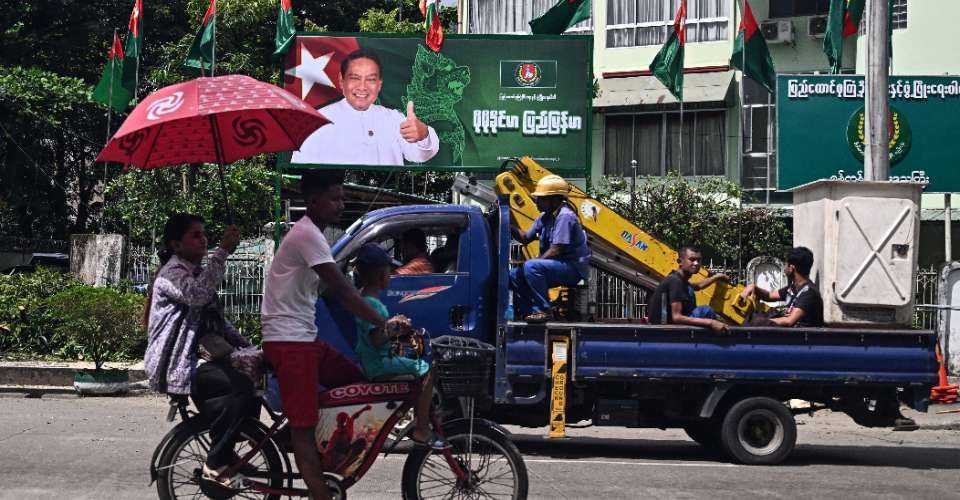
Polling stations opened at 6:00 a.m. in 100 townships across Myanmar on Sunday as the military government pressed ahead with the second phase of a three-stage general election that opponents and many foreign governments have dismissed as a bid to entrench junta rule.
The phase-two ballot covered townships in parts of Yangon and Mandalay cities and in Sagaing, Magway, Mandalay, Bago and Tanintharyi regions, as well as Mon, Shan, Kachin, Kayah and Kayin states. Voting is already barred in 65 townships where fighting makes polling impossible, and many of the areas that did cast ballots have been under heightened security or recent clashes.
On-the-ground accounts showed sparse turnout at numerous polling places in the country’s two largest cities, with some stations recording roughly 150 voters at the busiest sites and others seeing only a handful. Those figures contrast sharply with the long queues that marked the 2020 election and underscore the extent to which conflict, fear and political exclusion are shaping participation.
The military-aligned Union Solidarity and Development Party dominated the first phase on Dec. 28, capturing 90 of 102 lower-house seats contested, a result that analysts say reflects the junta’s control over the electoral environment rather than a free contest. Officials reported phase-one turnout at about 52 percent, saying more than 6 million ballots were cast from a pool of some 11 million eligible voters in that tranche. The government has set the overall electorate at just over 24 million people, roughly 35 percent fewer than in 2020, figures that critics say reflect voter roll reductions and exclusions that weaken the poll’s credibility.
Aung San Suu Kyi’s National League for Democracy has been dissolved after failing to register, along with dozens of other anti-junta parties, removing the principal civilian challengers from the ballot. Armed opposition groups, many ethnic armed organizations and broad swathes of the pro-democracy movement have also refused to participate, leaving the race dominated by military-aligned candidates and parties.

The junta and its supporters insist the vote will restore stability. Military spokesperson Zaw Min Tun told reporters on Jan. 11, “This is not just a victory for the government, but a victory for the people, an achievement for those who desire democracy and peace.”
Internationally, the United Nations, Western governments including the United States and the European Union, and human rights organizations have broadly rejected the polls as neither free nor fair, calling the process a ploy to formalize military authority under General Min Aung Hlaing. Analysts caution that attempting to build a stable administration through a military-controlled electoral process amid an active civil war may struggle to win broad international recognition and could compound the country’s isolation.
The humanitarian toll remains severe. Conflict monitoring groups estimate at least 16,600 civilian deaths since the 2021 coup, and United Nations figures point to about 3.6 million displaced people insideMyanmar. With the third and final voting phase set for Jan. 25, the junta faces the twin challenges of completing the ballot and persuading a skeptical domestic population and international community that the outcome can serve as a basis for peace and governance. For now, the election appears more likely to deepen political fragmentation than to bridge it.
Sources:
Know something we missed? Have a correction or additional information?
Submit a Tip