Kaua‘i Visitor Spending Climbs Despite Slight Drop in Arrivals
Preliminary state data show visitor spending on Kaua‘i jumped 13.1% in November 2025 to $236.9 million even as arrivals edged down about 1% year‑over‑year. The increase in average daily spending that drove the rise has implications for local businesses, tax receipts and county planning as Kaua‘i navigates post‑pandemic tourism shifts.
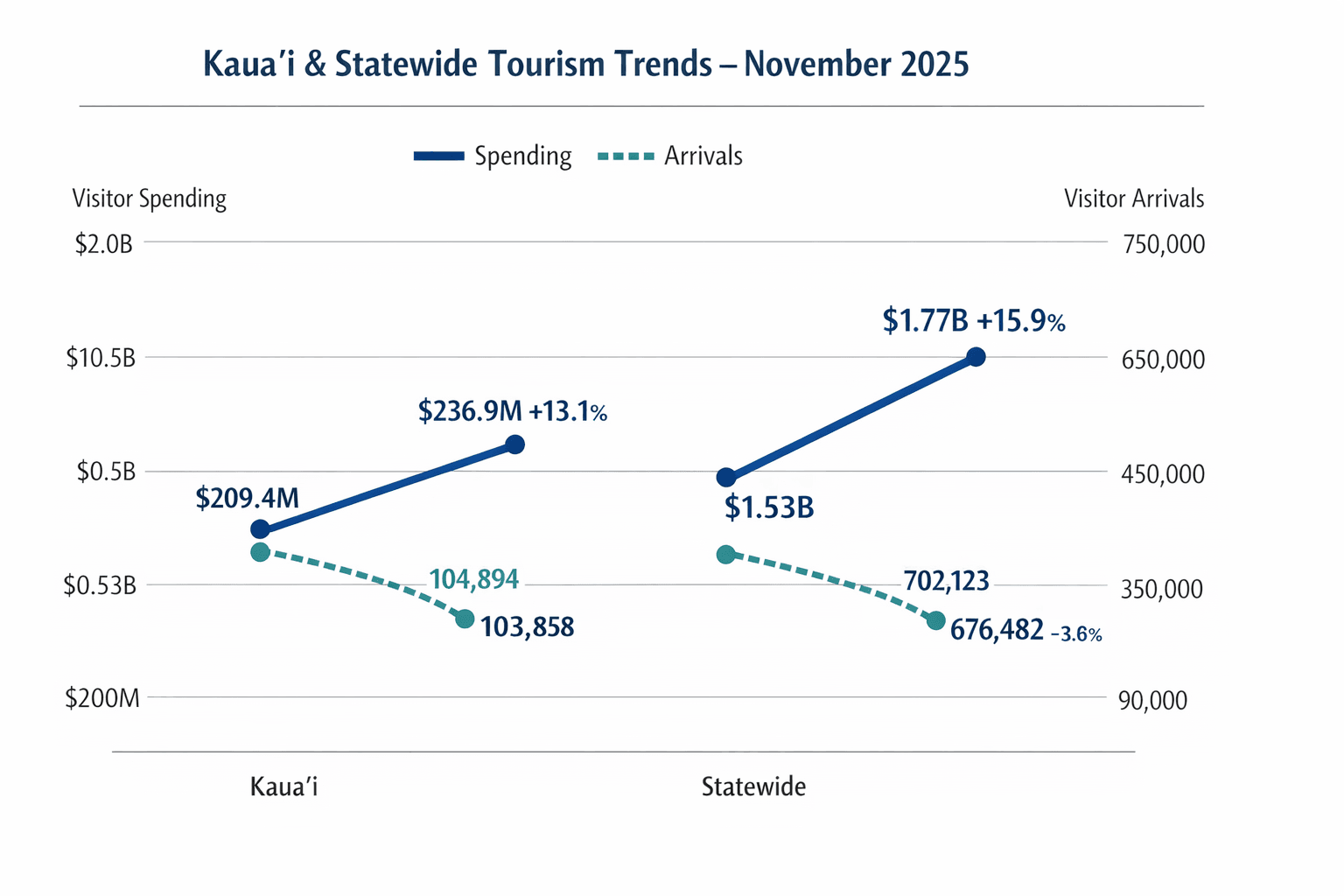
Preliminary data from the Hawai‘i Department of Business, Economic Development and Tourism show a notable divergence in November 2025: total statewide visitor spending rose 15.9% to $1.77 billion while overall arrivals fell roughly 3.6% compared with November 2024. Kaua‘i mirrored that pattern on the Garden Isle, where arrivals slipped to 103,858 from 104,894 a year earlier, a decline of about 1%, yet visitor spending increased to $236.9 million, up 13.1%.
The November figures indicate that higher per‑visitor or per‑day spending offset fewer travelers. Kaua‘i’s November spending represented roughly 13.4% of statewide visitor expenditures. Officials and business owners who rely on tourism dollars will feel that boost in revenue even as foot traffic across the island stabilizes below last year’s levels for the month.

For local retailers, tour operators, restaurants and lodging providers, higher average daily spending can translate into stronger receipts per booking and a partial cushion against lower occupancy or visitor counts. For county finances, increased spending raises potential transient accommodation tax collections and other tourism‑linked receipts, affecting revenue projections and budget choices for immediate services and capital projects.
The report also included Kaua‘i’s 11‑month cumulative visitor figures through November, situating the November performance within a broader trend for 2025. Taken together, the data point to a statewide pattern of revenue growth driven by spending intensity rather than volume growth. That pattern has multiple implications: it can reduce pressure from higher visitor volumes on infrastructure and natural resources while still supporting local wages and businesses, but it also raises questions about who is visiting and whether economic benefits are broadly distributed across the island economy.
Looking ahead, Kaua‘i’s planning and economic strategy will need to balance revenue gains with long‑standing local concerns around housing, workforce capacity and environmental carrying capacity. Tracking whether higher spending persists into the winter peak season will be critical for small businesses and county budget planners preparing for 2026. In the near term, the November numbers offer a mixed signal—fewer visitors arriving, yet more dollars flowing into the local economy.
Sources:
Know something we missed? Have a correction or additional information?
Submit a Tip