Keshena Falls, Heart of Menominee Culture and River Ecology
Keshena Falls, known in Menominee as Nama’o skiwamit, remains a living center of cultural practice and ecological connection for the Menominee people. Its role in traditional sturgeon runs, spring harvest celebrations, and everyday river use matters to local families, public health officials, and policymakers who share responsibility for protecting the river corridor.
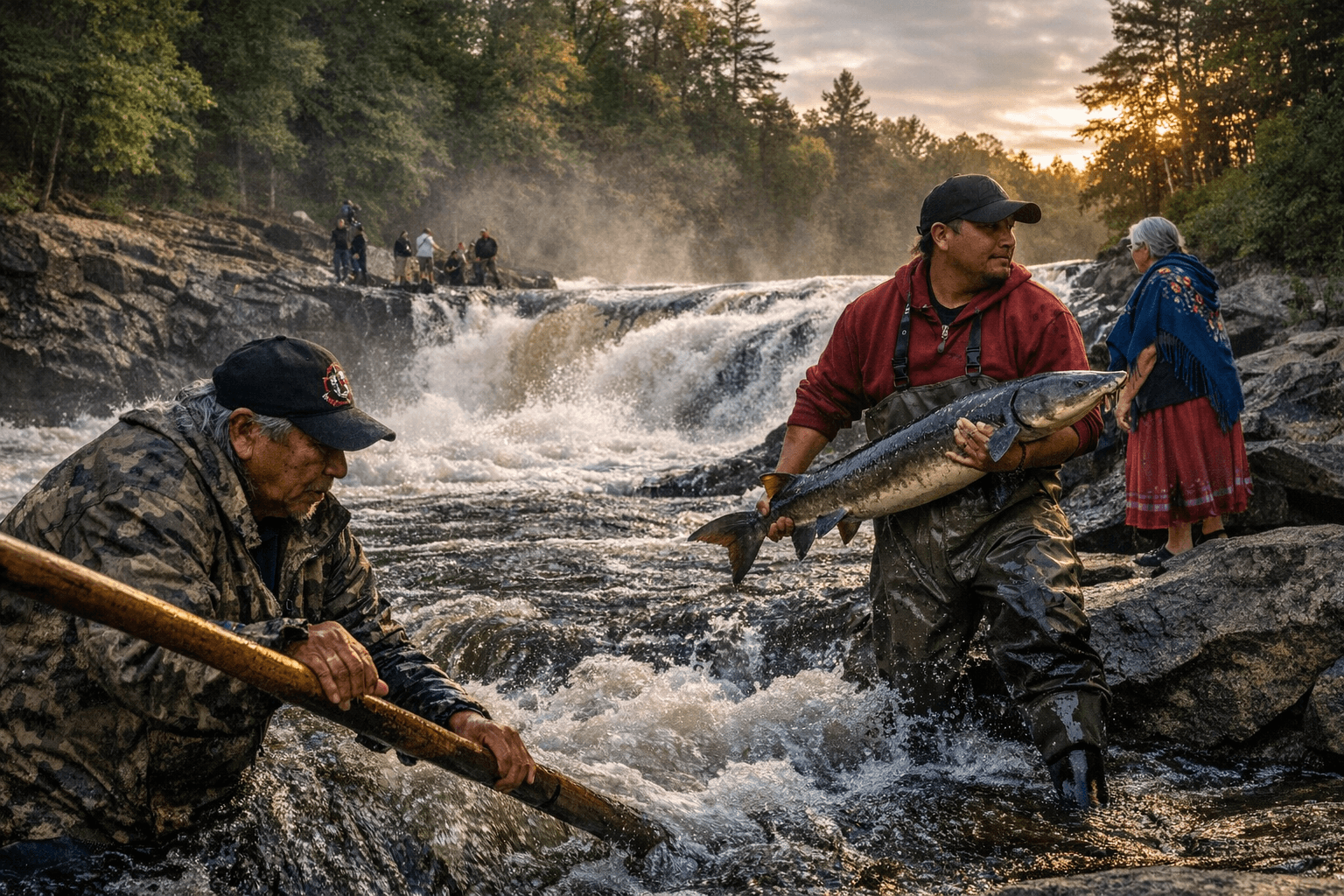
Keshena Falls sits at the intersection of culture, ecology, and community life in Menominee County. For generations the falls, called Nama’o skiwamit in the Menominee language, have marked the seasonal return of sturgeon and the rhythms of spring harvest celebrations. That continuity makes the site central to tribal cultural practices and to the Menominee relationship with the Menominee River.
The falls and the adjacent river corridor are used for fishing, river overlooks, and seasonal gatherings that sustain foodways and intergenerational knowledge. Local history and visitor materials routinely identify Keshena Falls as part of the broader tribal cultural landscape. That status brings regular foot traffic from residents and visitors, and it places the site squarely in discussions about land stewardship, public access, and community wellbeing.
Protecting the falls is a public health issue as well as a cultural priority. Access to traditional fish and other harvests supports nutrition and cultural continuity, while water quality and river management affect both food safety and recreational health. When rivers are stressed by pollution, altered flows, or loss of habitat, the impacts fall first and most heavily on communities that rely on them for subsistence and ceremony. For Menominee County, preserving river health is a preventative measure for both physical health and mental wellbeing tied to cultural identity.
Policy choices at local and state levels shape the future of Keshena Falls. Decisions about land use, water protections, and collaboration with the Menominee Tribe determine whether the falls will remain a safe place for fishing, ceremonies, and seasonal activities. Equitable access to the river corridor and meaningful tribal consultation are critical to addressing historical inequities and ensuring that stewardship reflects Menominee priorities.
Community organizations, tribal leaders, and county officials all have roles to play in maintaining the ecological integrity and cultural vitality of Keshena Falls. Protecting this landscape preserves more than a scenic site. It preserves practices, foods, and relationships that are essential to Menominee cultural survival and to the broader public health of Menominee County.
Sources:
Know something we missed? Have a correction or additional information?
Submit a Tip