Key West launches overtime enforcement to protect cyclists and pedestrians
City of Key West ran high-visibility enforcement Jan. 13 to reduce bicycle and pedestrian injuries. Residents and visitors should expect targeted patrols and safety education.
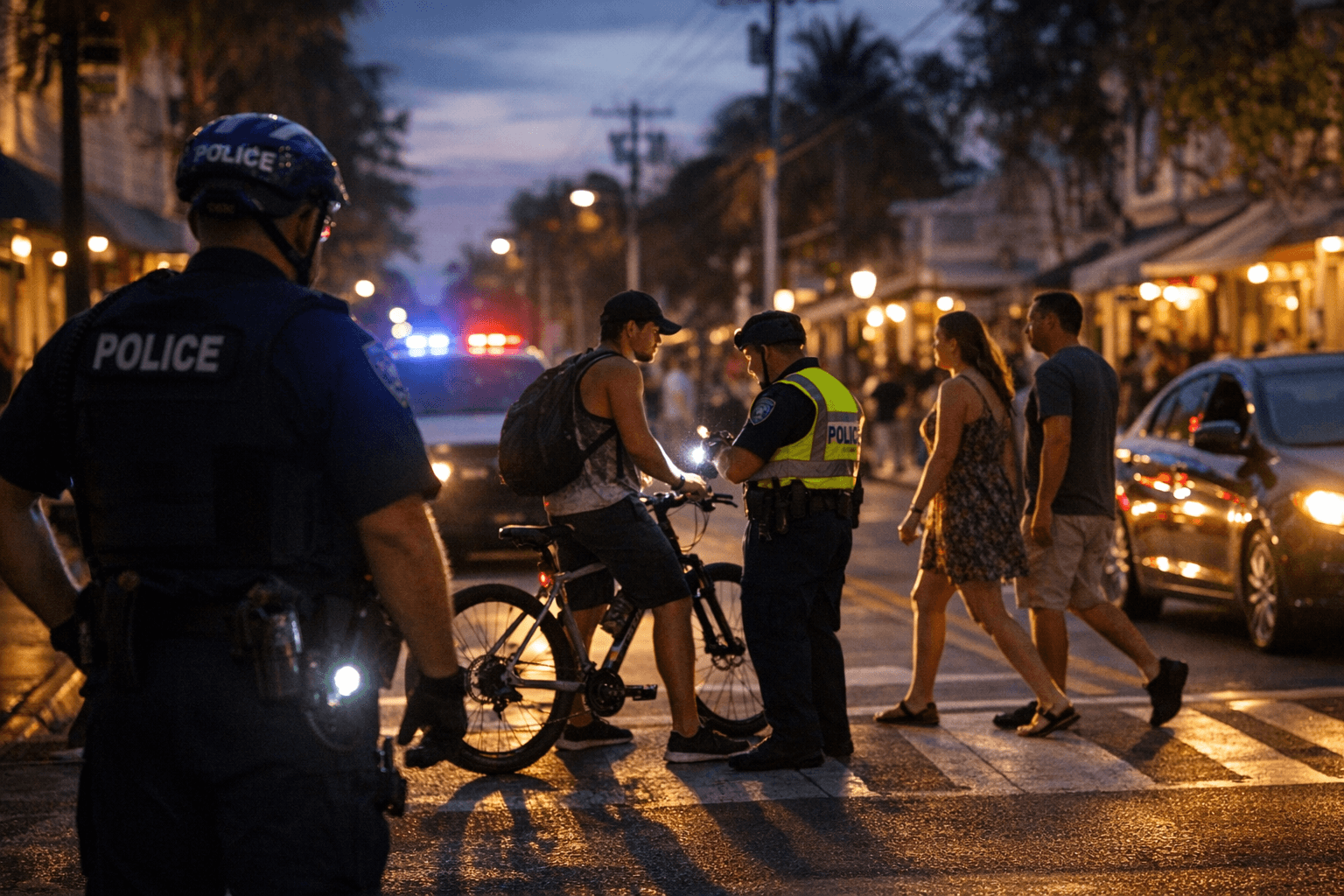
City of Key West, partnering with the Florida Department of Transportation and the Institute of Police Technology Management, activated a contract for overtime enforcement funding and conducted high-visibility patrols on Jan. 13 aimed at reducing bicycle and pedestrian injuries and deaths. The effort sent uniformed officers to specific times and locations where interactions between cars, bikes and people are most likely to create danger.
Officers working these details focused on changing dangerous behaviors across all road users. Patrols looked for speeding and drivers failing to stop for pedestrians in crosswalks, as well as improper turns and distracted driving. Enforcement also targeted risky conduct by nonmotorists: pedestrians crossing outside marked crossings, cyclists riding against traffic, and riders on bikes at night without proper lights. The campaign emphasized that each contact, whether or not it resulted in a citation, was intended to educate the public about avoidable hazards when autos, bicycles and pedestrians share the same space.
The overtime contract provides dedicated staffing for patrols rather than reallocating regular shifts, signaling a sustained municipal investment in visible enforcement. The involvement of the Florida Department of Transportation and the Institute of Police Technology Management brings state-level coordination and law enforcement expertise to local efforts, increasing the likelihood of consistent procedures and documented results.
For Monroe County residents and the many visitors who walk and bike the island, the immediate impact is both practical and behavioral. Motorists should expect more frequent stops and checks in downtown corridors and near busy crosswalks; cyclists should be prepared for attention to riding conventions and equipment such as lights; pedestrians should be mindful of using marked crossings. Beyond citations, the visible presence of officers aims to reduce risky split-second decisions that lead to serious injuries on narrow island streets.
The initiative also carries implications for local tourism and commerce. Safer streets can make Old Town and waterfront areas more inviting for foot and bicycle traffic, while persistent safety issues can harm the island’s reputation. Coordinated enforcement and education are a local response that complements engineering and public information efforts that the city and state may consider next.
The takeaway? Slow down and look twice where people bunch up - yield at crosswalks, keep lights on at night, and follow the flow of traffic on two wheels. Our two cents? Treat the island roads like shared living rooms: a little patience and the right gear go a long way toward keeping everyone, residents and visitors alike, moving safely.
Sources:
Know something we missed? Have a correction or additional information?
Submit a Tip