Key West wins $502,400 grant to bring AI to road safety
Local residents will learn how the federal grant funds AI near-miss sensors, who’s involved, and how the data will shape safer streets.

1. Federal grant award and program context The City of Key West received a notice of award for a $502,400 grant from the U.
S. Department of Transportation’s Safe Streets and Roads for All program. This federal funding directly supports the City’s Safety Action Plan, enabling targeted investments in technology and data-driven safety measures meant to reduce crashes and save lives on Monroe County roads.
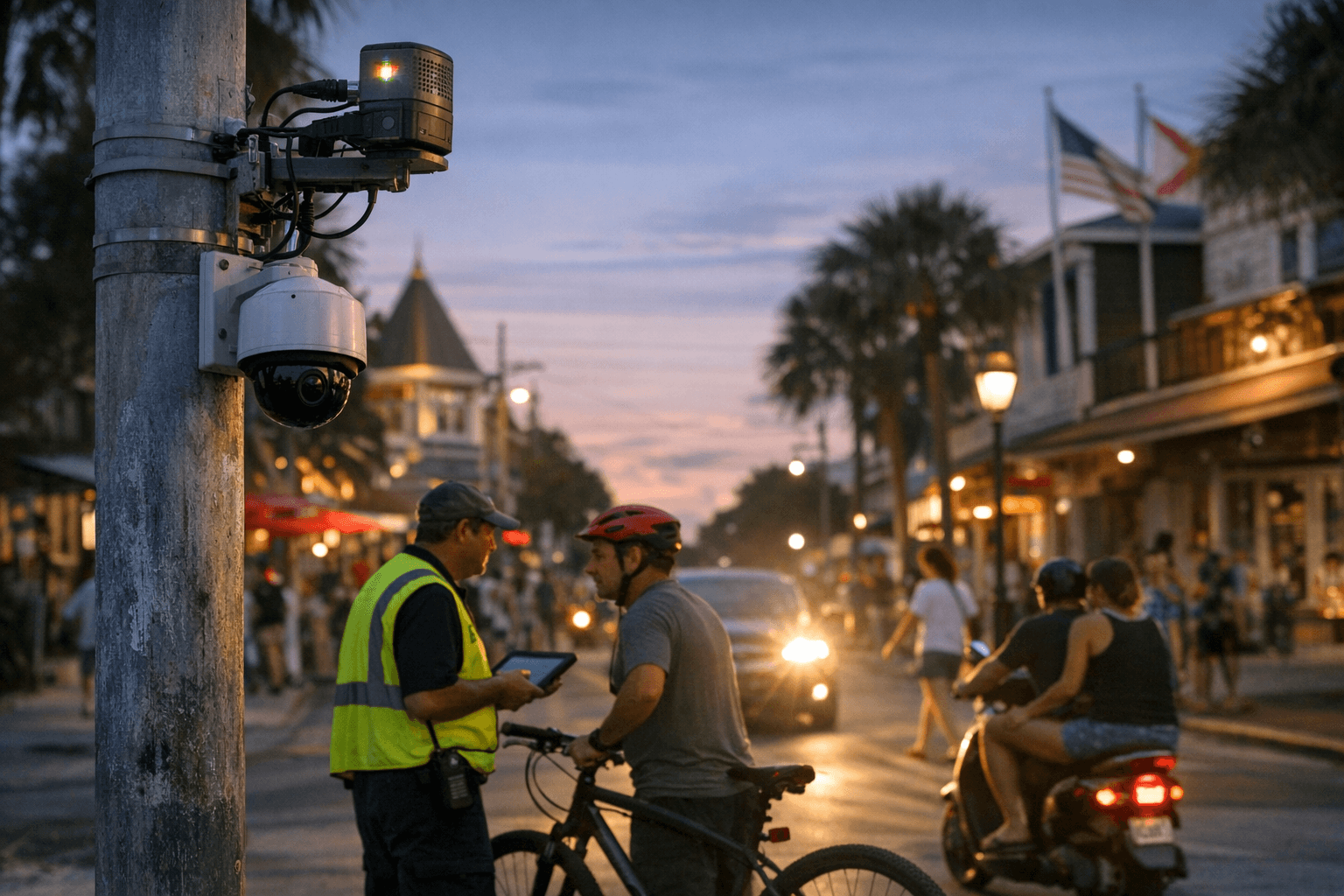
2. why the money matters for Key West The grant funds the installation of artificial intelligence-powered systems designed to identify near-miss incidents on busy corridors, turning hours of raw video into actionable alerts.
That shift from manual review to automated detection means the city can respond faster and prioritize engineering fixes and policy changes where data shows the greatest need.
3. Ray Atkinson’s announcement and plan Sustainable Transportation Coordinator Ray Atkinson framed the project in human terms: “I am excited to use the grant to help prevent more people from injury or even death when traveling in Key West,” said Sustainable Transportation Coordinator Ray Atkinson.
“The Safety Action Plan identified high-crash corridors. The grant will be used to install artificial intelligence-powered near-miss sensors on high-crash corridors to allow my team to be automatically informed of near-miss crashes without needing to review hours of video recording. My team will review these crashes to implement safety improvements. I believe the City of Key West will be the first city in Florida to use AI-powered near-miss sensors on high-crash corridors.” Those words underline the city’s commitment to evidence-led safety work and its ambition to be a statewide pioneer.
4. what the technology does and why it’s different AI-powered near-miss sensors flag potentially dangerous interactions—pedestrians, bicyclists, scooters, and vehicles—before they become full collisions, giving planners a richer picture of risk.
Rather than relying solely on police crash reports, which capture only incidents that result in official reports, near-miss data reveals recurring hazards and near-failures that signal where physical or operational changes are overdue.
5. data transparency and public resources Key West is expanding its data gathering and public access to safety information; the City’s website provides up-to-date information on everything from the location of bike racks to links that provide searchable details of crash locations.
Residents should check the City site page at /804/Car-Free-Key-West to explore crash maps, e-bike guidance, and other multimodal resources that will be central to local planning and daily decisions.
6. local partnership and technical support Multimodal Transportation Coordinator Ryan Stachurski is working with the University of Florida and consultant Elisa Levy to translate sensor data into real-world improvements.
Levy announced this week that Key West will be showcased in June at the American Society of Civil Engineers Conference to share the challenges the city faces and the solutions in the Safety Action Plan, a sign that local work is already attracting national professional attention.
7. community impact and everyday benefits For residents and visitors, the project means safer crossings, clearer bike routes, and more informed traffic-calming measures where they’re needed most.
Faster identification of trouble spots should reduce the time between problem detection and physical fixes, helping to prevent injuries and improve the quality of life along busier corridors.
8. privacy, legal and operational safeguards Using video and AI in public spaces raises questions about privacy and data governance that the City will need to address.
The approach described centers on automated alerts for near-misses and human review by city staff to design safety improvements, not on punitive automated enforcement; keeping that distinction clear will be important for community trust and legal compliance.
9. what this means beyond Monroe County If Key West becomes Florida’s first municipality to deploy AI near-miss sensors on high-crash corridors, the city could serve as a practical model for other coastal towns and tourist centers balancing heavy pedestrian activity with vehicle traffic.
Sharing findings at the ASCE conference will help export lessons learned and attract technical partners who can scale successful practices across the state and beyond.
10. how residents can stay involved and what to watch next Watch for updates from the City and Stachurski’s office as sensor installations and data dashboards roll out, and consult the City’s Car-Free Key West page for crash maps and bike-rack locations.
Expect public briefings or community meetings as the team reviews near-miss data and proposes specific street-level changes.
The takeaway? This grant is a smart, modestly sized investment with outsized potential—by combining federal support, university know-how, and local street smarts, Key West is turning near-misses into knowledge and, eventually, safer trips for everyone. Our two cents? Keep an eye on the City site, speak up at community meetings, and treat this as a chance to help shape how new tech keeps our streets safe.
Sources:
Know something we missed? Have a correction or additional information?
Submit a Tip