La Grande negotiator resolves train-bridge crisis; resident hospitalized
Police asked residents to avoid Island Avenue as officers and a negotiator resolved a person-at-risk on the train bridge; the individual surrendered and went to hospital.
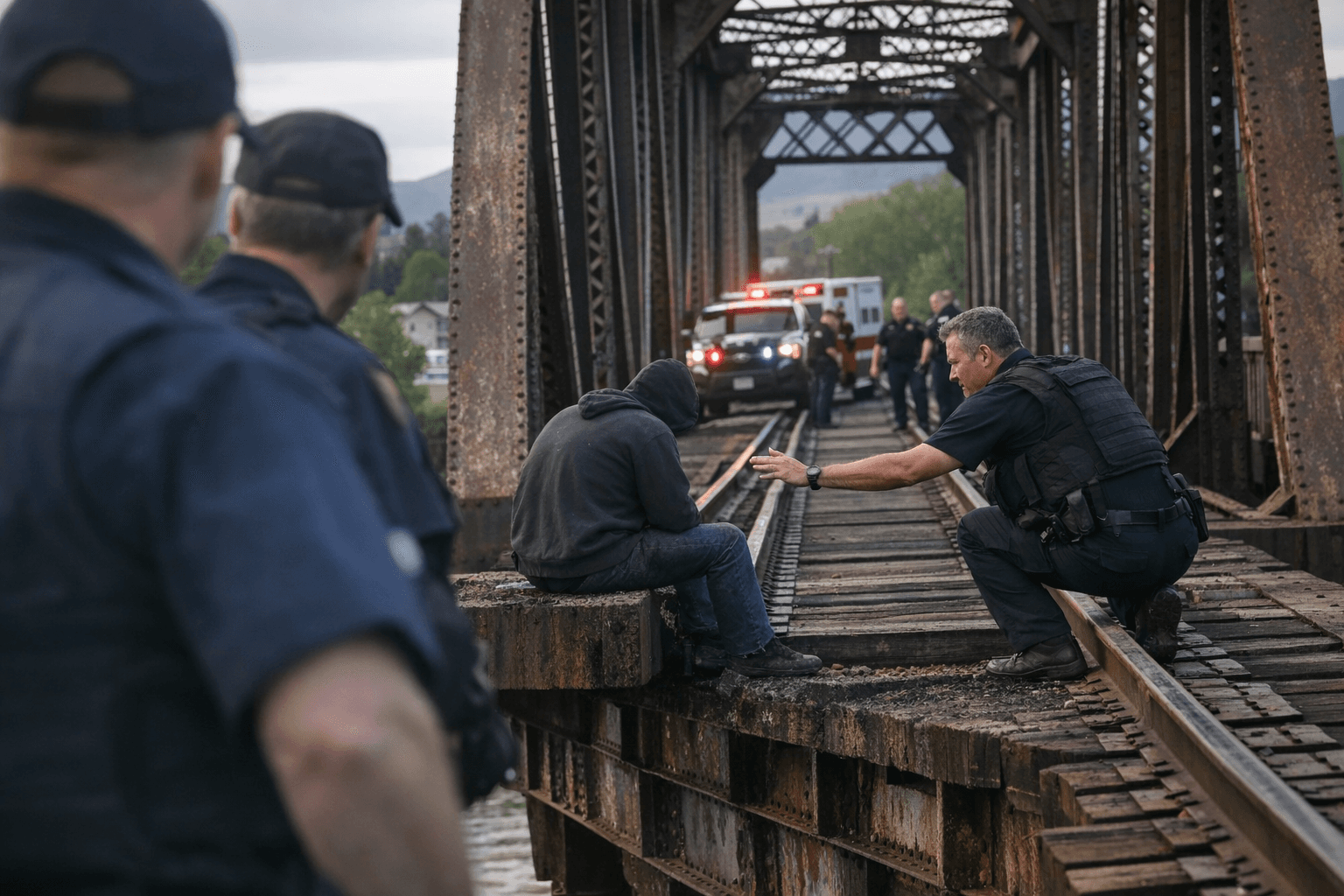
On the evening of January 7, the La Grande Police Department asked the public to avoid Island Avenue between Adams and Monroe after officers encountered a person on the train-bridge who had threatened self-harm. Multiple police units and a trained negotiator responded to the scene, and the department said the situation ended without injury when the individual voluntarily surrendered and agreed to seek help.
La Grande police moved quickly to secure the area and to limit disruption while negotiators worked to de-escalate the incident. The person was transported to a hospital for evaluation and care following the surrender. Lt. Jason Hays later credited the negotiator for the outcome and asked the community to continue supporting public safety and to exercise discretion while the matter was handled.
For residents, the episode underlines two immediate concerns: safety near rail infrastructure and how the city responds to behavioral health crises in public spaces. The department's public notice to avoid Island Avenue was aimed at protecting both the person involved and neighbors who could be affected by emergency activity. The use of a trained negotiator reflects a law enforcement emphasis on crisis intervention techniques intended to reduce harm and connect individuals to care.
Institutionally, the incident highlights the importance of cross-training and preparedness for local responders. Negotiation skills, awareness of mental-health resources, and coordinated scene management are essential when police confront people in precarious locations such as bridges or tracks. The department's communication to the public during the event also demonstrates a balance between informing residents and preserving discretion while sensitive matters unfold.
Community implications extend beyond this single night. Neighbors who witnessed police activity may have questions about what happened and how to support someone in crisis. Local civic engagement can steer policy discussions about resources for mental-health response, whether through enhanced training for officers, partnership with behavioral health professionals, or investment in preventive outreach.
The takeaway? If you encounter someone in immediate danger, call 911 and allow trained responders room to work. Respect requests for discretion when police ask the public to avoid an area; doing so helps keep people safe and preserves privacy. Our two cents? Keep an eye on neighbors, learn the signs of a crisis, and support local efforts that connect people to care so incidents like this resolve safely.
Sources:
Know something we missed? Have a correction or additional information?
Submit a Tip