Lambert High Students Build Low Cost Outbreak Test, Win iGEM Medals
Lambert High School students developed a lower cost method to help predict disease outbreaks and won medals at the international iGEM competition on December 5, 2025, outperforming several college teams. The project combines hands on engineering with biology, and its local rollout could strengthen Forsyth County public health capability while more broadly feeding the region's STEM pipeline.
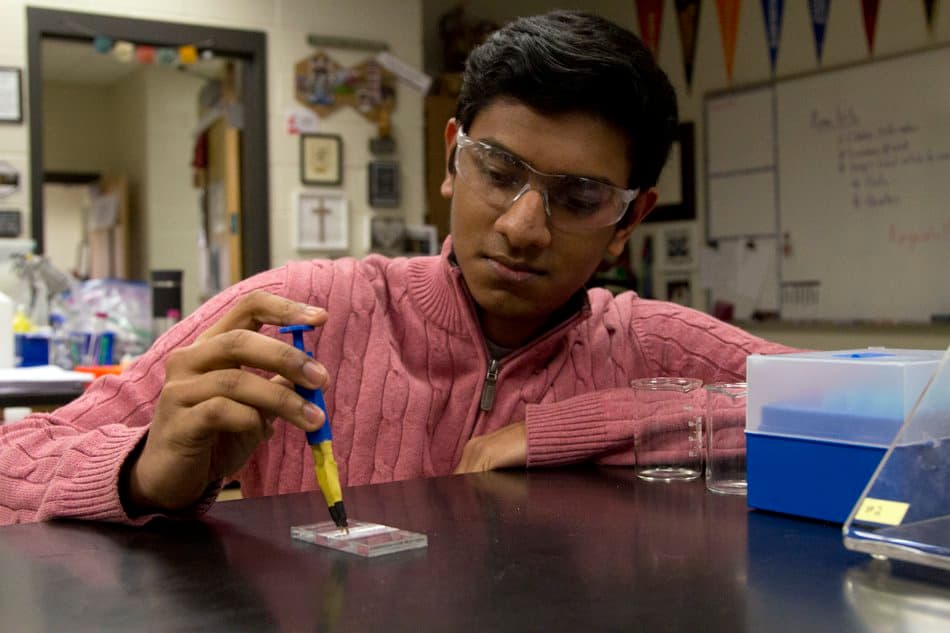
A team of students from Lambert High School captured international attention on December 5, 2025, when their entry in the International Genetically Engineered Machine competition earned medals after competing against college and university programs. The judged project centered on a lower cost approach to predicting disease outbreaks, an outcome notable for both its technical ingenuity and its potential community relevance.
The group built and tested prototypes in school labs, relying on 3D printed components and improvised electroplating devices to fabricate assay parts at a fraction of the usual cost. Classroom mentorship from teachers and external advisors guided the work, and students documented laboratory procedures through photos and written records. Teachers placed the effort within an applied classroom curriculum that emphasizes prototyping, experimental design, and data analysis.
For Forsyth County the immediate significance is practical. Local public health departments operate under tight budgets and irregular grant cycles. A lower cost predictive method could expand the ability of county health officials to run surveillance more frequently or across more sites without proportionately higher costs. Beyond direct public health benefits, the project strengthens the local workforce pipeline. High school students who gain hands on experience in synthetic biology and hardware fabrication are likelier to pursue biotechnology careers or to start small technical ventures, which can seed local economic growth.

On the market side the team’s work highlights broader trends in democratizing laboratory technology. Falling costs for 3D printing and DIY electronics reduce barriers to entry for early stage diagnostic tools, which can accelerate innovation but also raises questions about regulation and quality control. For policymakers in Forsyth County and nearby jurisdictions those tradeoffs suggest two priorities. First, invest in supervised school and community lab spaces so students can prototype safely and reliably. Second, create pathways for collaboration between schools, the county health department, and local colleges to vet promising tools for pilot use.
The students plan to expand outreach and share their methods with local schools and health partners in the coming months. If adopted, the approach could offer a low cost, locally managed supplement to existing surveillance systems while also demonstrating the economic value of investing in STEM education and practical lab infrastructure.