Lando Norris Triumphs in Abu Dhabi, Claims First Formula One Title
Lando Norris clinches his first Formula One drivers championship in a tense Abu Dhabi finale, holding off Max Verstappen by two points and delivering McLaren its long awaited pinnacle. The result reshapes competitor dynamics, boosts McLaren's commercial prospects, and marks a cultural moment as the first British champion since Lewis Hamilton's 2020 title.
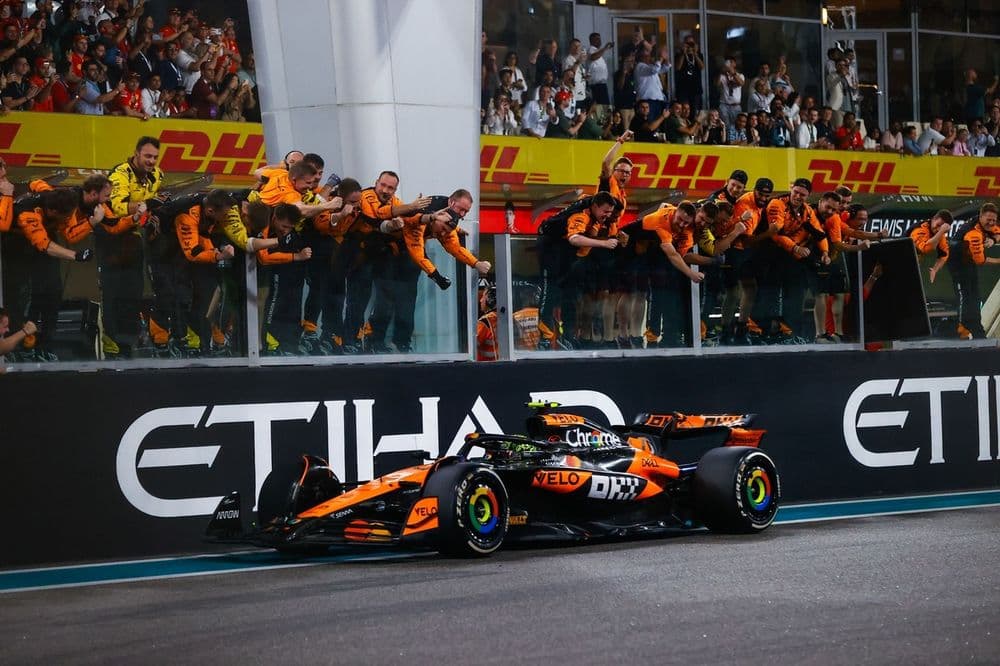
Lando Norris sealed the drivers championship at the season ending Abu Dhabi Grand Prix today, finishing third in a pressure filled finale while Max Verstappen took the race victory. Norris completed a campaign that came down to inches and split seconds, ending the year two points clear of Verstappen in the standings. Oscar Piastri, Norris's McLaren teammate, finished second in the race and rounds out the season in third place overall.
The outcome was decided not just by pure pace but by a complex interplay of pit strategies and race management. Teams made aggressive calls on tyre windows and service timing, while penalties and track position shuffled the order at crucial moments. A five second penalty assessed to Yuki Tsunoda influenced his track position and rippled through strategic calculations for several teams late in the race. Those variables allowed McLaren to protect a narrow points margin and secure the title that has eluded the team and its lead driver for years.
From a performance standpoint Norris delivered consistency under pressure, combining qualifying speed with race craft and tyre management to withstand direct attacks from a relentless Verstappen. Piastri reinforced his standing as a future team anchor by converting race pace into a podium and a top three finish in the championship. For Red Bull and Verstappen the win in Abu Dhabi underscores recurrent race dominance, but the championship outcome highlights increasing competitive parity at the front of the grid.
Industry implications are immediate. McLaren returns to the summit of the sport at a moment when Formula One is expanding its global footprint and commercial reach. A drivers title for Norris amplifies McLaren's value to sponsors, elevates merchandising opportunities, and strengthens the brand premium that underpins long term partner deals. It also intensifies scrutiny of team structures across the paddock, with rival organizations likely to reassess driver development, pit lane operations, and strategy analytics.
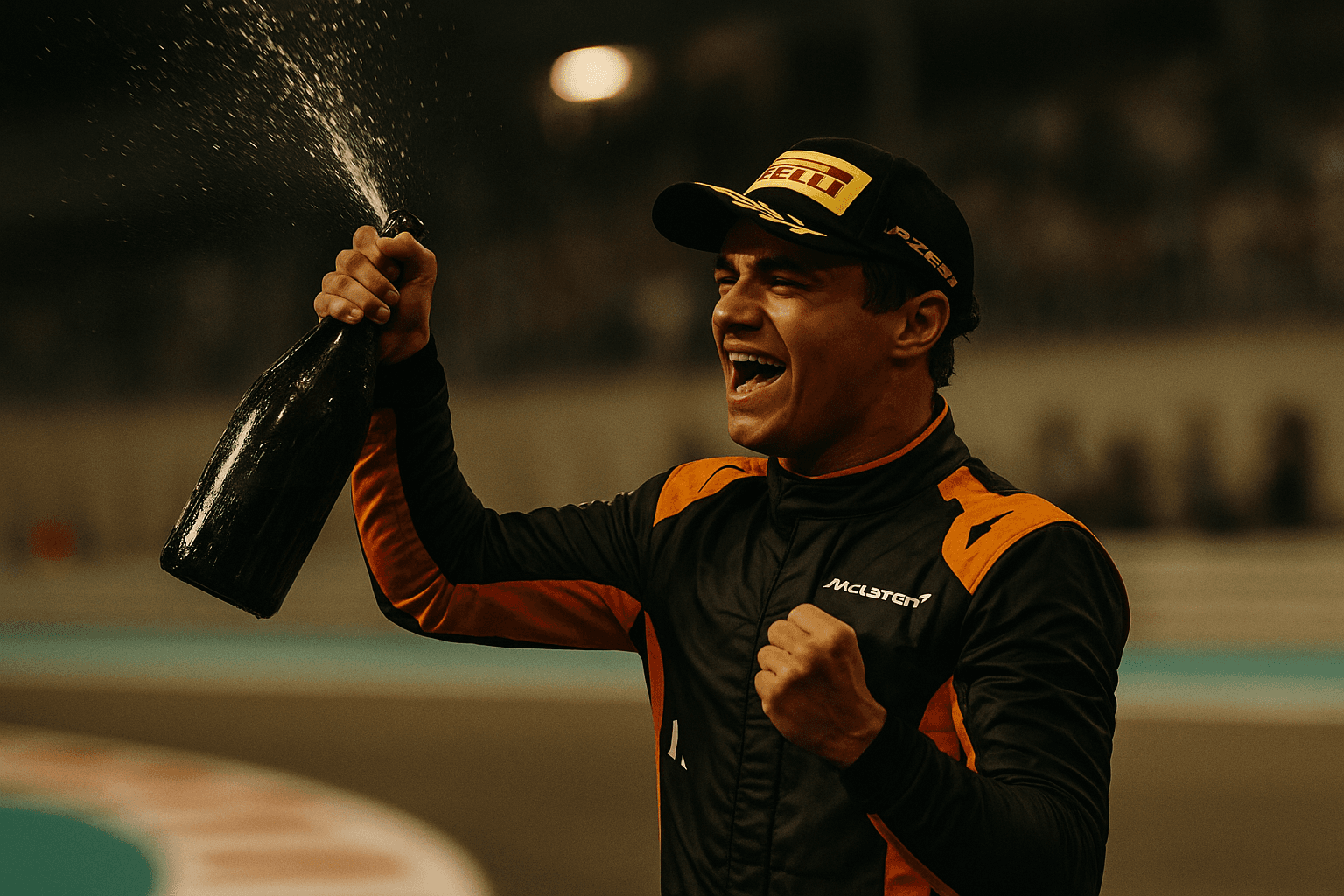
Culturally the result resonates beyond motorsport. Norris becomes the first British world champion since Lewis Hamilton in 2020, reviving a national narrative of racing excellence and offering a new figurehead for British motorsport. Norris's youthful profile and crossover appeal to streaming and social audiences positions him as a bridge between traditional racing fans and younger viewers who have helped drive Formula One's recent popularity surge.
Socially, the championship underscores sport as a platform for community and identity and will likely inspire increased grassroots interest in karting and junior formulas across the United Kingdom. For McLaren the title is a validation of long term investment in engineering, driver grooming, and commercial strategy. As the paddock turns toward build season, teams will confront the dual challenge of preserving competitive gains while preparing for a new cycle of technical and market pressures that will define the next era of Formula One.