Langley Swears In Three New Council Members Focused on Housing
On Jan. 9 the Langley City Council seated Savannah Erickson, Dominique Emerson and Thomas Gill, replacing three incumbents who did not seek reelection. The new council members prioritized housing, fiscal resilience and streamlined development rules—issues that will affect local taxes, services and future growth for the one-square-mile city.
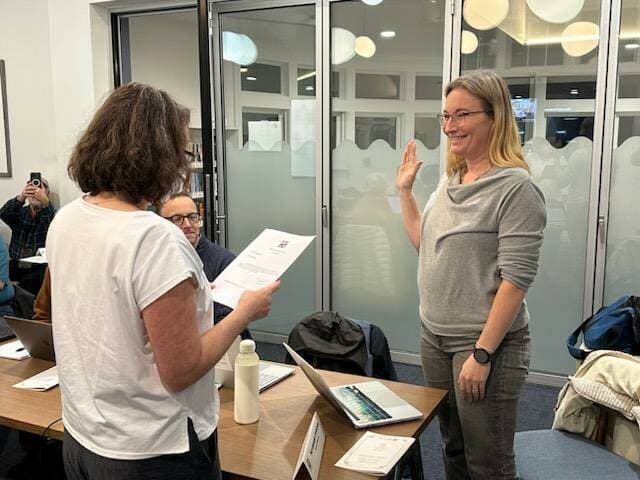
Langley’s City Council opened 2026 with a trio of new members sworn in at Monday night’s meeting, signaling an early focus on housing affordability and municipal finances. Gail Fleming, Harolynne Bobis and Rhonda Salerno did not seek reelection, leaving room for Savannah Erickson, Dominique Emerson and Thomas Gill to begin new terms.
Savannah Erickson, a rookie council member, brings emergency-management experience from more than a decade at the Federal Emergency Management Agency and current service as a fire commissioner for the South Whidbey Fire/EMS board. Dominique Emerson returns to the council after a previous four-year term that began with her 2017 election. Thomas Gill was elected to two prior council terms, in 2019 and 2013.
All three identified housing as a top priority. Erickson framed housing as essential to sustaining local businesses by helping attract and retain a workforce that can afford to live in Langley. Gill said the council should remove unnecessary roadblocks for sensible development ideas, arguing that new projects boost property tax revenue and ease the fiscal burden on long-time residents. He also raised the possibility of a levy lid lift as one tool to address rising operating costs, while stressing that any proposal would require educating residents before a vote.
Emerson urged the council to set future rate structures with an assumption that a share of the population will be lower income. That approach may require reassessing existing code limits, including building-height restrictions, to make development more affordable. “We are a one square mile hamlet of 1,100 people,” Emerson said, adding that the city must become more financially sustainable because it currently cannot afford to pay fair wages to staff, maintain safety records and continue providing essential services such as utilities, planning and parks.
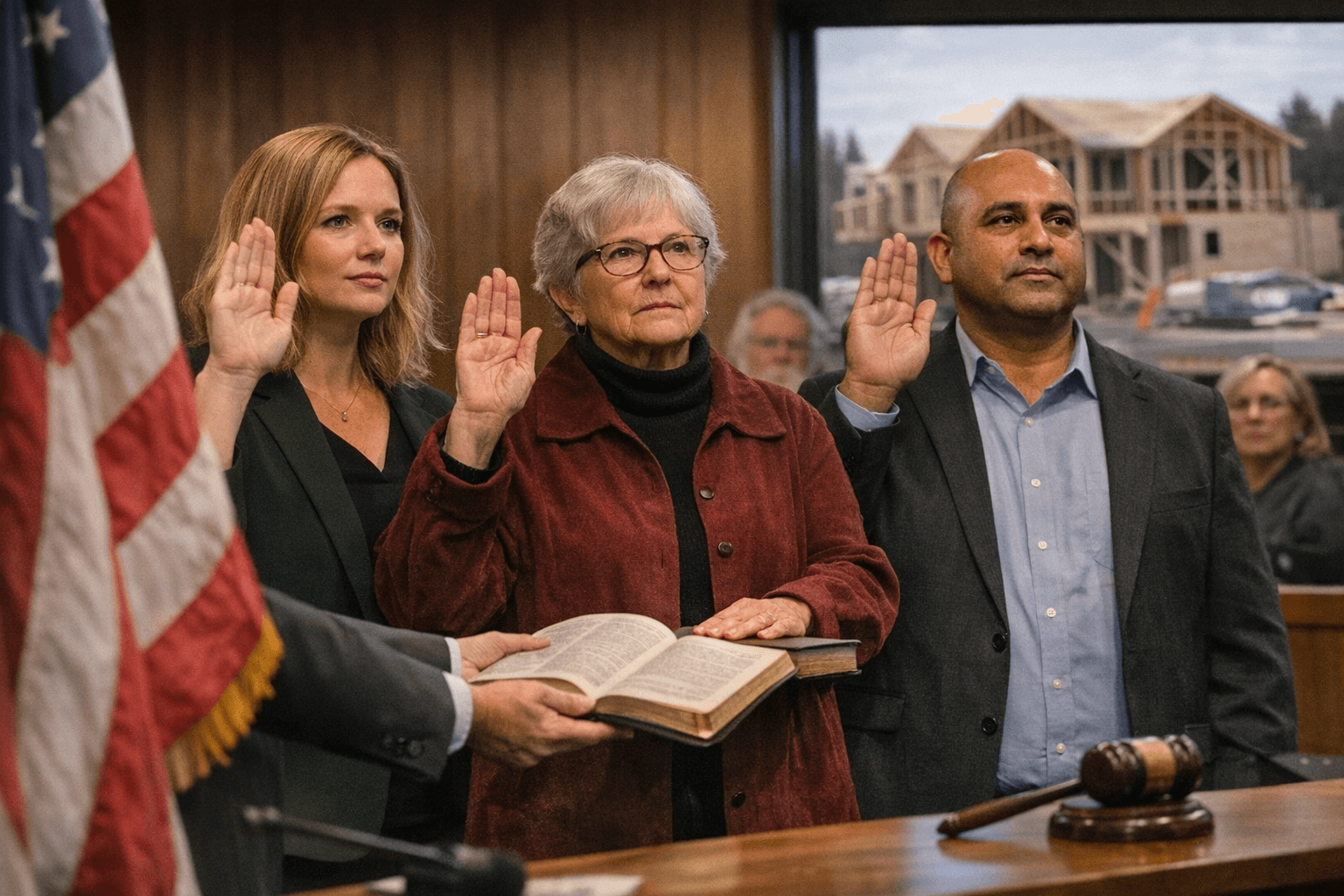
Erickson said she will prioritize ensuring core municipal functions remain operational and financially viable, and acknowledged Mayor Kennedy Horstman’s efforts given the modest mayoral stipend. She also listed goals including a more walkable downtown, stronger environmental protections and clearer lines of communication between council and community.
For residents, the new council’s agenda points to potential changes in development rules, tax policy and service priorities that could shape Langley’s character and affordability. As the council moves into budget and code discussions this year, decisions on how to balance small-town quality of life with fiscal stability will have direct consequences for homeowners, renters, local businesses and municipal staff.
Sources:
Know something we missed? Have a correction or additional information?
Submit a Tip