Navy delays PFAS cleanup at NAS Whidbey until 2028
An interim cleanup of PFAS contamination at Naval Air Station Whidbey Island won't be operational until fiscal year 2028. That delay affects local timelines for reducing groundwater risk.

The Navy confirmed that an interim action to treat per- and polyfluoroalkyl substances, or PFAS, tied to the Area 6 Landfill at Naval Air Station Whidbey Island will not be operational until fiscal year 2028. The move follows detection of elevated PFAS levels in groundwater at the landfill, where materials containing PFAS, including firefighting foam used for jet-fuel fires, were historically disposed.
Naval Facilities Engineering Systems Command Northwest, known as NAVFAC, said the interim action is being pursued to address the discharge before a final remedy for the site is selected. NAVFAC estimated the project’s total net worth at $5.73 million. The agency also explained that inquiries about the Navy’s PFAS cleanup on and around military installations require clearance by the Office of the Secretary of War, and NAVFAC did not release comments on the action until Jan. 8.
The planned treatment sequence begins with GreensandPlus, a granular filter media intended to remove naturally occurring manganese from the groundwater. That step will be followed by Fluoro-Sorb 200, a granular clay media designed to trap PFAS contaminants through adsorption. Public comment on the interim action closed on Jan. 8, moving the process into its next administrative and design phases.
For Island County residents, the delayed operational date means a longer wait for on-site treatment tied directly to the landfill. Elevated PFAS in groundwater raises concern because these compounds are persistent in the environment and can move through groundwater toward larger hydrologic systems. Many local households and businesses rely on well water and depend on nearby marine and freshwater resources, so monitoring and timely communication about exposure pathways remain central community priorities.
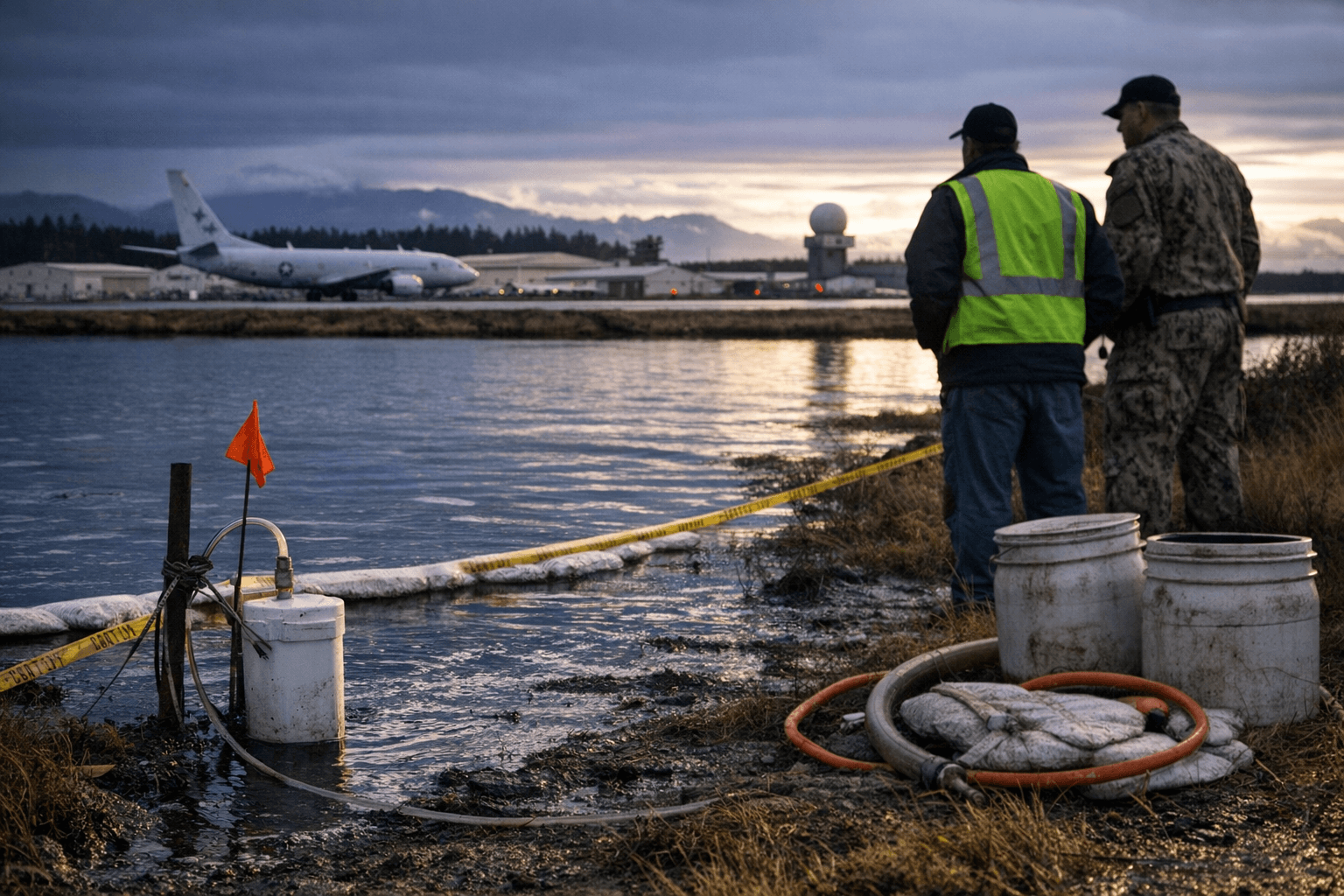
The interim action’s purpose is to limit ongoing discharge and reduce immediate risk while engineers and regulators evaluate long-term remedies. However, an operational start in fiscal year 2028 pushes tangible mitigation farther into the future, reinforcing the need for interim protections, well testing, and coordination between the Navy, county health officials, and state regulators.
The global spotlight on PFAS has made military sites a focal point for cleanup efforts worldwide, and the materials and costs outlined by NAVFAC reflect a specific, technical approach to capturing these substances. For local residents, the practical next steps are clear: stay engaged with county and Navy notices, track testing results for private wells, and expect further project design updates as the Navy moves from public comment to implementation.
Our two cents? Keep your well tests current, subscribe to county updates, and press for clear timelines—practical vigilance matters while plans slowly move from paper to pump.
Sources:
Know something we missed? Have a correction or additional information?
Submit a Tip