Legend Lake Guide: Recreation, Management, and Local Policy
Legend Lake is Menominee County’s largest and most-used recreational waterbody, a chain of connected lakes covering roughly 1,304 acres with nearly 47 miles of shoreline and a maximum depth near 74 feet. Its year-round use and local governance raise practical and policy questions about access, invasive species prevention, and coordination among lake organizations, the Wisconsin Department of Natural Resources, and county authorities.
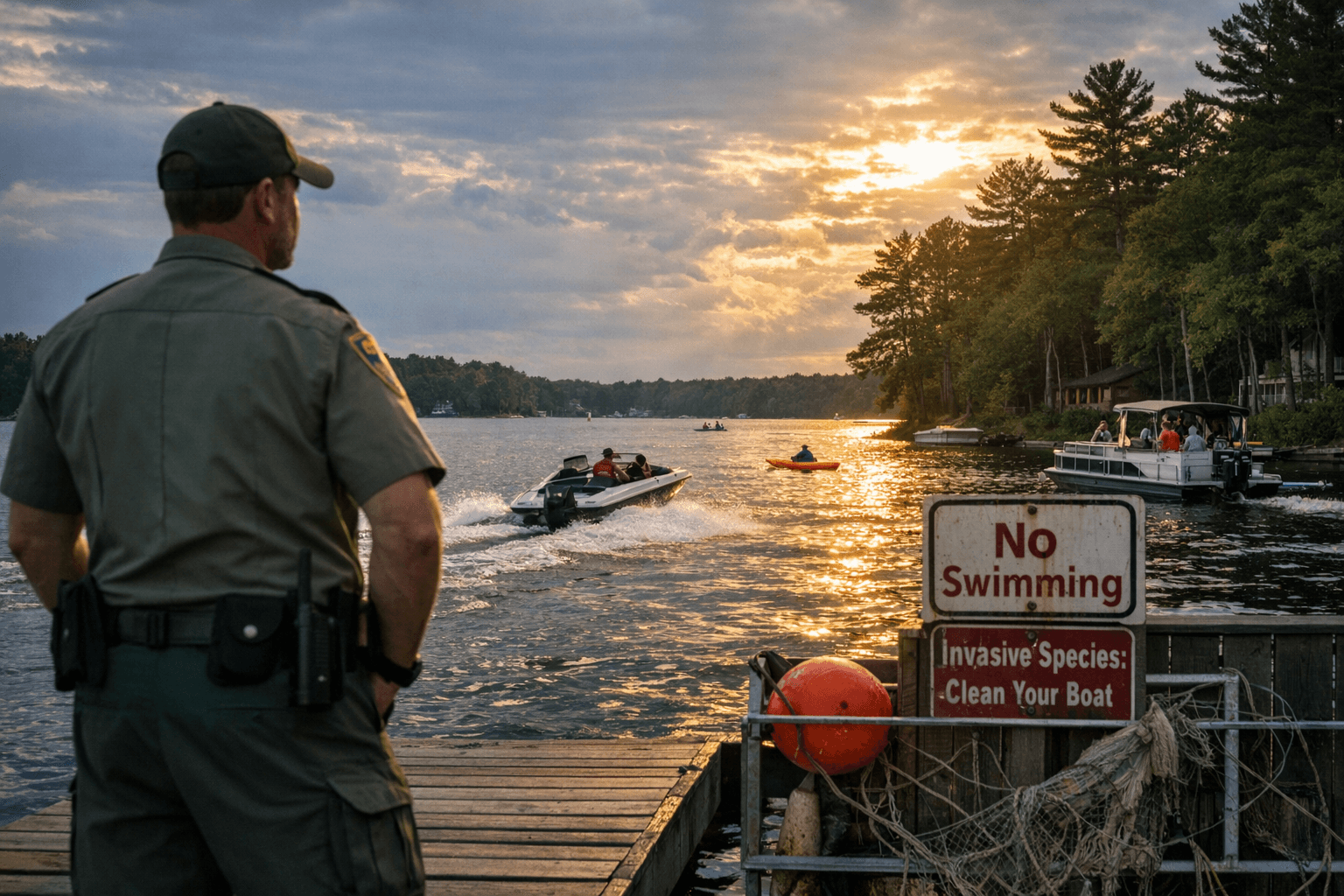
Legend Lake anchors Menominee County’s outdoor recreation economy and everyday leisure for residents. The chain of connected lakes spans about 1,304 acres, reaches a maximum depth near 74 feet, and offers roughly 47 miles of shoreline, making it the county’s largest and most-used waterbody for boating, fishing, and swimming in summer, and ice fishing and winter snow activities.
Local management is led by two community bodies: the Legend Lake P&R District and the Legend Lake Property Owners Association. The Wisconsin Department of Natural Resources maintains a Lake Detail page with technical facts and management contacts, and serves as a resource for public access locations, launch rules, and safety guidance. Public boat launches and access points are available; visitors and residents should consult the DNR lake page and local maps to confirm locations, hours, and regulations.
Ecological stewardship is a continuing priority. Legend Lake and neighboring waters are monitored for aquatic invasive species, and the Wisconsin DNR boat-cleaning guidance remains a central tool to reduce spread. That monitoring intersects with broader conservation and recreational management questions: how to sustain high-use access while protecting water quality, how to fund ongoing prevention and signage, and how to coordinate responses among county officials, the DNR, and lake organizations.
The lake sits within a network of nearby outdoor and cultural assets that shape visitor patterns and local planning. Scenic corridors such as Keshena Falls and the Wolf River draw anglers and sightseers and are sites of riverfront fishing and sturgeon restoration efforts; officials advise consulting access maps and DNR advisories before visiting. In Keshena, the Menominee Cultural Museum operates year-round and the Logging Museum generally opens seasonally from spring through fall; group tours are often available by appointment and contact numbers are listed on the county tourism page.
Trails and motorized recreation add seasonal complexity. Snowmobile, ATV, and hiking use varies by season and by route; trail grooming notices and permitted routes are posted by towns and county tourism authorities. Coordination among local trail managers, town governments, and the county affects safety, maintenance costs, and access equity across communities.
Policy implications are practical and immediate for residents. Decisions about beach and launch maintenance, invasive species prevention funding, signage and enforcement, trail grooming, and museum staffing reflect a mix of local governance and state support. Participation in Legend Lake governance and county planning processes influences those outcomes; lake organizations and the DNR provide entry points for engagement. For technical lake facts and management contacts consult the Wisconsin DNR Lake Detail for Legend Lake and the Menominee County tourism page for museum and local access information.
Sources:
Know something we missed? Have a correction or additional information?
Submit a Tip