Lindsey Vonn Stuns Field, Wins World Cup Downhill at 41
Lindsey Vonn produced one of the sport's most improbable returns, winning the opening World Cup downhill in St. Moritz at age 41 and setting the tone for the 2026 Olympic season. The victory carries huge implications for her legacy, the commercial landscape of alpine skiing, and debates over longevity and medical innovation in elite sports.

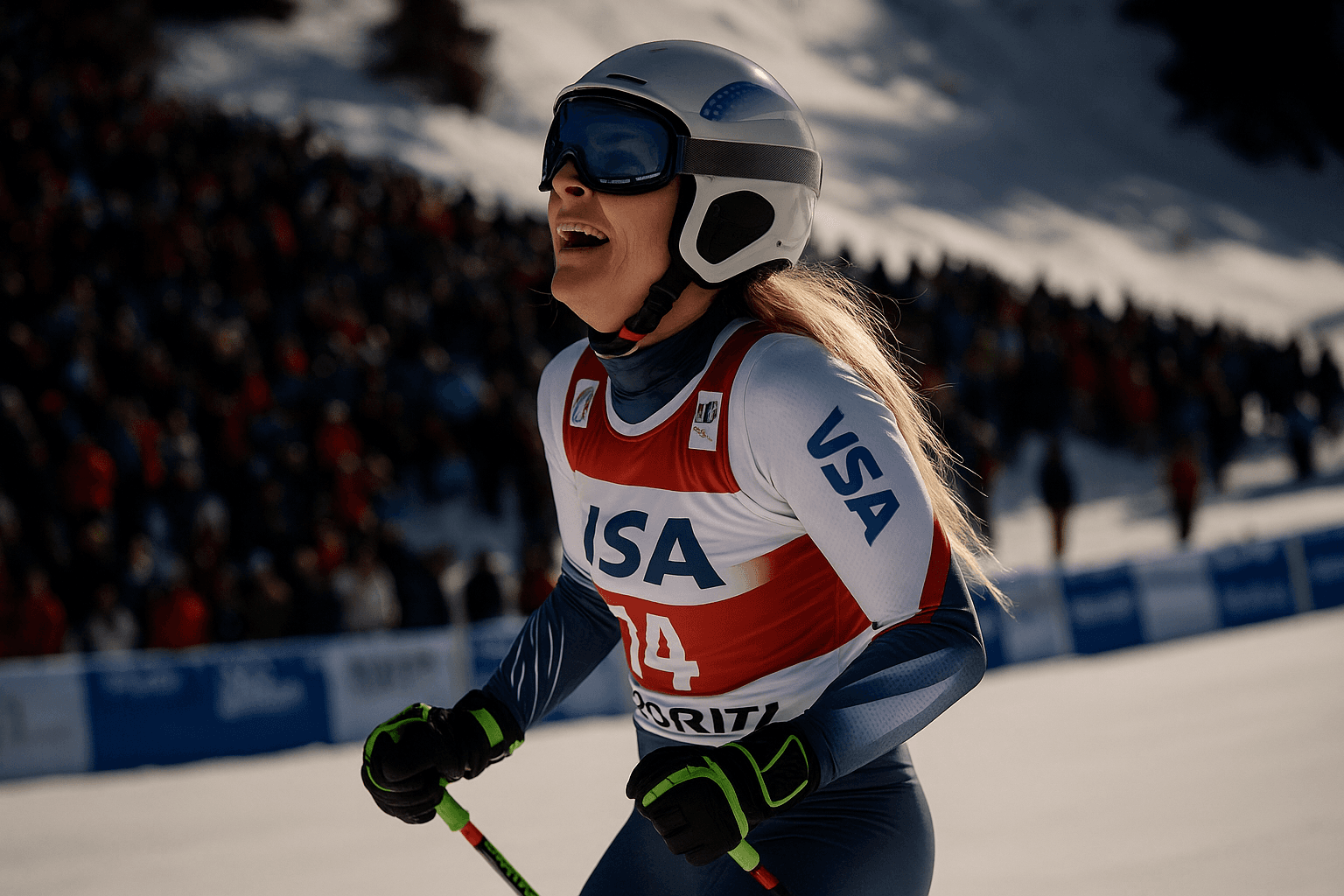
Lindsey Vonn returned to the top of the World Cup podium on December 12 in St. Moritz, Switzerland, producing a performance that few expected when she rejoined the circuit. The American, aged 41, won the opening women's downhill of the season in decisive fashion, edging Austria's Mirjam Puchner to claim what multiple outlets say is her 83rd World Cup victory and what Reuters and others reported as the oldest win by a World Cup competitor.
Coverage varied on the exact margin but not on the significance. ABC News reported Vonn's winning gap at 1.16 seconds, while CNN put the margin at 0.98 seconds. Both characterizations called the lead large and authoritative. ABC noted a striking mid race swing, with Vonn trailing by 0.61 seconds after two time checks before mounting a comeback that carried her to the finish line. Puchner finished second, with other placings not consistently reported.
The triumph carries a heavy historical weight for Vonn. It was her first World Cup triumph in nearly eight years and was counted as her 44th victory in downhill discipline, extending a record that has defined much of her career. The win came in her 125th World Cup downhill start, 24 years after her first appearance in a Lake Louise downhill, and at a venue where she previously won in 2012. Her last World Cup victory had been a downhill in Åre, Sweden, in March 2018.
Vonn's path back has been shaped by modern medical interventions and a high profile, five year retirement. Coverage noted she underwent surgery that included titanium implants in her right knee, a detail that is central to conversations about how advances in sports medicine can extend elite careers. The win was framed as a major boost to her 2026 Olympic ambitions, and she was explicit about the target. "Obviously my goal is Cortina but if this is the way we start I think I'm in a good spot," she said.
Beyond the immediate sporting drama, the result reverberates across several layers of the industry. From a commercial perspective, Vonn's comeback is a boon to broadcasters and sponsors seeking narratives that drive viewership and engagement. Veteran stars returning to peak form broaden the audience beyond traditional ski fans, attracting mainstream attention that translates into higher media rights value and sponsor activation. Equipment makers and tour operators can expect renewed interest in downhill gear and alpine travel tied to marquee names and dramatic venues.
The cultural impact is equally notable. Vonn's victory challenges assumptions about age and elite performance and reinforces the celebrity athlete as a vehicle for national identity and inspiration in winter sport. It also spotlights the ethical and social questions around medical technology in competition, including access and the boundaries between recovery and enhancement.
As the Olympic season unfolds, Vonn's win in St. Moritz will be measured not only in seconds but in its ripple effects across the sport. For now, the image of a 41 year old champion charging down a World Cup track will remain a defining moment in alpine skiing this winter.
Know something we missed? Have a correction or additional information?
Submit a Tip