Maryland Falls to Oregon 64-54, Big Ten Struggles Continue
Maryland lost to Oregon 64-54 at the XFINITY Center on Jan. 3, 2026, a defeat that dropped the Terps to 0-3 in Big Ten play and exposed continuing offensive and depth problems. For Prince George's County residents who follow the team, the result raises questions about on-court strategy, player support, and how the university balances athletic pressures with students' health and equity needs.
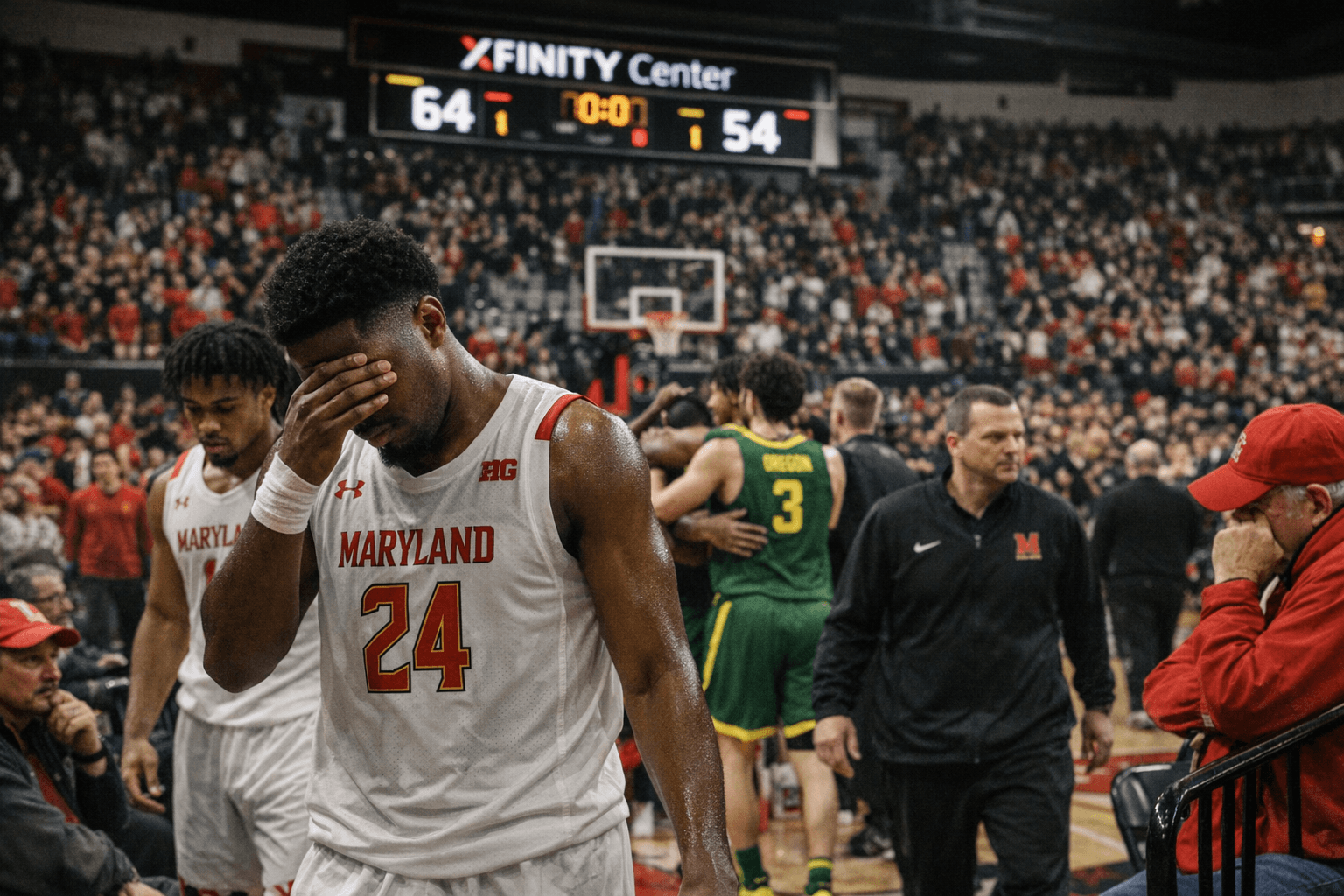
Maryland's men’s basketball team could not overcome a second-half lull and Oregon's dominance inside the paint in a 64-54 loss at the XFINITY Center on Jan. 3, 2026. The defeat left the Terps winless in the conference at 0-3 and highlighted glaring offensive struggles that hindered the home crowd's hopes early in the Big Ten season.
The Terps managed just a career-high 17 points from guard Solomon Washington, who also chipped in with notable defensive effort. Beyond that performance, Maryland's offense sputtered in key stretches. The team shot as low as roughly 27.7 percent from the field during portions of the game and endured nearly a five-minute scoreless stretch in the second half that allowed Oregon to pull away. Oregon outscored Maryland in the paint and controlled the glass, limiting second-chance opportunities for the Terps.
Turnovers, poor shooting and a thin backcourt were central problems in the loss. Those shortfalls have immediate implications for the season, but they also ripple beyond the scoreboard for the university and the broader Prince George's County community. Home games bring residents together, generate local spending and serve as a focal point for community pride. Continued struggles on the court risk dimming that community energy and could affect attendance and local businesses that rely on game-day traffic.
There are also public health and equity dimensions to consider. Competitive college athletics places intense physical and mental demands on student-athletes, and sustained losing stretches can exacerbate stress and anxiety. The situation underscores the need for robust health services and equitable access to mental health care for athletes, especially at institutions where resources are unevenly distributed across programs. County residents and university stakeholders alike have an interest in ensuring student-athletes receive adequate medical, nutritional and psychological support as the grind of conference play continues.
As the Big Ten schedule moves forward, Maryland faces pressure to shore up its offensive identity, fortify its backcourt contributions and secure better rebounding and paint defense. For supporters across Prince George's County, the immediate questions go beyond wins and losses: how the program responds will reflect priorities about athlete well-being, resource allocation and the role of college sports in community life.
Sources:
Know something we missed? Have a correction or additional information?
Submit a Tip