Microsoft limits cloud services to Nayara Energy after EU sanction filings
Microsoft restricted certain cloud services to Indian refiner Nayara Energy after EU-linked sanction filings, prompting Nayara to sue in Delhi seeking restoration of services.
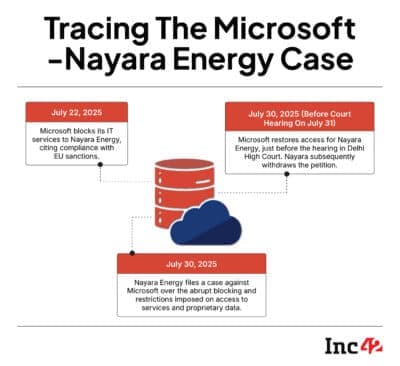
Microsoft restricted or withdrew some cloud services for Nayara Energy after the European Union announced additional restrictive measures tied to entities linked to Russia, a move that has prompted the Indian refinery to sue in the High Court of Delhi seeking an interim injunction to restore access.
The company’s legal filing asks the court to direct Microsoft to continue providing services under the Microsoft Business and Service Agreement and describes what Nayara calls an "abrupt and unilateral suspension of critical services" that limited access to company "data, proprietary tools, and products" despite fully paid licenses. Nayara framed the action as taken "without any legal requirement to do so under US or Indian law," arguing the EU measures "originate exclusively from the EU" and accusing Microsoft of acting "unilateral, without prior notice, consultation, or recourse" and "under the guise of compliance."
Sources familiar with the matter identified employees’ Outlook email accounts and Microsoft Teams among the services affected, and described the action more broadly as a withdrawal or limitation of cloud computing services. In the days after the filing, court papers later indicated that some services had been restored, though accounts differ on whether the interruption was temporary or constituted a broader suspension and on the precise timeline for any restoration.
Nayara moved quickly to reduce operational exposure, signing with an Indian provider for business-grade hosted email services and emphasizing that it operates an on-site data center at its refinery site in Gujarat. That facility was awarded a Telecommunications Industry Association design rating of level three on June 29, 2025, and the company’s 2023/2024 annual report described an ongoing data center revamp and the creation of a disaster recovery site as part of broader IT investments.

Microsoft declined to comment. The company has not published a public legal rationale tying its actions to U.S., Indian or EU law, and the exact scope of the cloud services affected beyond email and collaboration tools has not been disclosed by either party in available filings.
Legal and industry observers say the episode highlights the commercial and operational risks companies face when critical systems depend on third-party cloud providers whose compliance interpretations may be shaped by extraterritorial sanctions regimes. Contractual remedies can create a path to damages, but they do not always enable an immediate restoration of services, leaving customers to scramble for alternative providers or on-premises workarounds while disputes play out in court.
Nayara has argued that Microsoft’s interpretation of EU restrictions sets a dangerous precedent for corporate overreach with potential repercussions for India’s energy sector. The Delhi litigation now places the question of how global cloud platforms should respond to overlapping jurisdictional sanctions at the center of a larger debate about resilience, sovereignty and the governance of critical corporate infrastructure.
Sources:
Know something we missed? Have a correction or additional information?
Submit a Tip