Qatar and UAE to join U.S.-led Pax Silica coalition for chips and AI
Qatar and the United Arab Emirates will join Pax Silica to align industrial and investment strengths in semiconductor and AI supply chains. The move signals a regional shift toward technology-driven economies.

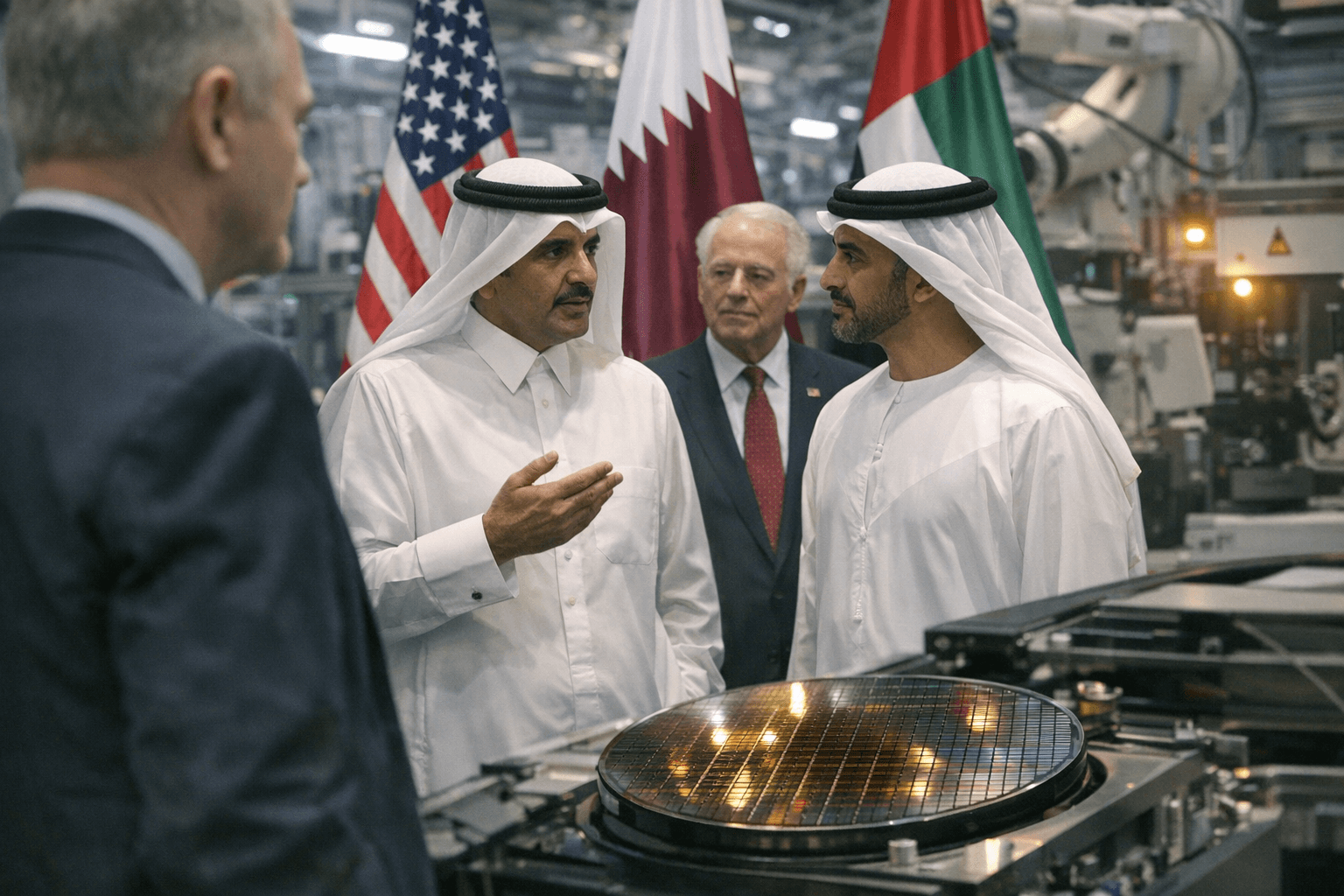
Qatar and the United Arab Emirates will soon join Pax Silica, a U.S.-led coalition aimed at securing supply chains for artificial intelligence and semiconductors, the State Department announced on Jan. 11. The expansion brings two wealthy Gulf states into a technology-first economic framework that U.S. officials say will reshape regional industrial ties and reduce dependence on hydrocarbons.
Undersecretary of State for Economic Affairs Jacob Helberg described Pax Silica as a “coalition of capabilities.” He said membership will hinge on the specific industrial strengths and corporate assets that prospective partners bring rather than on preset geographic or security blocs. That flexible, contribution-driven model is intended to make the initiative more commercially oriented and adaptable than traditional treaty-based alliances.
Pax Silica’s immediate objective is to align industrial policy, investment flows and regulatory approaches so that semiconductor fabrication, advanced packaging, chip design and AI computation remain reliable and accessible to trusted partners. Officials framed the effort as a way to create resilient lines for critical components—from silicon wafers to advanced chips to the data centers that power AI—by coordinating where production occurs, what investments are endorsed and how technologies are protected.
Helberg positioned the Gulf expansion as part of a broader economic transition for the region. He said leaders hope to move “from a hydrocarbon-centric security architecture to one focused on silicon statecraft,” signaling a concerted push by Gulf governments to diversify sovereign revenues and industrial bases through high-tech investment and infrastructure.
Alongside the Pax Silica announcement, U.S. and UAE officials outlined a suite of complementary technology, security and investment commitments. The two governments agreed to establish a US–UAE AI Acceleration Partnership to boost cooperation on critical technologies and to secure them under joint commitments. As part of that framework Washington will facilitate the launch of a 1GW AI data center in Abu Dhabi, described by officials as the first phase of a planned 5GW UAE–US AI technology cluster aimed at meeting regional computation demand while adhering to robust U.S. security standards.
Those measures include safeguards to protect national security, enable trusted investment and entrepreneurship, and encourage cross-border research and development. The partners committed to deepen research cooperation across academia, industry and government and to develop roadmaps for responsible technology access intended to accelerate scientific progress and job creation.
Cybersecurity will be a parallel focus. The UAE and the United States agreed to continue collaboration on the Counter Ransomware Initiative, including joint contributions to the Crystal Ball platform for real-time threat intelligence sharing. The UAE Cyber Security Council is coordinating projects with U.S. entities such as the Cybersecurity & Infrastructure Security Agency and business groups to bolster economic-security resilience.
Officials also signaled broader cooperation to strengthen critical infrastructure and supply-chain resiliency, from undersea cables and clean-energy development to food security and trade linkages. The announcements come as senior officials and industry leaders converge on the Future Minerals Forum in Riyadh later this week, underscoring how mineral, energy and semiconductor strategies are becoming intertwined in a new geopolitical economic architecture.
Know something we missed? Have a correction or additional information?
Submit a Tip