Monocular Vision System Wins Podiums, Advances Autonomous Drone Racing
Researchers posted a preprint describing a monocular, end to end system that corrected Visual Inertial Odometry drift and placed on the podium across multiple autonomous drone races, demonstrating robust high speed flight with constrained sensors. The work matters because it shows perception and planning advances that hobby pilots can adapt for low cost builds, simulators, and visual flight aids.
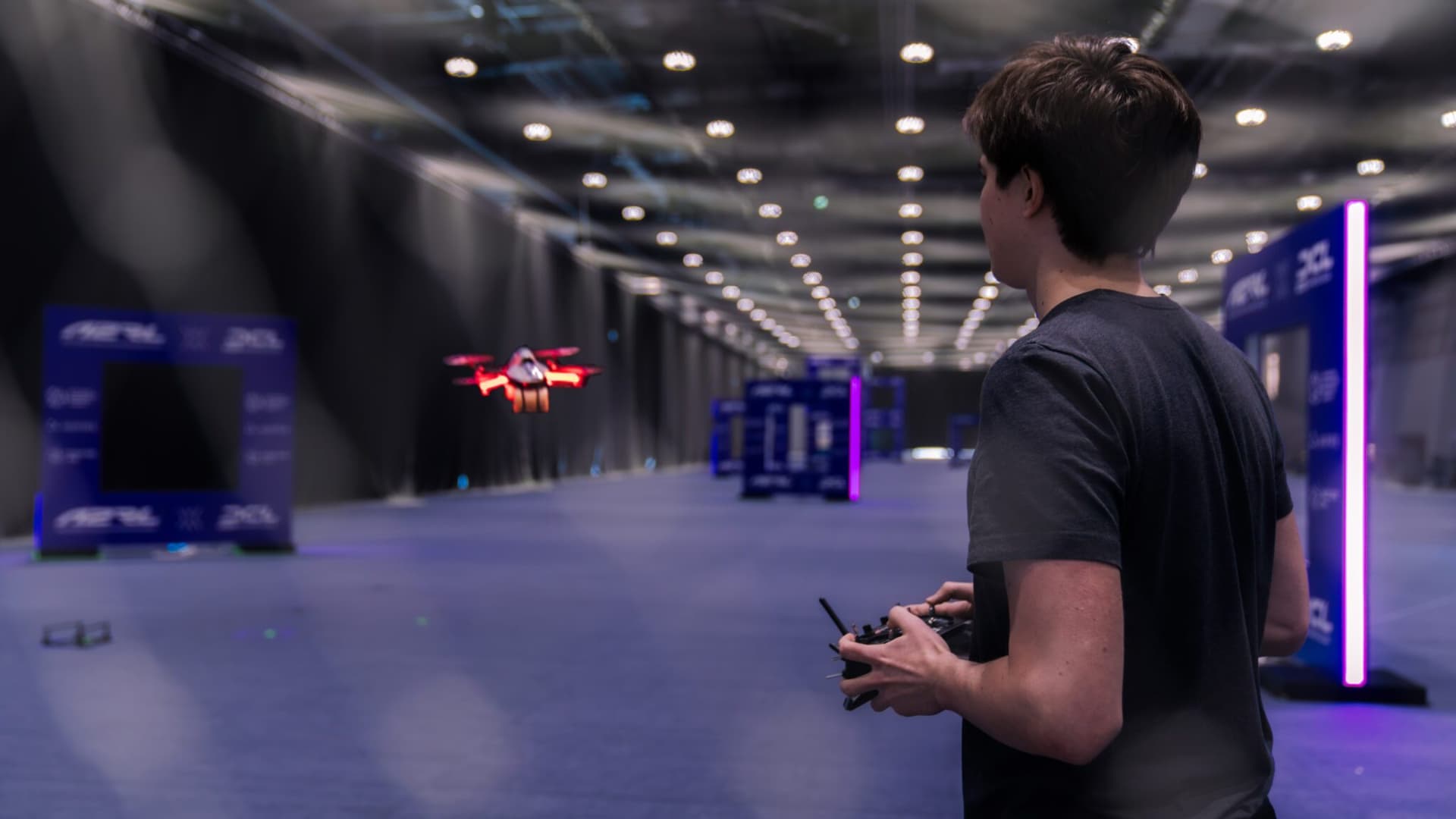
A research team released a preprint on December 23, 2025 that described a monocular, end to end approach used in the Abu Dhabi Autonomous Racing League and Drone Champions League autonomous competition. The system combines Visual Inertial Odometry outputs with global position measurements from a YOLO based gate detector, fusing those signals with a Kalman filter to correct VIO drift. That sensor fusion is paired with a perception aware planner that balances outright racing speed against the need to keep gates in view for reliable perception.
The paper focuses on a deliberately constrained sensor suite, mirroring many hobby builds, using a single forward camera and a low quality IMU. In real world competition the approach earned podium finishes in the AI Grand Challenge, reporting a top speed around 43.2 kilometers per hour. The same stack placed second in the AI Drag Race while reaching speeds greater than 59 kilometers per hour, and also took second in the AI Multi Drone Race. The authors detail system architecture, sensor fusion strategy, planner trade offs, and experimental analysis that together demonstrate that monocular vision can support high speed autonomous racing on modest hardware.
For the community the practical value is immediate. Perception aware planning that explicitly trades speed against viewpoint stability can be implemented in simulators and flight stacks to improve reliability when cameras and IMUs are basic. Implement the YOLO based gate detector or comparable object detection to supply global position cues, then fuse those cues with VIO using a Kalman filter to reduce long term drift. Verify sensor calibrations, tune IMU and filter settings, and test planner parameters in simulation before attempting real world high speed runs.

The work also points to where hobby tooling will move next. Expect more accessible visual based flight aids, tighter integration of perception into autopilot loops, and community ports of fusion and planning components for low cost frame builds. The preprint includes an author list and abstract, and may include links to code and data for those who want to reproduce the results or adapt the system to consumer hardware.
Sources:
Know something we missed? Have a correction or additional information?
Submit a Tip