Navajo Nation Weighs Reapportionment Plans Ahead of 2026 Election
On Jan. 8 the Navajo Nation Council advanced consideration of five reapportionment maps as part of preparations for the 2026 general election. The Naabik'íyáti' Committee reviewed options and the Navajo Board of Election Supervisors identified three preferred plans, a process that will reshape delegate boundaries and could affect representation for San Juan County residents.
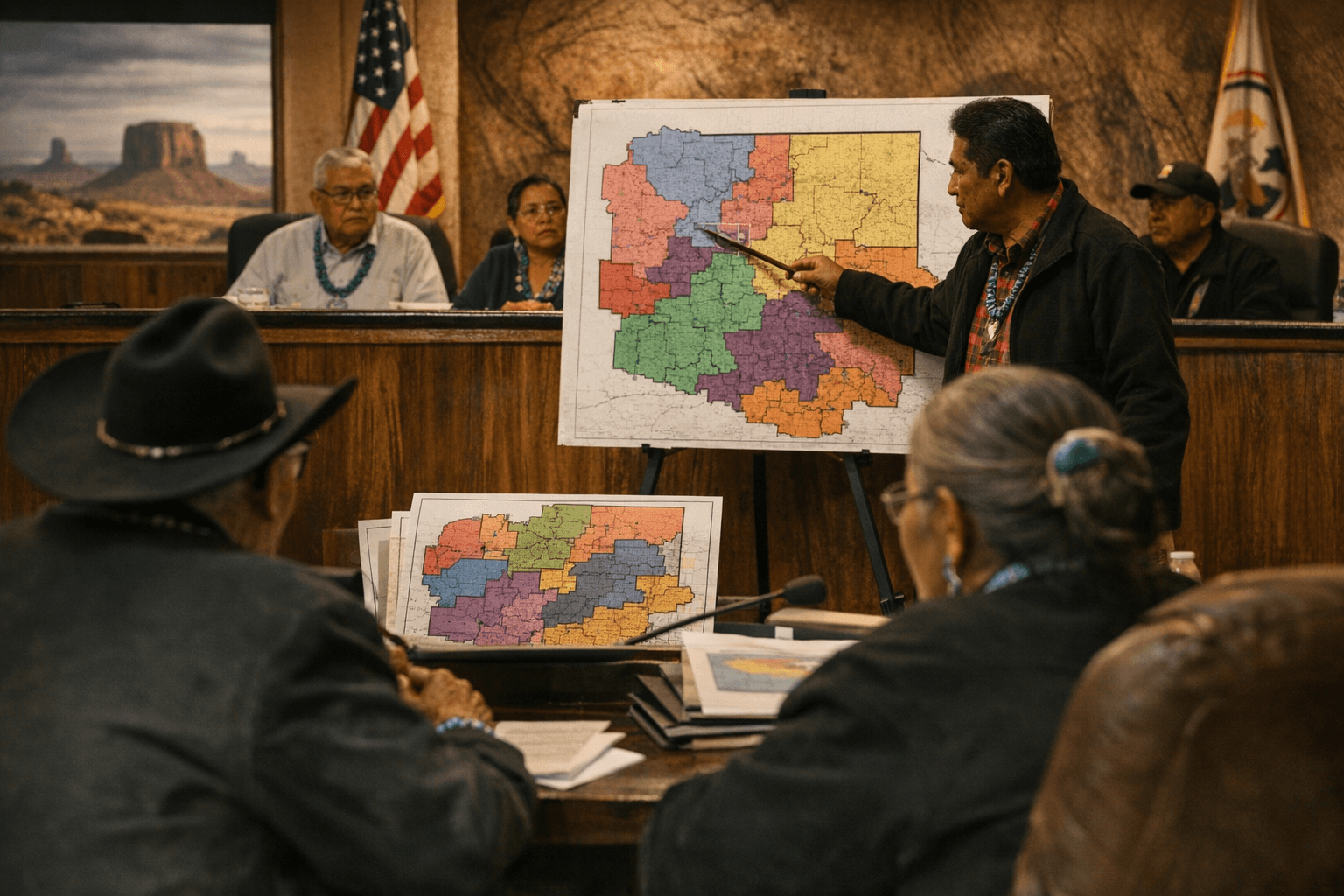
On Jan. 8 the Navajo Nation took a decisive step toward redrawing delegate districts when the Naabik'íyáti' Committee reviewed five reapportionment plan options submitted for the 2026 general election. Legislation sponsored by Delegate Arbin Mitchell would adopt a new reapportionment plan, setting a timetable for the council to finalize boundaries before candidate filing and ballot preparation begin.
The Navajo Board of Election Supervisors conducted technical reviews and public hearings on proposed maps and recommended three preferred options: Plans 5, 3 and 4. Those recommendations informed the committee's review, which considered how each plan would alter the size and shape of delegate districts across the reservation. Committee members weighed population shifts, geographic contiguity, and the practical challenge of representing very large, sparsely populated areas.
Reapportionment on the Navajo Nation determines which communities are grouped with which delegate, affecting constituent access, local priorities, and the administration of services. For San Juan County residents who live on the reservation, map changes could reassign neighborhoods to different delegates or expand the geographic area a delegate must cover. That has direct consequences for outreach, travel time for elected officials, and how effectively constituents can raise local concerns in Council deliberations.
The process that began with public hearings and technical review now moves into legislative decision-making. If Delegate Mitchell's bill is adopted, the new plan would become the official framework for the 2026 election cycle. The council must act in time to allow the Board of Election Supervisors to update voter rolls, prepare ballots, and provide clear information to voters and candidates. Delays or contested map selections could complicate these administrative steps and compress timelines for outreach in remote communities.
Public engagement shaped earlier reviews: hearings produced testimony about community ties, access to services, and the burden of representing expansive districts. The Board's technical analysis aimed to balance those community concerns with legal and demographic requirements. As the council considers adoption, officials will need to make explicit how the chosen plan addresses equitable representation and practical governance across diverse parts of the reservation.
For San Juan County voters, the immediate questions are where district lines will fall and who will represent them after 2026. The council's forthcoming actions will determine those answers and set the conditions for political competition and constituent services in the next term. Transparency in the remaining steps and timely communication from election authorities will be critical to ensure voters understand how any changes affect their representation.
Sources:
Know something we missed? Have a correction or additional information?
Submit a Tip