Netanyahu Says Israel Will Seek to Wean Off U.S. Military Aid Within Decade
Israeli Prime Minister Benjamin Netanyahu announced plans to reduce reliance on U.S. military assistance over the next ten years, tying the goal to a sweeping domestic arms-industrial expansion. The shift would have major budgetary, industrial and geopolitical consequences for Israel and for U.S. defense contractors as the 2016 U.S.-Israel assistance agreement approaches renegotiation in 2028.

Israeli Prime Minister Benjamin Netanyahu said on Friday that he aims to "taper off the military within the next 10 years" and indicated that the reduction could go "down to zero." He framed the objective as part of a broader push to make the Israel Defense Forces and the domestic arms industry more self-reliant, saying Israel must be "as independent as possible" while continuing to "fight for the allegiance of the American people."
Netanyahu unveiled a plan in December to invest 350 billion shekels in a domestic arms industry, a figure he presented as the backbone of his strategy to replace foreign suppliers and reduce dependence on U.S. grants and procurement. That 350 billion shekel commitment, the consistent datum across reports, is roughly equivalent to $110 billion by commonly used conversions and would translate to about 35 billion shekels per year if allocated over a decade, or roughly $11 billion annually.
The announcement comes with the current U.S.-Israel military assistance memorandum of understanding running through September 2028. The 2016 MOU commits roughly $38 billion over its ten-year term, including about $33 billion in procurement grants for U.S. equipment and $5 billion earmarked for missile-defense systems. Those provisions deliver about $3.8 billion a year to Israel, an amount that has been characterized as roughly 15 percent of Israel's defense budget.
Netanyahu stressed gratitude for long-standing American support, telling U.S. President Donald Trump during a recent meeting that Israel values "the military aid that America has given us over the years, but here too we’ve come of age and we’ve developed incredible capacities." He also painted part of the strategic rationale as reputational: scaling down financial dependence could help preserve favorable public perception at home and abroad. On information threats, he described the contest as asymmetric, likening digital misinformation to using "cavalry against F-35s" and criticizing social media "fake bots."
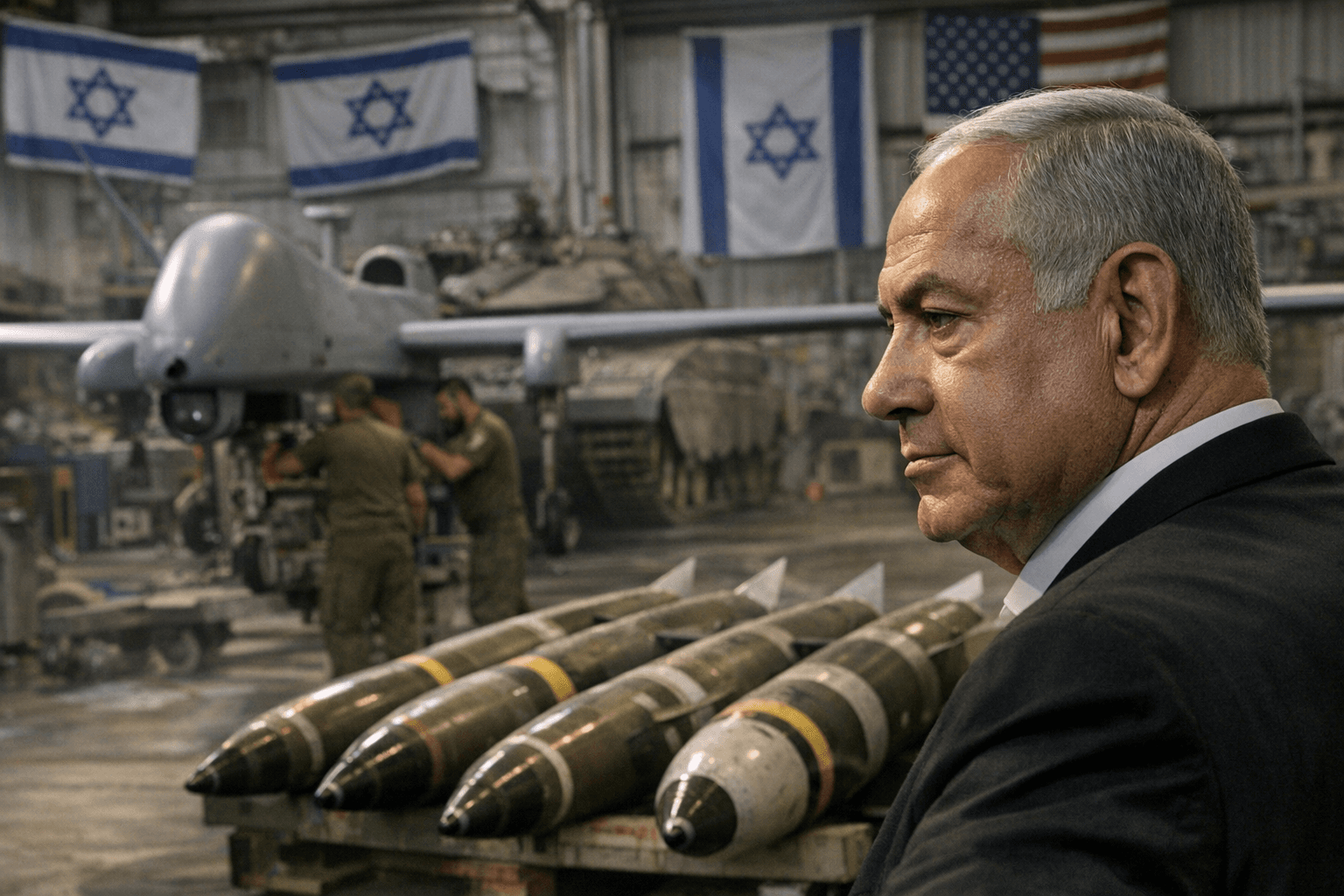
The economic and market implications are substantial. Israeli defense exports rose about 13 percent in the past year, a sign that domestic suppliers are already scaling production and winning international contracts. If Israel implements the 350 billion shekel plan, the government would be committing resources comparable to several years of U.S. assistance; over a decade it would amount to roughly three times the annual U.S. grant level. That could expand Israel's arms-export footprint, shift procurement away from U.S. suppliers, and alter product mixes in global defense markets.
The move will be closely watched in Washington. U.S. domestic defense firms that benefit from Israeli procurement could see reduced sales, while Congress will weigh strategic ties against changing fiscal realities. Republican Senator Lindsey Graham offered a supportive political reaction, saying "we need not wait ten years" to begin scaling back aid.
Achieving true independence will require sustained capital investment, industrial scaling and likely continued cooperation on technology transfers and joint programs. The MOU renegotiation window in 2028 will be the practical moment to test whether Israel seeks to replace U.S. grants with domestic financing and increased exports or to maintain the current subsidy model. For markets and policymakers, the announcement signals a pivot toward strategic autonomy that could reshape regional defense economics over the coming decade.
Sources:
Know something we missed? Have a correction or additional information?
Submit a Tip