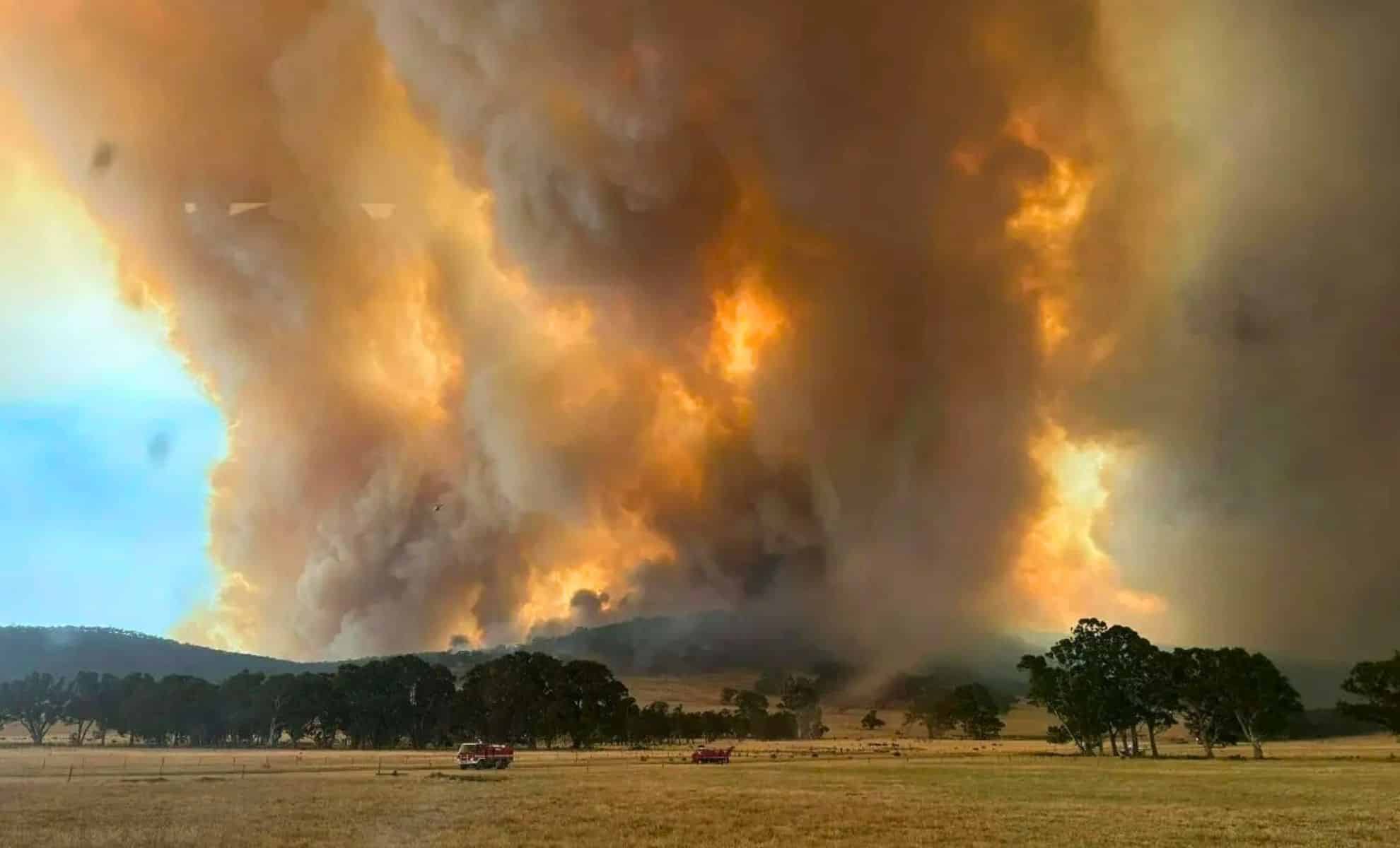
Victoria Declares State of Disaster as Bushfires Burn Hundreds of Thousands
An intense heat wave has fuelled fast-moving blazes across central and northeastern Victoria and parts of adjoining New South Wales, burning at least 300,000 hectares and destroying scores of structures. Authorities warned the fires may burn for weeks, ordering evacuations under a state of disaster and mobilising national firefighting resources as communities face heavy losses and uncertain recovery.

Victoria is confronting a multifront bushfire emergency after an intense heat wave ignited and fanned multiple large fires earlier in the week, prompting the state government to declare a state of disaster on January 10. The declaration grants authorities broader powers to order evacuations as crews battle blazes that have so far burned at least 300,000 hectares, with some tallies placing the total at 350,000 hectares or higher.
The most heavily affected zones are rural and forested districts of central and northeastern Victoria, with fires also active near the New South Wales border. Longwood, roughly 110 kilometres north of Melbourne, has been identified as a major hotspot. Estimates for the Longwood fire front vary widely; one account placed the area burned there at about 150,000 hectares while another described the Longwood-Ruffy inferno at more than 84,000 hectares. Other significant fronts include Ruffy, the Walwa and Mount Lawson area on the New South Wales border, and the Ravenswood area near Castlemaine and Bendigo.
Human impacts are already severe and still unfolding. Victoria police reported human remains found by a vehicle near Longwood; the victim had not been identified at the time of reporting. Earlier notices had listed up to three people unaccounted for. State briefings and Emergency Management Commissioner Tim Wiebusch cited at least 130 structures destroyed, a figure that other tallies have pushed above 300; the losses include homes, outbuildings, vineyards and agricultural assets. Utilities were heavily affected, with around 38,000 residences and businesses reported without power at one point.
Fire behaviour has been extreme. Temperatures in parts of the state topped 40 degrees Celsius and forecasts warned of peaks near 46 degrees Celsius combined with damaging winds. Forest Fire Management Victoria chief fire officer Chris Hardman warned that the blazes "will not be contained before it gets hot, dry, and windy again," and cautioned that it could take firefighters weeks to gain the upper hand. In response, hundreds to thousands of firefighters have been mobilised from across Australia to support local brigades, and evacuation orders and high-danger warnings remain in force for multiple communities.
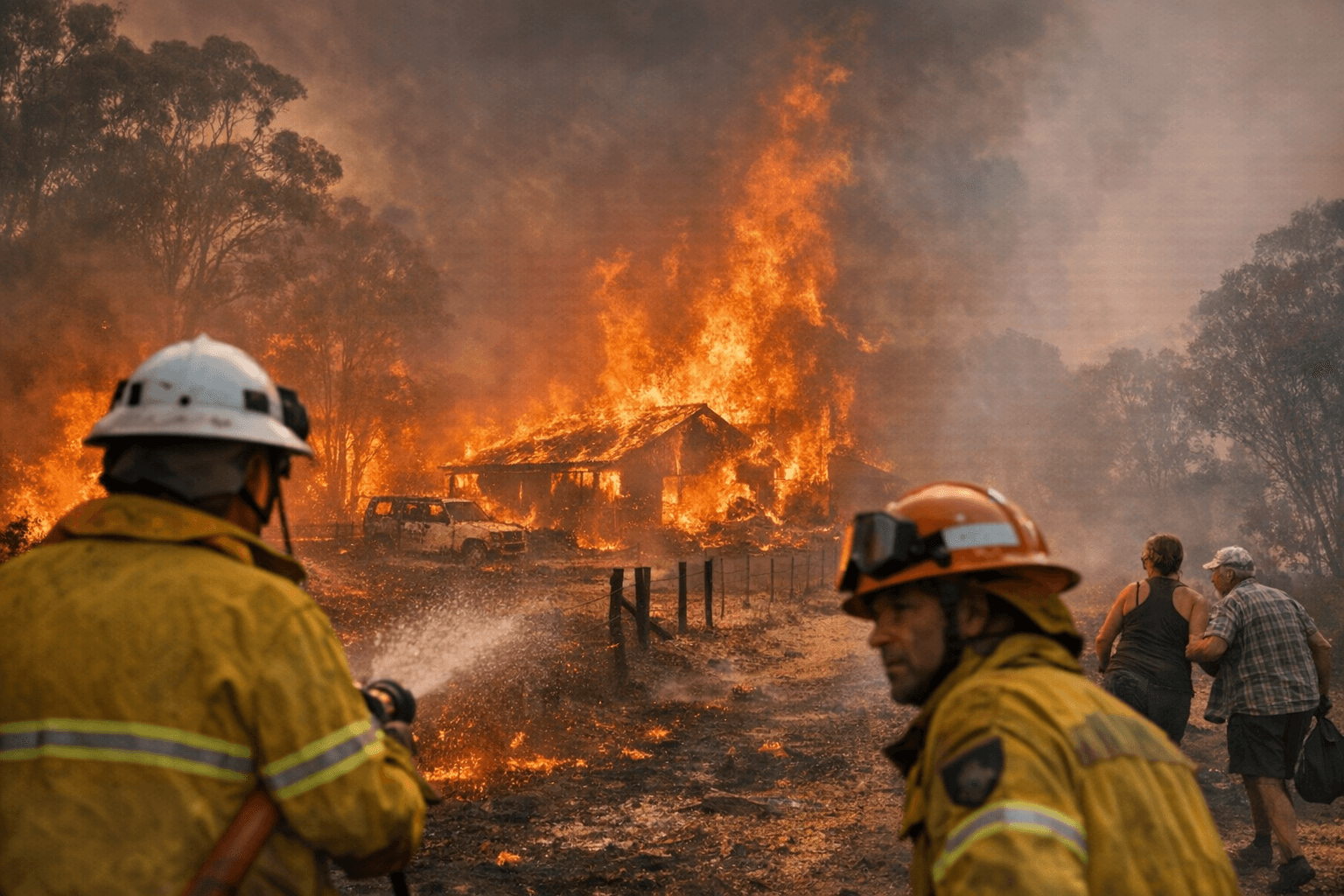
Premier Jacinta Allan framed the declaration as a measure to protect lives, saying it "is all about one thing: protecting Victorian lives" and urging anyone ordered to leave to do so. The state of disaster also enables forced evacuations where necessary and concentrates emergency powers around life safety, resource deployment and infrastructure protection.
The scale of this emergency invites painful comparisons with the 2019-2020 Black Summer season, though officials note differences in geography and scale. Beyond immediate destruction, the fires threaten agricultural production, supply chains and cultural heritage in regional communities where First Nations connections to land raise additional recovery complexities. The episode underscores the national and international dimensions of climate-amplified wildfire risk, testing emergency resilience, mutual-aid arrangements and long-term adaptation planning across jurisdictions. For now, authorities say containment will be measured in weeks, not days, as hot, dry and windy conditions persist.
Know something we missed? Have a correction or additional information?
Submit a Tip