North Carolina Reentry Council Sets New Goals, Launches 2030 Dashboard
The North Carolina Joint Reentry Council met Jan. 7, 2026, to review 2025 progress and outline statewide priorities for housing, employment and health support for people returning from incarceration. The meeting highlighted a new Reentry 2030 Dashboard and initiatives that could affect Wake County by shaping local housing access, workforce programs and public safety planning.
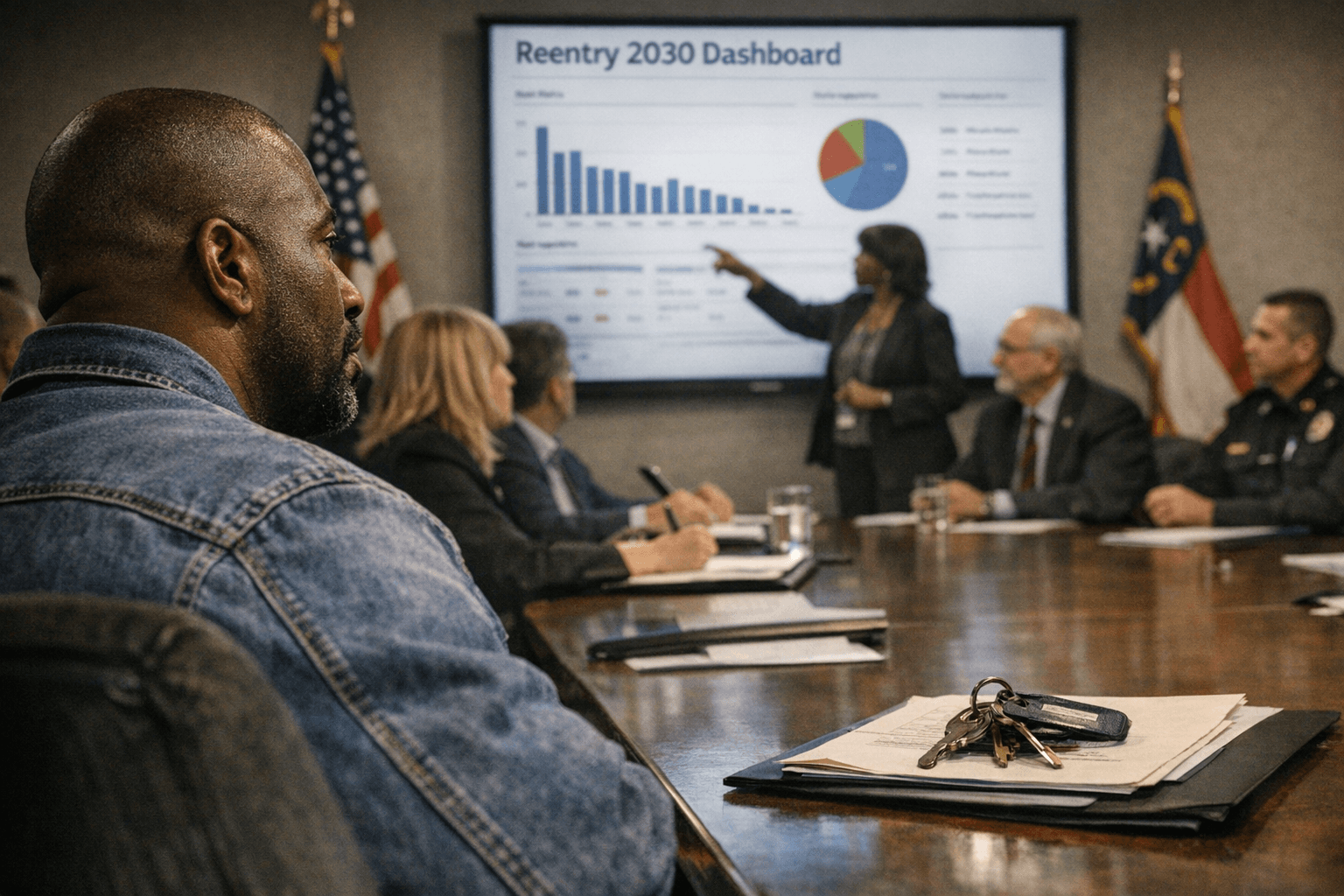
Leaders from across state agencies and advocacy groups convened on Jan. 7, 2026, for the first North Carolina Joint Reentry Council meeting of the year, focusing on strategies to support people after incarceration and reduce barriers to successful reentry. The council, which meets every two months, reviewed gains made in 2025 and set priorities for the coming year, with the launch of a new Reentry 2030 Dashboard among its headline actions.
The Reentry 2030 effort, which North Carolina joined in 2024 through an executive order signed by former Governor Cooper, seeks to align state and local partners around measurable outcomes for housing, employment, health care and transportation access. Council members stressed that more coordinated data and shared metrics will be key to tracking progress and directing funding to areas of greatest need.
Governor Stein framed reentry work as both moral and practical, noting the scale of the challenge and the community stakes. "Equipping folks with the tools they need to succeed with their second chance is not only right for them but also great for their families and benefits all of us," he said during the meeting. He also cited the stark reality that 90 percent of people incarcerated in North Carolina prisons will eventually be released, and that "approximately 18,000 people [are] expected to be released this year alone." Addressing common barriers, he added, "Too often, when people leave incarceration and return to their communities, they find door after door closed to them. They can't find housing, afford transportation, rely on health care, or access jobs that will hire them. Every time a door closes on someone, it becomes harder for them to stay on track."
The governor referenced the recent tragic killing of Raleigh teacher Zoe Welsh to acknowledge the community's concerns about safety and accountability while emphasizing prevention through reentry supports that reduce recidivism.
Advocates at the meeting highlighted local innovations aimed at creating job pathways. Kerwin Pittman outlined plans to transform a former Wayne County jail into a workforce development campus offering vocational training and job placement aimed at securing livable-wage employment for people with convictions. Pittman said the planned transformation is the first of its kind nationally and expressed eagerness to collaborate with the state to implement it.
For Wake County residents, these statewide actions translate into potential changes in how local agencies, employers and housing providers engage with returning residents. A dashboard that clarifies outcomes could guide county investments in affordable housing, transportation assistance and employment programs. Local nonprofits and workforce partners may see expanded opportunities for collaboration and funding tied to the Reentry 2030 benchmarks.
The council's next bi-monthly meeting will provide another opportunity for local leaders and community organizations to assess the dashboard's metrics and press for targeted supports that address Wake County's specific housing and workforce needs.
Sources:
Know something we missed? Have a correction or additional information?
Submit a Tip