Nvidia Builds Optional Location Verification to Curb AI Chip Smuggling
Nvidia has developed an optional software feature that lets data centers verify the country where advanced AI GPUs are operating, a step aimed at preventing diversion of high end chips into restricted markets. The capability arrives amid mounting United States export controls and criminal prosecutions, and raises fresh questions about privacy, trust and the limits of corporate self regulation.
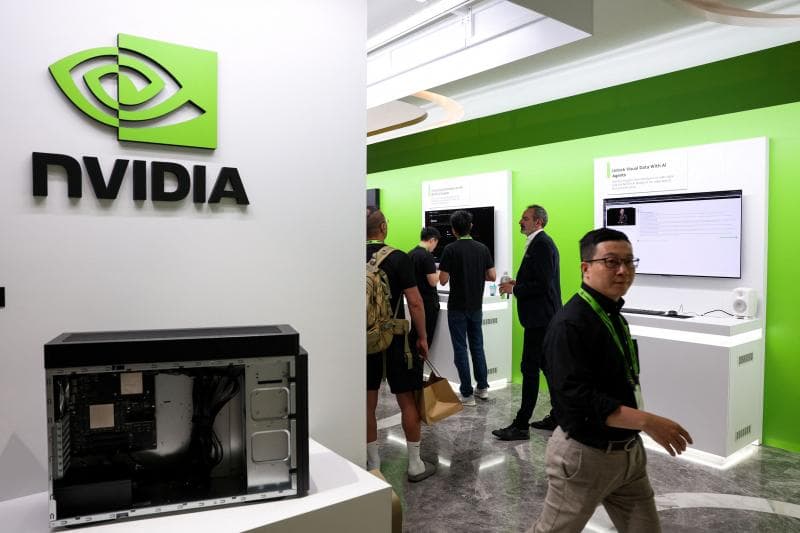
Nvidia has privately developed and demonstrated a new location verification software intended to help data center operators and customers confirm the country in which advanced AI graphics processing units are running. The tool combines confidential computing features built into Nvidia GPUs with network latency and telemetry analysis to generate location estimates. Nvidia plans to offer the capability as a customer installed software agent that monitors fleet health, integrity and inventory, and to debut it on its latest Blackwell generation GPUs while evaluating extension to Hopper and Ampere families.
Company officials have described the feature as optional and as designed to avoid creating security backdoors, and they have denied concerns raised by Chinese regulators that it could be used to surreptitiously access machines. The development comes as companies and governments face rising pressure to enforce export controls on powerful AI semiconductors after a series of prosecutions related to the smuggling of high end chips into restricted markets, notably China.
The proposed system relies on confidential computing elements to assure that the verification process itself cannot be tampered with by third parties, while network latency and telemetry provide signals that can be compared against expected baselines to infer location. Because the software would be installed and managed by the customer, Nvidia positions it as a tool for enterprise inventory control and regulatory compliance rather than a vendor imposed monitoring system.
The timing reflects a broader policy environment in which hardware makers are being asked to do more to prevent diversion of dual use technologies. United States regulators have tightened controls on exports of advanced GPUs used for AI model training and inference, and law enforcement actions have targeted networks that move chips outside sanctioned channels. For cloud providers, colocation facilities and large enterprises, the ability to demonstrate that hardware resides in a compliant jurisdiction could streamline audits and reduce legal exposure.

At the same time, the feature opens technical and political debates. Location inference based on network behavior and telemetry is inherently probabilistic and can be affected by routing anomalies, virtual private networks and deliberate obfuscation. Critics argue that even optional verification tools can be pressed into compulsory use by governments or repurposed for surveillance if oversight is weak. Regulators in some countries will scrutinize whether such technologies create new risks to customers or national security.
Industry adoption will depend on customers trust and on how regulators interpret an optional feature that ties hardware verification to geopolitical rules. For cloud and data center operators already juggling compliance, billing and service level expectations, an integrated verification agent could be a practical addition. For countries wary of external control over computing assets, the feature may prompt demands for independent audits or technical safeguards.
As Nvidia moves to ship the capability with its next generation hardware, companies across the AI ecosystem will weigh the balance between preventing illicit trade and preserving operational autonomy. The outcome could shape how export controls are enforced in practice and how vendors and customers negotiate the boundaries of oversight for powerful computing platforms.
Sources:
Know something we missed? Have a correction or additional information?
Submit a Tip