OSHA Forklift Training Rules Highlight Safety Priorities at Home Depot
Federal OSHA guidance on powered industrial trucks clarifies employer obligations for operator training, documented evaluation, and refresher training, and it remains a central compliance issue. For Home Depot stores and distribution centers that operate forklifts and similar equipment, the guidance shapes associate safety programs, training policies, and efforts to prevent workplace incidents.
Federal Occupational Safety and Health Administration guidance on powered industrial trucks lays out specific obligations that employers must meet before workers may operate forklifts independently. OSHA requires a combination of formal instruction, practical training, and a documented evaluation, and it calls for periodic re evaluation and refresher training under specified conditions. That framework is the baseline for safety programs at large employers where powered industrial trucks are in regular use, including Home Depot store locations and distribution centers.
The requirements matter to thousands of Home Depot associates who operate or work near forklifts, pallet jacks, and similar equipment. Formal instruction typically covers operating principles and safety rules, while practical training allows operators to demonstrate competency under supervision. A documented evaluation is required before independent operation, creating a paper trail that employers can use to show compliance and to identify training gaps.
Periodic re evaluation and refresher training are triggered by conditions OSHA specifies, which keeps training responsive to changes in equipment, work environment, or worker performance. For employers, that means safety teams and store leaders must track who has completed initial training, who has a current evaluation on file, and when associates need additional instruction. Training timing and documentation affect not only worker safety but also operational readiness and legal risk in the event of an incident.
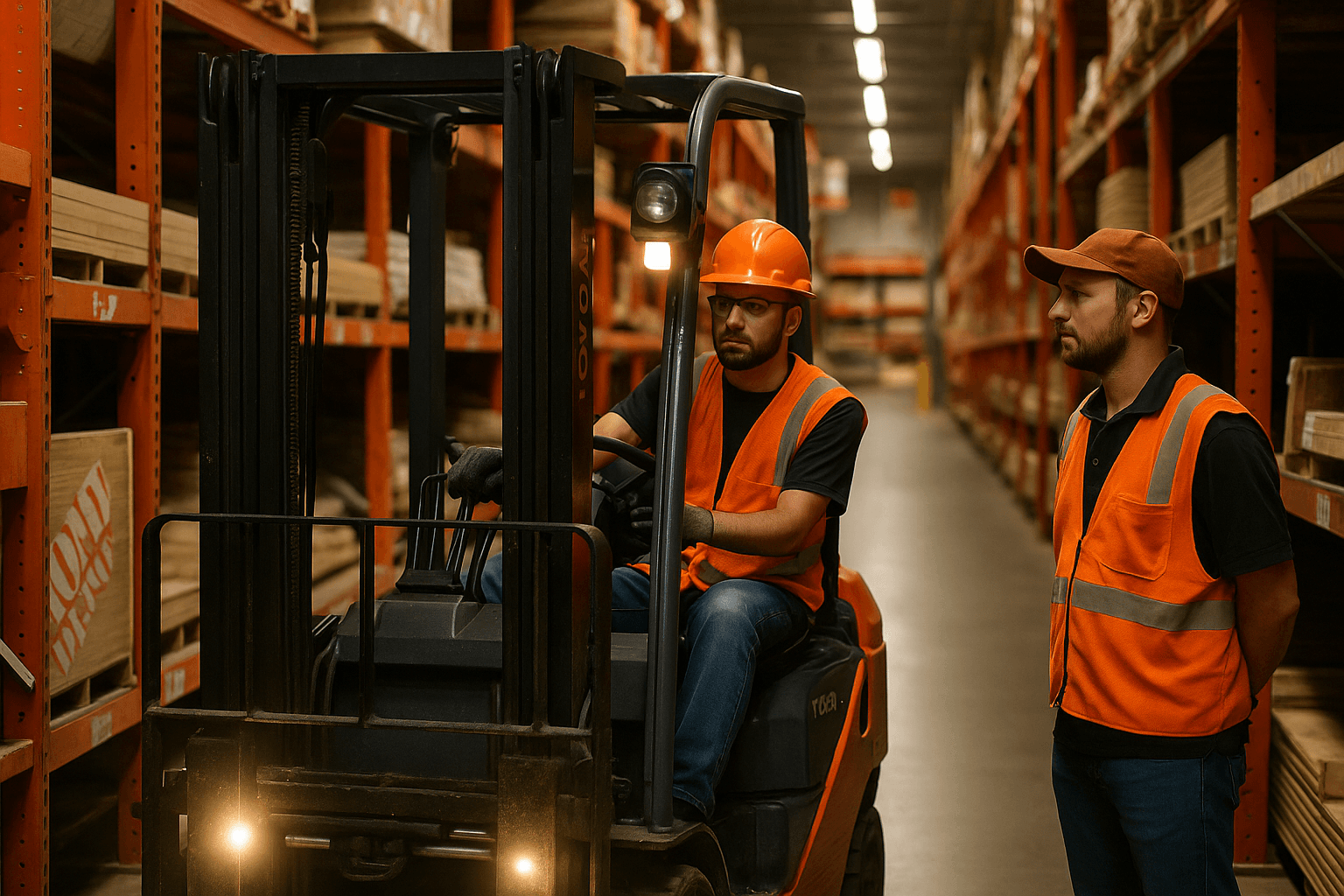
At Home Depot, the guidance intersects with scheduling, staffing, and the company safety culture. Distribution centers tend to have higher rates of powered industrial truck use, while store operations use a mix of devices for inventory moves and floor tasks. Ensuring consistent application of OSHA criteria across different work settings presents a management challenge, but it also provides an opportunity to reduce accidents and strengthen associate confidence.
Employers and safety managers should integrate OSHA powered industrial truck standards into onboarding, ongoing training, and record keeping. Clear procedures for formal instruction, supervised practical experience, documented evaluations, and timely re evaluation and refresher training help protect workers and reduce operational disruptions. Compliance with the guidance is a core element of preventing workplace incidents where powered industrial trucks are in use.
Sources:
Know something we missed? Have a correction or additional information?
Submit a Tip