Owsley County Courthouse Anchors Booneville Civic and Judicial Life
The Owsley County Courthouse on Courthouse Square in Booneville remains the central location for the county’s circuit and district courtrooms and administrative offices, serving residents for judicial business and public records. Its current single-story brick and concrete building, constructed in 1972–1973 with a 1984 addition, follows a long history of courthouse fires and rebuilding that shaped local government access.
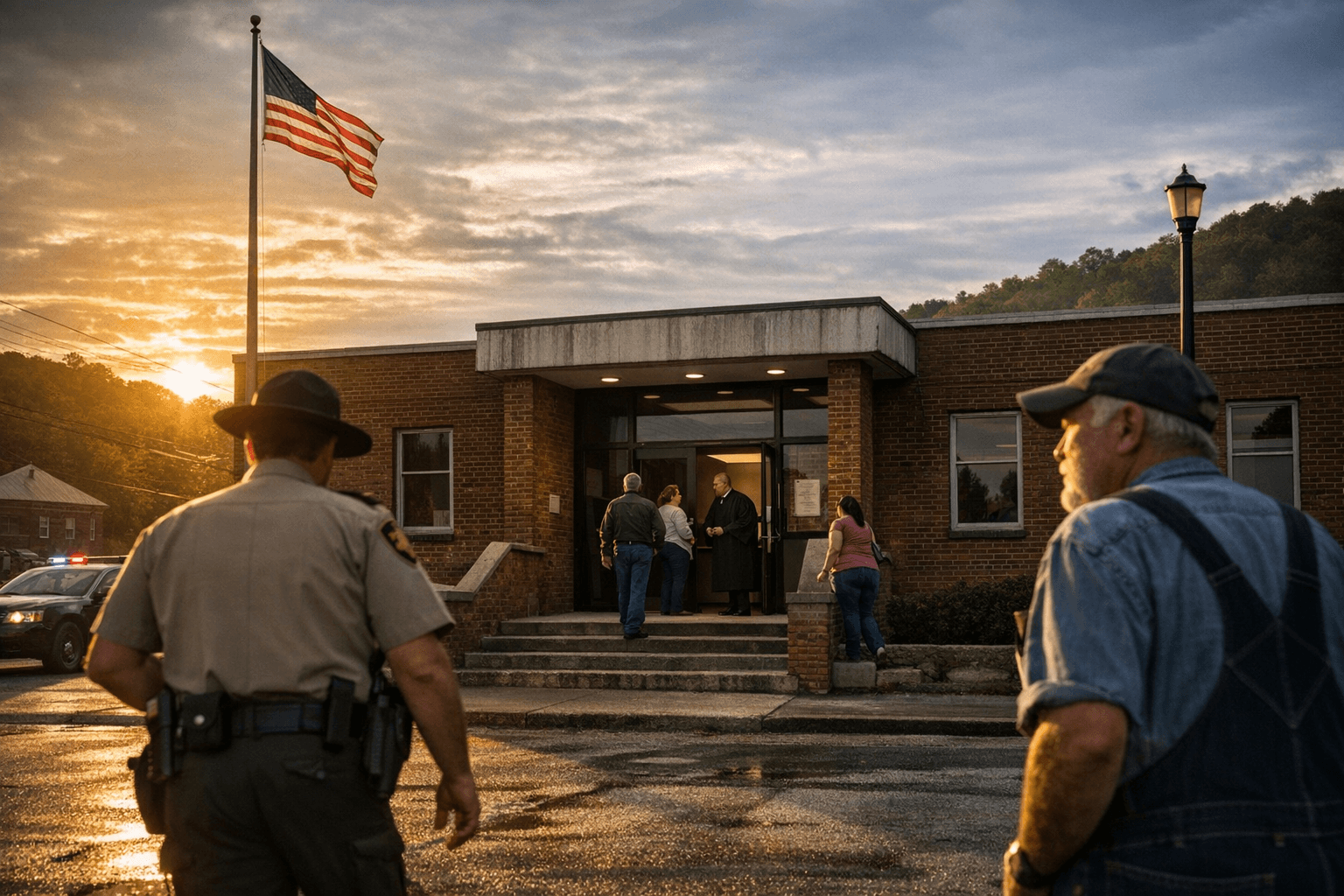
The Owsley County Courthouse sits at the heart of Booneville’s downtown, housing the county’s circuit and district courtrooms alongside county administrative offices. For residents, it is the primary point of contact for court proceedings, public records, deeds, and a range of county services that affect daily life from property matters to local administration.
Owsley County itself was established in 1843, and the county seat—originally called Owsley Court House—was renamed Booneville in 1846. The county’s courthouse history has been marked by loss and rebuilding. The original courthouse burned in January 1929, and a subsequent courthouse suffered fire damage in 1967. Those disruptions interrupted local government functions and underscored the vulnerability of civic infrastructure to disaster.
The present courthouse was built in the early 1970s, with construction occurring in 1972–1973. The structure is a single-story brick and concrete modern building designed to accommodate court functions and county business more securely than its predecessors. An addition completed in 1984 expanded the facility’s capacity to serve administrative needs and public access to records.
The building’s continuity matters to Owsley County residents. The courthouse not only schedules and holds hearings for civil and criminal matters but also maintains vital records that underpin property transactions, family law actions, and public accountability. Its location on Courthouse Square keeps county services concentrated and accessible to Booneville and the surrounding rural areas, where travel and access can be barriers to civic participation.
Beyond local utility, the courthouse stands as a civic landmark representing continuity of governance. The cycles of destruction and rebuilding over the 20th century shaped how county officials approached security, record preservation, and facility planning. For residents, the current building embodies that institutional resilience while serving everyday needs.
Residents with inquiries about court dates, records, or administrative services should continue to use the courthouse on Courthouse Square as the primary local point of contact. As with civic centers in communities worldwide, Owsley County’s courthouse remains essential to maintaining the rule of law and enabling public access to government services.
Sources:
Know something we missed? Have a correction or additional information?
Submit a Tip